Aaron Siri’s Response to the New York Times' Attack on ICAN’s Polio Vaccine Petition
Originally published: 2025-01-05
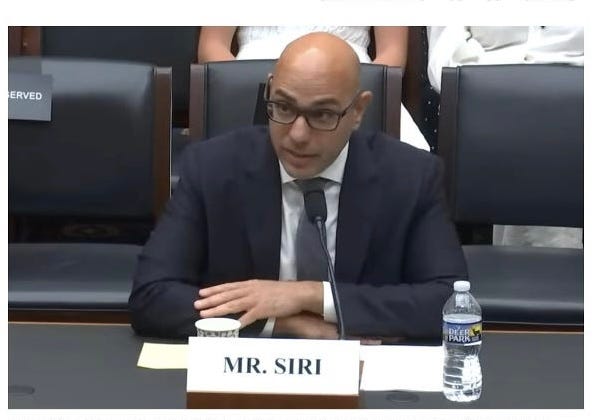
The recent New York Times article that attempted to discredit ICAN’s petition to the FDA has sparked a heated debate. Written by Aaron Siri, the lawyer representing ICAN in this case, this response sheds light on the inaccuracies and omissions presented in the article.
The New York Times piece begins by defending a particular polio vaccine, IPOL, which is not the same as the polio vaccine many are familiar with, created by Jonas Salk or Albert Sabin. This vaccine, which has been in circulation since 1990, is based on an entirely new technology involving the use of modified monkey kidney cells to grow the polio virus. Despite its approval, concerns remain about its safety—concerns that the Times’ article notably sidesteps in favor of stoking fear.
The heart of ICAN’s petition is simple: the FDA needs to conduct proper clinical trials for IPOL, particularly for its use in infants and children. IPOL was approved based on pediatric trials that reviewed safety for only three days after injection—hardly enough time to assess long-term impacts. The vaccine, which contains virus grown in Vero cells (which are modified to behave like cancer cells), is not the vaccine we associate with earlier polio treatments. It’s a new product with unknown long-term effects, particularly on the developing immune systems of children.
Despite the legitimate concerns raised in ICAN’s petition, the New York Times article chose to ignore the detailed safety issues in favor of sensationalizing fear. It also inaccurately claimed that the petition called for a revocation of “the polio vaccine” in general. However, ICAN’s request was focused solely on IPOL for children and only until proper trials are conducted—an entirely reasonable and necessary request in the interest of public health and safety.
Siri goes on to explain that the New York Times failed to mention the nature of the disease contracted by an unvaccinated individual in New York who recently became paralyzed—an instance in which the person contracted polio from the vaccine strain, not from the wild virus. The article also omits crucial details from the CDC, which explains that IPOL does not stop the transmission of polio despite providing protection from the disease itself.
ICAN has made every effort to engage with the FDA and other health agencies to ensure that IPOL was trialed properly. FOIA requests have been filed, and correspondence with the HHS has shown that the safety data provided by the FDA and the vaccine manufacturers is lacking. Despite these efforts, the New York Times’ coverage focuses on anecdotal evidence rather than solid scientific data or studies.
The essence of ICAN’s petition is not to attack the polio vaccine as a concept, but to ensure that safety standards are maintained for new vaccines, particularly those administered to children. Siri’s response urges the New York Times to correct its misleading headline and present a more accurate depiction of ICAN’s reasonable request to revoke approval of IPOL until it has undergone proper safety trials. Public health decisions should be based on science, transparency, and integrity—not fearmongering or corporate interests.
For more detailed information on the petition and the safety concerns surrounding IPOL, please visit ICAN’s official site.
