Adrian Wenban’s Ouster and the Uncertain Future of BCC
Originally published: 2025-07-28
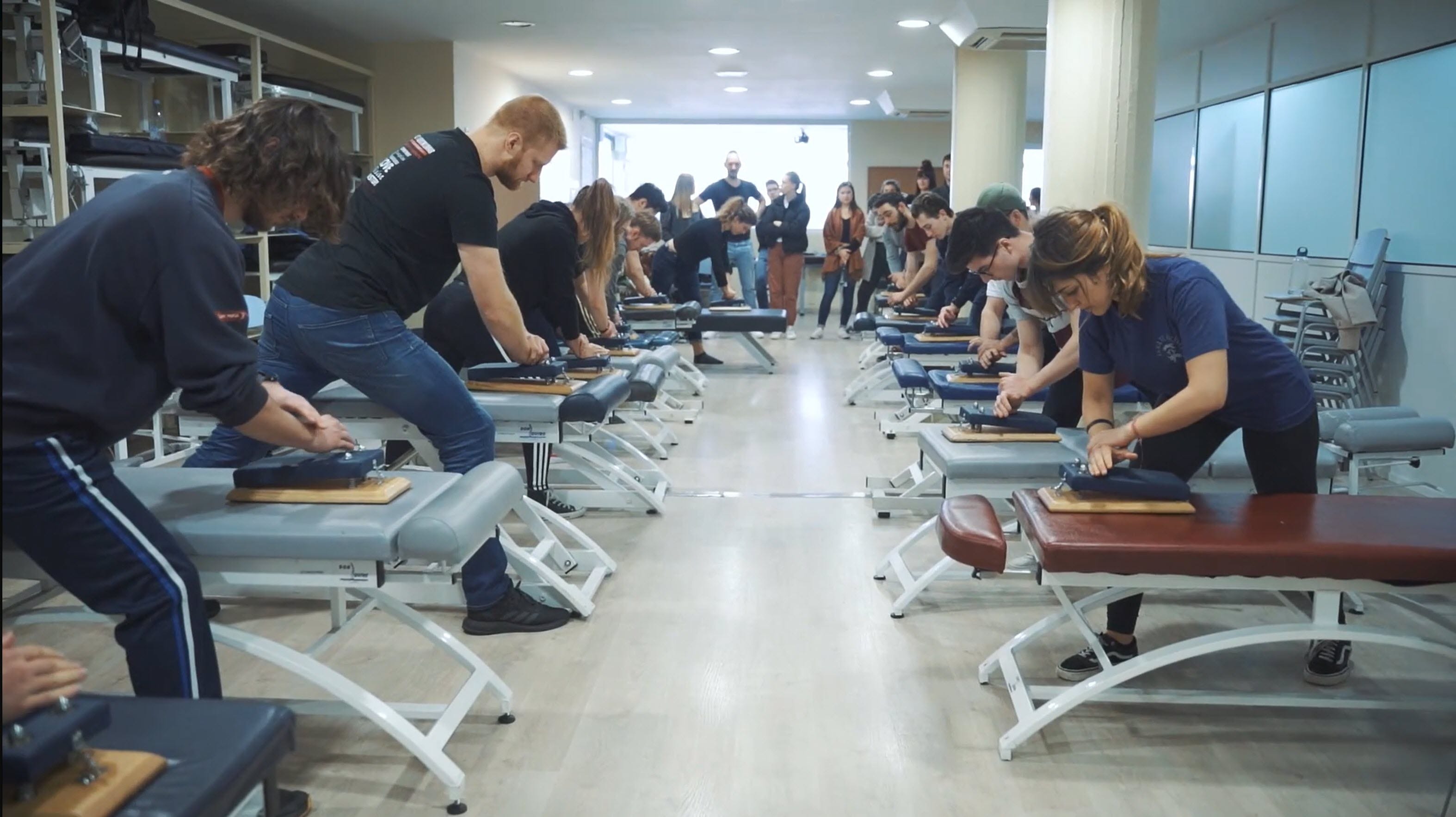
After nearly two decades at the helm, Dr. Adrian Wenban departs the Barcelona College of Chiropractic under sudden and unclear circumstances, leaving behind a legacy shaped by vision, philosophy, and accreditation challenges
A Sudden Farewell
“As of July 25th, 2025, Dr. Adrian Wenban no longer collaborates with FPQ and BCC projects.”
With that single, brief sentence, the Barcelona College of Chiropractic (BCC) officially ended its long-standing relationship with its founding principal, Dr. Adrian Wenban. The message to students from the Fundación Privada Quiropráctica (FPQ) offered no explanation, no sendoff celebration, and no reflection on nearly 20 years of service. The announcement marked a jarring end to an era for one of Europe’s most unique chiropractic institutions.
For students, alumni, and members of the global chiropractic community, the news has sparked confusion, curiosity, and concern, particularly among those who saw BCC as a rare institution that once held fast to the foundational pillars of philosophy, science, and art in chiropractic education.
Building Something Different
“Wenban’s fingerprints were on every aspect of BCC—from curriculum to culture.”
Dr. Wenban’s relationship with the Barcelona College of Chiropractic predates its first class of students in 2009. As early as 2005, he was laying the groundwork for a chiropractic institution unlike any other in Europe. He served as President of the FPQ from 2007 to 2009, and subsequently became the face of the college as its founding Principal.
Under Wenban’s leadership, BCC became known for several key innovations:
A bilingual program (Spanish and English), which drew an international student body from over 20 countries.
A curriculum grounded in the three pillars of chiropractic: philosophy, science, and art.
A stated commitment to vitalistic principles and subluxation-centered care, differentiating it from many other institutions in Europe.
For years, Wenban shepherded BCC through challenges, including multiple rounds of accreditation reviews by the European Council on Chiropractic Education (ECCE). His scholarly background, including degrees in clinical epidemiology and medical education, helped him craft an evidence-informed curriculum while still holding space for chiropractic’s foundational philosophy.
A History with Accreditation
BCC’s path to full ECCE accreditation was not a smooth one. In 2014, the ECCE denied the college’s application, citing concerns about clinical practices and a perceived lack of alignment with the biopsychosocial model of care. Among the critiques was the use of the term “practice member” instead of “patient”, a subtle yet symbolic indicator of the school’s vitalistic leanings.
In response, Wenban issued a public letter acknowledging the ECCE’s concerns and vowing to work toward greater compliance. His efforts were successful. In 2017, BCC was granted full accreditation, and by 2021, the ECCE awarded it the maximum eight-year renewal, citing numerous commendations.
Still, some observers noted a shift in tone during these years. BCC became increasingly engaged with “mainstream” chiropractic institutions as it fell under the thumb of the Chiropractic Cartel, eventually joining the International Chiropractic Education Alliance (ICEA) as a full founding member, a group convened under the umbrella of the World Federation of Chiropractic (WFC). The WFC, long associated with the global medicalization of chiropractic efforts, including those of accrediting bodies, has often attracted skepticism from within the profession.
“BCC is now a founding member of the ICEA under the WFC, a notable shift from its early years as an outlier.”
Wenban's embrace of these alliances, while likely driven by a desire to secure legitimacy and global recognition, also represented a pragmatic adaptation. It allowed BCC to navigate a challenging political landscape while preserving what it could of its original mission.
The Silence Is Deafening
“There was no farewell address, no quote from the founder, and no acknowledgment of the institution he helped build.”
In light of Dr. Wenban’s central role, the brevity of the announcement surrounding his departure is striking. There was no official explanation provided, just a statement that he “no longer collaborates” with the college and its projects.
This type of language, stripped of context or tribute, is rare in academic leadership transitions—particularly for founders. It suggests a deliberate effort to move on without revisiting the past. The reasons for his departure remain unknown. Whether it was a resignation, a disagreement with the Board, or a governance-level decision is unclear.
What is clear is that a defining era has ended, and it has ended abruptly.
A New Structure, A New Direction?
In place of Dr. Wenban, the Board of Governors has introduced a dual leadership structure. Silvia Ranz, a longtime contributor to the college through her consultancy and academic roles, has been appointed College Principal, responsible for day-to-day operations. A second role, College Rector, remains unfilled and is designated for a chiropractor who will oversee strategic alignment with ECCE policies and hopefully ensure adherence to the school’s founding principles.
This bifurcated model is designed to meet accreditation requirements while professionalizing the college’s management. Ms. Ranz’s background is in business and medical education, not chiropractic, making the Rector position a critical piece in preserving the college’s clinical and philosophical credibility.
Looking Ahead with Cautious Curiosity
“BCC was once a lighthouse for vitalistic chiropractic in Europe. Where it goes next remains to be seen.”
Dr. Wenban’s departure, coupled with the appointment of a non-chiropractor to oversee daily operations, has naturally sparked questions about the school’s future. While it is unfair to draw conclusions without more information, it is reasonable to be curious, and concerned.
Will BCC maintain its commitment to the philosophy-science-art triad?
Will subluxation and vitalism continue to hold space in its curriculum?
Who will be appointed as Rector, and what will their vision be?
These questions matter deeply, not only to the students currently enrolled, but to the broader chiropractic community watching from around the world.
For now, we are left with a legacy that is both proud and precarious. Dr. Adrian Wenban brought something unique to European chiropractic education. Whether the college he built can carry that vision forward in his absence is the challenge that now lies ahead.
Conclusion
As students prepare for the upcoming academic year, and as faculty adjust to a new leadership structure, the full implications of Dr. Wenban’s exit will unfold gradually. What matters now is that the values that once made BCC stand out, its integrity, its courage, its balance of science and philosophy, do not fade quietly with its founder’s departure.
Those who care about the future of chiropractic education would do well to keep watching.
