Building on Principle: Highlights from IRAPS 2025, Volume I
Originally published: 2025-08-05
The Best of Both Worlds: Evidence and Ideas at IRAPS
IRAPS 2025 opened with a powerful demonstration of what makes this annual symposium unique: the seamless integration of rigorous scientific inquiry and principled chiropractic philosophy. As the only academic event in the profession dedicated entirely to vertebral subluxation-centered research and philosophy, IRAPS continues to solidify Sherman College’s leadership in defending and advancing chiropractic’s core identity.
This first installment in our IRAPS 2025 review series highlights four standout presentations, two from the research frontlines and two from chiropractic’s philosophical roots.
Best Practices for the Profession’s Future
Presented by Anquonette Stiles, DC, MPH & Sherman Student Research Fellows
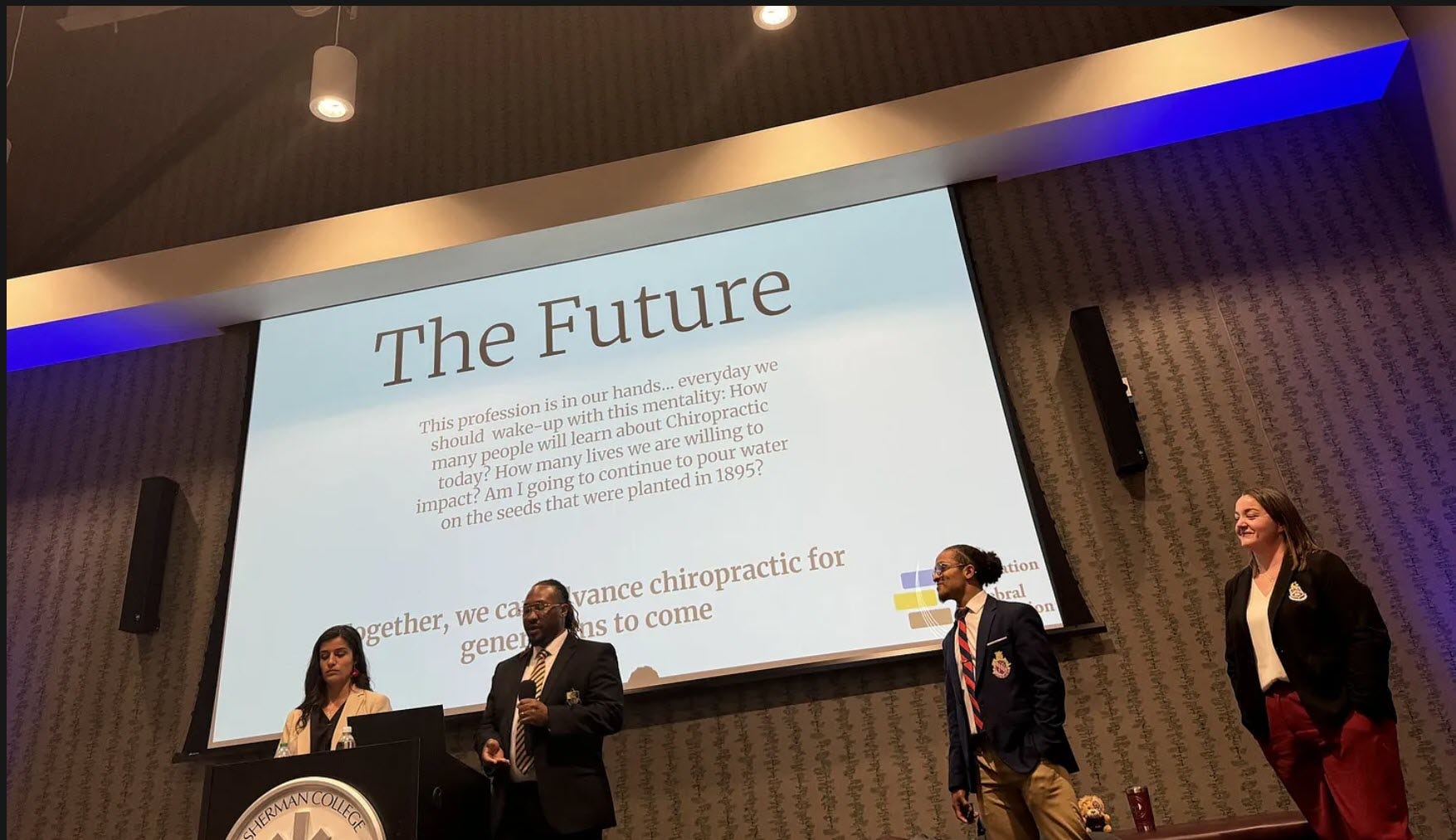
The Foundation for Vertebral Subluxation (FVS) unveiled its ongoing effort to develop Best Practice Guidelines for the Clinical Management of Vertebral Subluxation. Presented by Anquonette Stiles DC, MPH and a team of Sherman student fellows, the project represents years of work to consolidate and synthesize evidence in areas such as pediatric care, maternal health, instrumentation, mental health, imaging, and patient safety.
The presentation emphasized the professional, ethical, and public health need for subluxation-centered best practices to defend and promote the chiropractic paradigm in legislative, regulatory, and clinical settings.
“This project is not just about research. It’s about protecting our profession by owning the narrative around vertebral subluxation,” said Anquonette Stiles DC, MPH
Can Correcting Subluxations Improve Sleep and Stress?
Presented by Charles Kenya, DC & Matthew Hudson, DC
In a compelling clinical study, Drs. Kenya and Hudson investigated the impact of vertebral subluxation correction on sleep quality and stress levels. Using validated measures such as the Pittsburgh Sleep Quality Index and the Perceived Stress Scale, the authors presented preliminary findings suggesting improvements in sleep and reductions in anxiety and depression scores following chiropractic care.
Their results provide a welcome addition to the evidence base for chiropractic’s role in overall well-being and may have implications for public health research and interdisciplinary collaboration.
“This is the kind of work that opens doors in the broader health sciences,” noted one IRAPS attendee.
Philosophical Fiction as a Tool for Teaching
Presented by Myron Brown, DC
In one of the most thought-provoking sessions of the event, Dr. Myron Brown proposed a novel idea: using philosophical fiction as a vehicle for communicating chiropractic’s core concepts. Drawing parallels to science fiction’s role in shaping public imagination around scientific themes, Brown suggested that fictional narrative might help educate both the public and chiropractors themselves about complex philosophical issues.
“Chiropractic needs to reclaim the power of narrative,” Brown said. “If we don’t tell our story, someone else will.”
Subluxation Models from the Early Pioneers
Presented by Simon Senzon, MA, DC (with Tim Faulkner, DC & Joseph Foley, DC)
Dr. Senzon’s historical paper compared the subluxation models of two of D.D. Palmer’s early students, Langworthy and Smith. By analyzing their writings and perspectives, the presentation shed light on how these early interpretations still echo in modern practice. It also highlighted the necessity of understanding chiropractic history not as dogma, but as a living tradition that informs current philosophical debate.
“Our profession’s future is hidden in its past,” said Senzon. “We ignore it at our peril.”
IRAPS: Where Principle Meets Proof
These presentations, spanning clinical outcomes, professional policy, historical context, and philosophical innovation, capture the spirit of IRAPS and Sherman College’s strategic emphasis on expanding the profession’s scholarly and scientific infrastructure.
“IRAPS brings together everything that matters in chiropractic, evidence, philosophy, principle, and purpose,” said Sherman’s Director of Scholarly Activity, Dr. Alan Brewster.
Stay tuned for Part II in our series as we explore more of the dynamic research and transformative ideas shared at IRAPS 2025.
CLICK HERE to review the Proceedings
