CCE Under Fire at CHEA Review: Monopoly and Transparency Issues Laid Bare
Originally published: 2025-03-10
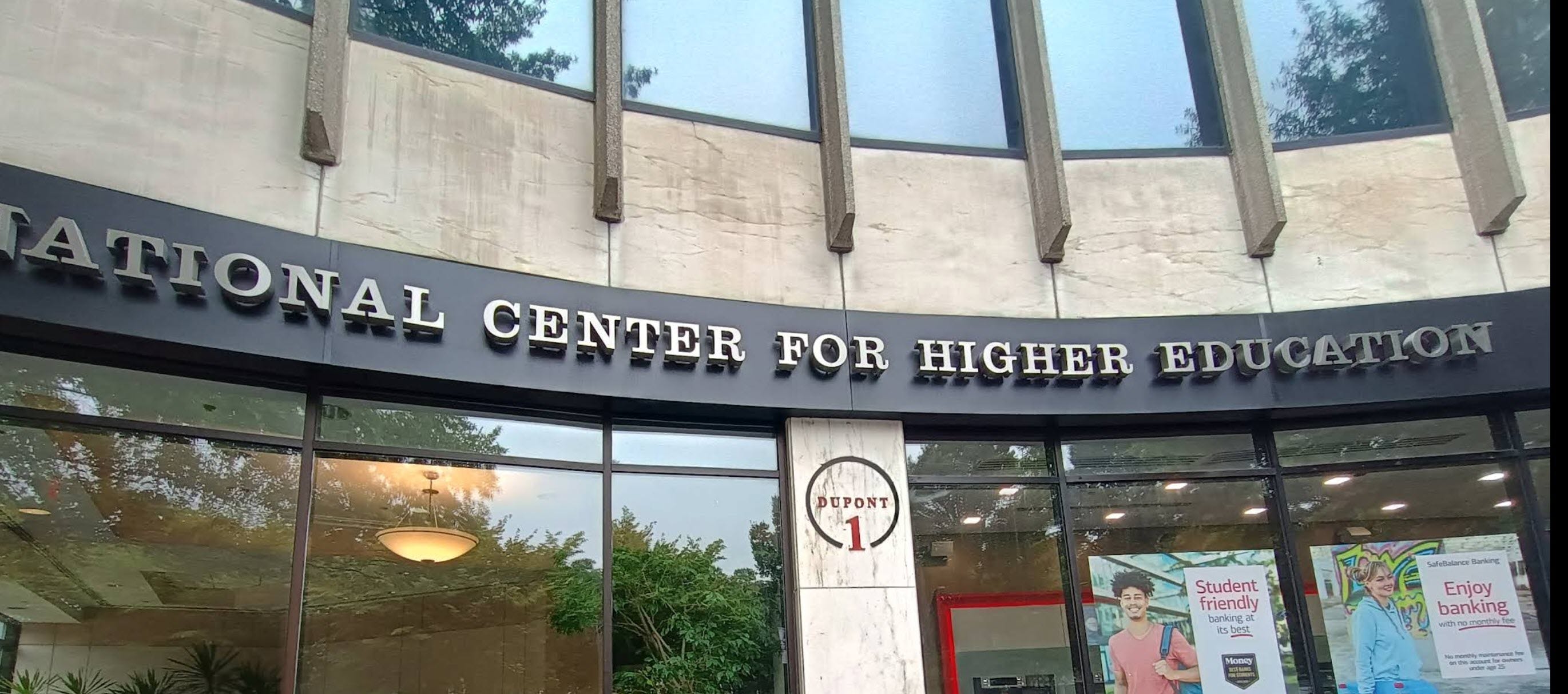
The Coalition for Freedom in Chiropractic recently presented oral testimony to the Council for Higher Education Accreditation (CHEA) regarding the Council on Chiropractic Education’s (CCE) application for renewal of recognition. The testimony, delivered by Dr. Mike Guinosso on behalf of the Coalition, raised serious concerns about the CCE’s ongoing lack of transparency, monopolistic practices, and its close relationship with the National Board of Chiropractic Examiners (NBCE).
CLICK HERE for the CHEA announcement
This follows written submissions from the Coalition highlighting how CCE’s accreditation policies reinforce NBCE’s monopoly over chiropractic licensure and education. Despite these well-documented concerns, CCE has consistently avoided direct answers and relied on misdirection and logical fallacies rather than addressing the real issues.
CLICK HERE for the Coalition’s letter to CHEA
The Core Issue: CCE Reinforcing a Monopoly
One of the central issues raised in the Coalition’s testimony is the entrenched relationship between CCE and NBCE. While CCE claims that it has no role in licensing decisions, its policies directly mandate NBCE’s control over the profession by using NBCE Part IV exam scores as a proxy for licensure.
CCE attempts to sidestep this issue by claiming that schools are not required to use NBCE scores because they can instead report "proof of licensure" as an alternative metric. However, this is nothing more than a convenient misdirection for several reasons:
Tracking licensure rates is functionally impossible—Chiropractic graduates may become licensed in any of 50 states and over 120 countries. Licensing boards may or may not be under any obligation to provide this data, and even if they did, there is no centralized system to track and verify it.
If licensure rates were a viable alternative, this would remove one of the main arguments for NBCE Part IV—If schools could realistically report licensure rates, the need for NBCE’s Part IV exam would collapse. Yet, CCE continues to endorse the Part IV requirement, ensuring that NBCE remains the gatekeeper of chiropractic licensure.
The schools already certify clinical competency - Every graduate that walks across the stage has been deemed competent. If they are not then the problem is with CCE since they are the ones that accredited the program.
If the argument is that someone has to police the schools - the CCE already does that. If the argument is that we need NBCE to policie the CCE - then who polices the NBCE?
The burden is unfairly placed on schools and students—It's all smoke and mirrors and the ruse collapses upon cursory inspection. Rather than supporting schools in creating a centralized licensure tracking system that the CCE requires for accreditation, CCE forces the use of NBCE data, thereby forcing students to shoulder the financial and logistical costs of an unnecessary exam that benefits a private corporation with a monopoly. Two monopolies working hand in hand to control trade.
If CCE were actually serious about offering an alternative to NBCE Part IV scores, it would work with chiropractic schools and the Association of Chiropractic Colleges (ACC) to create a national licensure tracking system. Instead, CCE’s default reliance on NBCE metrics ensures that the monopoly remains intact.
CCE’s Participation in Secretive Policy-Making
Another major issue raised in the Coalition’s testimony was CCE’s participation in the Chiropractic Summit—a closed-door group that includes NBCE and the Federation of Chiropractic Licensing Boards (FCLB).
The Summit excludes many chiropractic organizations while giving NBCE and FCLB privileged access to discussions on accreditation and licensure policy. CCE’s involvement in this group raises serious ethical concerns:
If CCE is merely an accreditor with no influence over licensing, why does it participate in a forum where licensing policies are shaped?
Why are updates on accreditation provided to Summit members but not to the broader chiropractic profession?
If CCE is truly committed to transparency and stakeholder engagement, why does it engage in private policymaking with the very organizations that control licensure and testing?
CCE’s silence on this concern only reinforces the perception that CCE operates as part of a closed regulatory cartel rather than an independent accreditor.
Failure to Address Press Censorship and Stakeholder Exclusion
The Coalition also raised concerns about press censorship at CCE’s January 2025 stakeholder meeting. A representative from The Chiropractic Chronicle was prohibited from recording the meeting, despite no explicit rule in CCE’s policies barring such activity.
CCE’s justification that written comments could be submitted at any time and that it follows "established best practices" for public meetings is a red herring—the issue is not whether written comments are allowed, but why CCE actively restricts real-time engagement, refuses to allow virtual participation, and prevents independent documentation of its proceedings.
At the end of the December 2011 Hearing held by the National Advisory Committee on Institutional Quality and Integrity (NACIQI) to consider the Council on Chiropractic Education’s petition for continued recognition by the Federal Government, NACIQI added one final recommendation that created serious concerns at the CCE.
That recommendation was that the CCE demonstrate compliance with section 602.13 dealing with the wide acceptance of its standards, policies, procedures and decisions.
Just eight days after the hearing, David Wickes MA, DC Chair of the CCE sent a letter to the Assistant Secretary of Education, Eduardo M. Ochoa, asking him to remove this language.
In a move that shocked the conservative faction of the chiropractic profession, the Assistant Secretary honored the CCE’s request
Bear in mind that the CCE was able to pull this off because of lobbying efforts at the Department level. They did not satisfy NACIQI. Adding insult to injury David Wickes DC as President of Canadian Memorial referred to anyone practicing in a subluxation, vitalistic model as "the gangrenous arm of the profession that needs to be cut off".
Hardly an objective position to take.
Borrower’s Defense Claims and CCE’s Role in Misleading Students
Adding to these concerns is the growing number of Borrower’s Defense claims filed by chiropractic graduates who allege they were misled about:
Career prospects and income potential.
The financial burden of student loans and licensing exams.
The necessity of taking NBCE exams and the associated costs.
These claims expose a fundamental failure of oversight and accountability on CCE’s part. CCE’s policies have created a system where students are burdened with high debt and misaligned expectations—a direct consequence of CCE’s NBCE policy.
CCE’s Response: Deflect and Deny
CCE’s response follows a clear pattern:
Deflect responsibility—CCE repeatedly states that licensing policies are determined by state authorities, ignoring the fact that CCE’s accreditation policies have shaped those very requirements. Is CCE attempting to rewrite history?
Offer impractical solutions—The suggestion that schools can provide proof of licensure instead of NBCE scores is logistically impossible, yet CCE presents it as a meaningful alternative.
Ignore key concerns—CCE’s involvement in the Chiropractic Summit and the censorship of press coverage at its meetings are completely omitted from its response.
This is not accountability—it’s strategic avoidance.
Next Steps: What the Coalition is Asking CHEA to Do
Given CCE’s pattern of avoidance and lack of meaningful reform, the Coalition for Freedom in Chiropractic has asked CHEA to take the following actions:
Require CCE to implement genuine transparency reforms—Including allowing virtual and written public comments, and permitting press recordings of public meetings.
Investigate CCE’s reliance on NBCE exam scores as a de facto licensing and accreditation benchmark and encourage the acceptance of the institution's autonomy to determine the competency of its students no different than the medical and osteopathic professions.
Examine CCE’s participation in the Chiropractic Summit and require full disclosure of its discussions and policy influence.
Hold CCE accountable for ensuring accredited institutions provide truthful and transparent information about student outcomes and career prospects.
Conclusion
CCE cannot continue to hide behind procedural loopholes and technicalities while reinforcing a system that benefits private corporations at the expense of students and institutions. The chiropractic profession deserves an accreditor that operates with independence, integrity, and transparency—not one that reinforces monopolistic control and protects entrenched financial interests.
The Coalition for Freedom in Chiropractic will continue to push for real answers and real accountability. The future of chiropractic education depends on it.
