Chiropractic Cartel’s Sphincters Fibrillating as the Supreme Court Opens Door to Dismantling Federal Education Bureaucracy
Originally published: 2025-07-18
A Watershed Moment for Educational Freedom
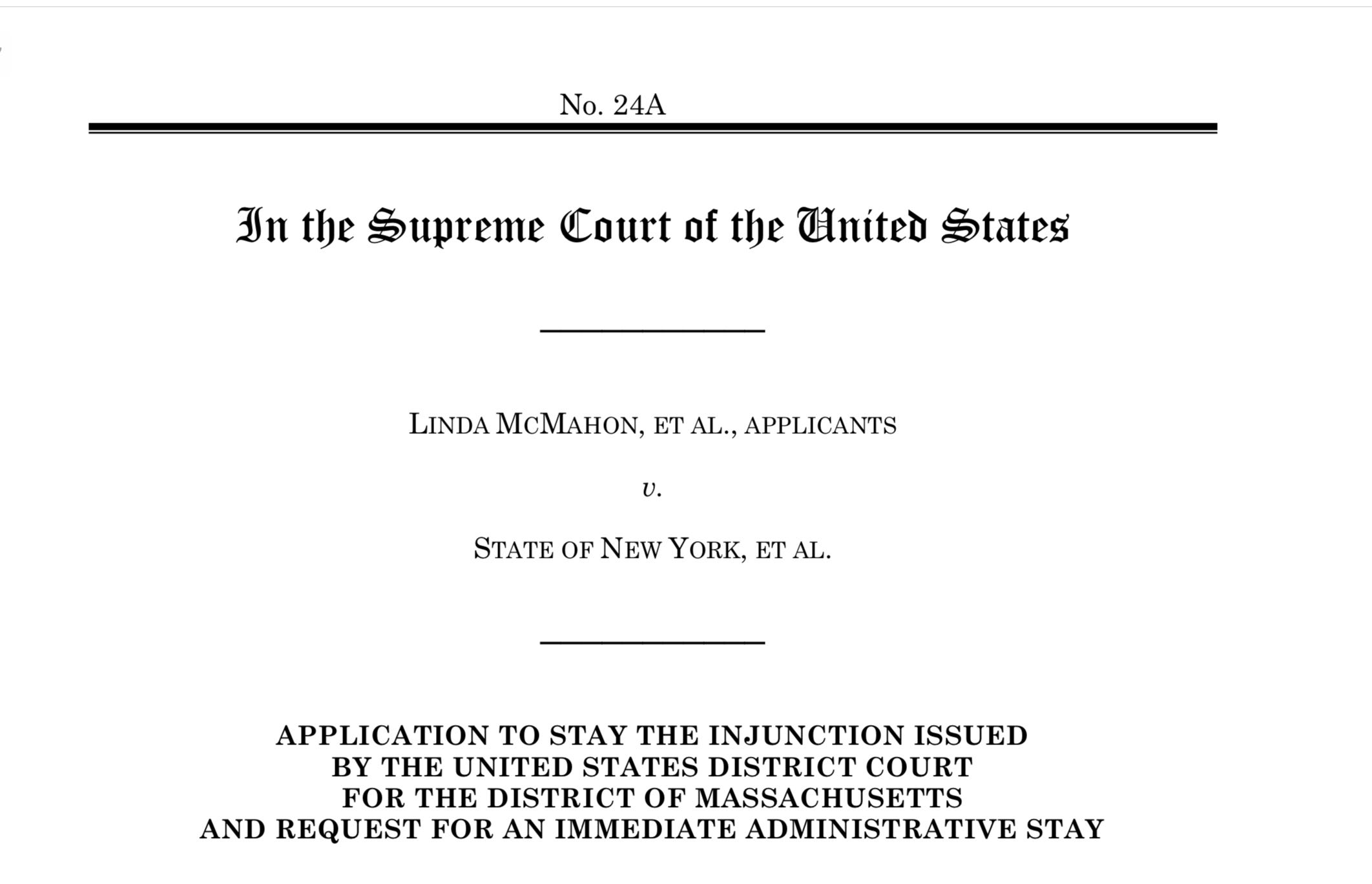
In a landmark 6-3 decision on July 14, 2025, the U.S. Supreme Court gave the green light to the Trump administration’s plan to slash nearly 40% of the Department of Education’s workforce. This move, reinstating mass layoffs that had been blocked by a lower court, signals a sweeping reorganization of federal control over education. For many in the chiropractic profession, particularly those aligned with the Chiropractic Freedom Coalition, this decision may mark the beginning of the end for the monopolistic stranglehold imposed by the Chiropractic Cartel: the Council on Chiropractic Education (CCE), the National Board of Chiropractic Examiners (NBCE), the Federation of Chiropractic Licensing Boards (FCLB) and their enablers at the state and federal level.
"The Supreme Court’s decision didn’t just shrink a bloated bureaucracy—it cracked open the walls protecting corrupt accreditation monopolies."
Why Chiropractors Should Care About McMahon v. New York
The case, McMahon v. New York, centered on whether President Trump could move forward with a dramatic downsizing of the Department of Education. The court’s unsigned opinion provided no explanation, but the consequences are profound. The Trump administration's plan involves redistributing federal education functions to other agencies or back to states, aligning with the administration’s broader effort to reduce federal overreach and rein in unaccountable regulatory agencies.
For chiropractors, especially those who have long battled the systemic entrenchment of the CCE, NBCE and FCLB, this decision strikes at the heart of the infrastructure that has enabled regulatory capture. The Department of Education’s recognition of the CCE as the de facto gatekeeper of chiropractic education and licensure has been a primary vehicle for suppressing competition, marginalizing philosophical diversity, and obstructing meaningful reform.
"Without the Department of Education to prop them up, the CCE’s recognition status may no longer be untouchable."
Implications for the Chiropractic Cartel
The Chiropractic Freedom Coalition argues that the CCE, NBCE and FCLB function as monopolies, using federal recognition to control education, licensure, and professional identity within the chiropractic field. By tying accreditation to licensure through policies like CCE’s infamous Policy 56, which effectively mandates the NBCE’s controversial Part IV exam, these organizations have created a closed-loop system resistant to accountability and innovation.
With the Department of Education now facing a potential internal collapse, the power structure holding this system in place is weakening. As more responsibilities shift to states and other agencies, the artificial federal imprimatur that has shielded the CCE may evaporate, paving the way for alternative accrediting bodies to finally gain a foothold.
Florida and the Southern Rebellion
Nowhere is this realignment more evident than in Florida and other southern states where lawmakers and chiropractic reformers are advancing legislation to recognize alternative accreditors. These efforts aim to decouple licensure from the monopolistic grip of the CCE, NBCE and FCLB and instead empower state boards and non-cartel organizations to chart their own regulatory paths.
The Florida movement has inspired similar discussions in Georgia, Tennessee, South Carolina, and Texas. These initiatives are no longer fringe, they are becoming the front lines of a revolution in chiropractic governance. With the Supreme Court's ruling clearing the way for a shrinking federal role, these states may soon have the space and authority to bypass cartel-imposed limitations altogether.
"This ruling gives states the breathing room they need to finally reclaim control over chiropractic education and licensure."
NACIQI and the Long-Overdue Reckoning
The National Advisory Committee on Institutional Quality and Integrity (NACIQI), which advises the Department of Education on accreditor recognition, has long been aware of the monopolistic practices surrounding the CCE. As early as 2013, members of the committee explicitly warned about the cartel-like dynamics within the chiropractic profession.
Attorney Anne Neal, JD, a NACIQI member at the time, made headlines during a December 12, 2013 hearing when she compared the coercive nature of monopoly recognition standards to mafia tactics:
"That’s about as voluntary as accepting an offer from Tony Soprano."
She continued:
“I’m very concerned that we’ve got to play fair with everyone, and I’m not sure we’re playing fair or the Department is playing fair.”
Likewise, Dr. Lawrence J. DeNardis, another NACIQI member and former U.S. Congressman, directly addressed the root problem:
“We are dealing with a monopoly control of a profession which has led to the establishment of a virtual cartel... I believe if we simply hear it, discuss it, anguish over it, and then give them five years of recognition, that we haven’t been the impetus for any corrective action for the profession—and I worry about the profession.”
These remarks from over a decade ago echo even louder today. The same cartel continues to exert disproportionate control over the profession, enabled by federal mechanisms that the Supreme Court just took a significant step toward dismantling. With the CCE’s next renewal of recognition likely on the horizon, and NACIQI already under pressure to address bias and exclusion, the Chiropractic Freedom Coalition and its allies must seize the moment to push for structural change.
"NACIQI knows the CCE is a cartel. They’ve said so themselves. The only question now is whether they’ll finally do something about it."
The Tipping Point Is Here
What was once seen as a quixotic struggle against entrenched interests is now a credible reform movement with political, legal, and structural momentum. The Supreme Court’s July 14 ruling is more than just a bureaucratic reshuffling, it’s a signal that monopolies built on federal largesse and unaccountable regulation are no longer safe.
For chiropractic reformers, this is the moment to act. The federal scaffolding that has protected the Chiropractic Cartel is beginning to crumble. What comes next will be determined by those bold enough to build something better in its place.
Call to Action
Chiropractors, students, educators, and lawmakers must seize this opportunity to reshape the profession. Support efforts in your state to recognize alternative accreditors. Hold your regulatory boards accountable. Push for open, competitive systems that honor the diversity of chiropractic thought and practice. The era of cartel control is ending, make sure your voice is part of what comes next.
