Cleveland Bans the Student IFCO from its Campus
Originally published: 2025-11-16
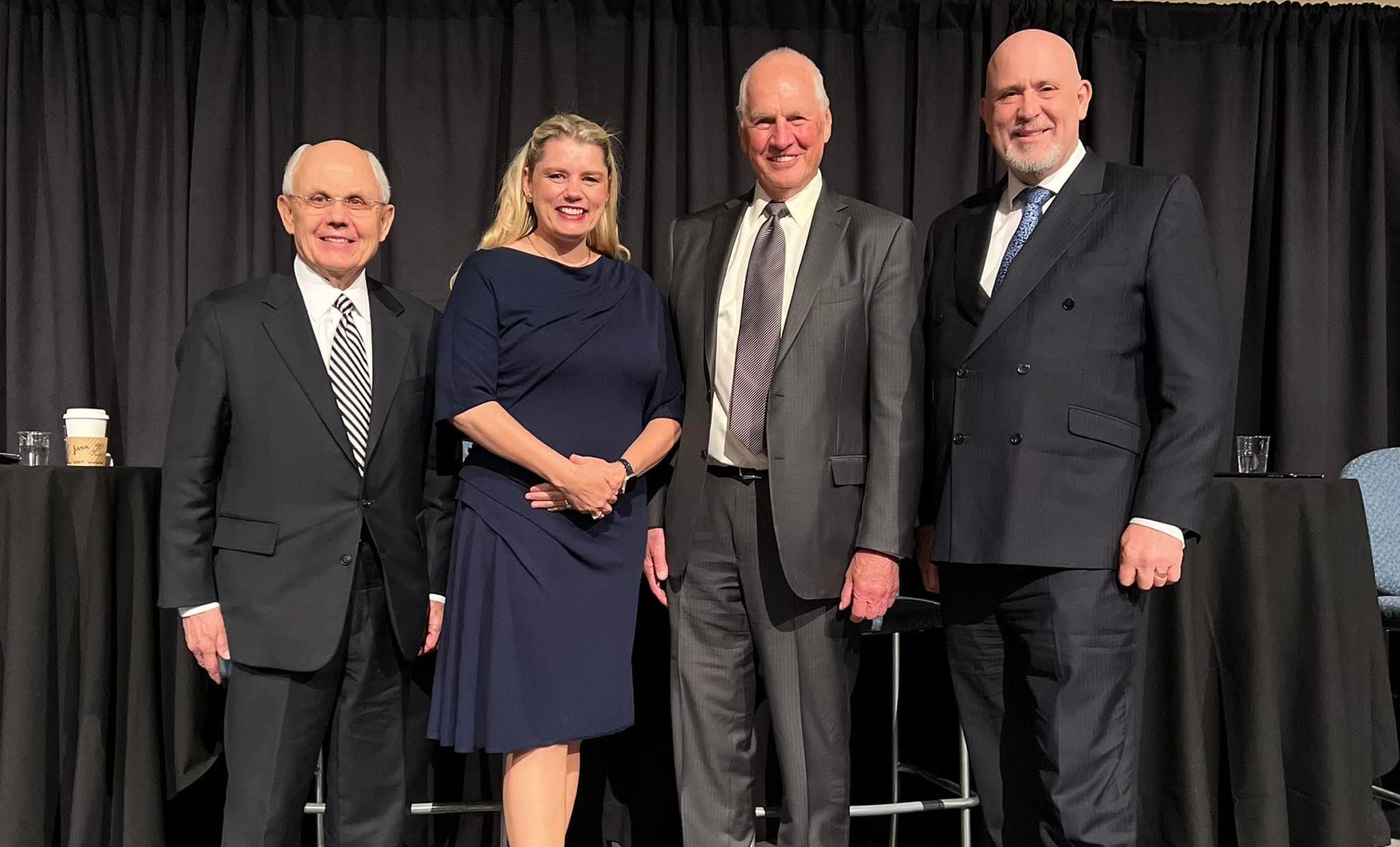
Left to Right: Carl Cleveland, Sherry McAllister (F4CP), Scott Haldeman & Richard Brown (WFC)
A Decision That Says More Than Cleveland Intended
Cleveland University’s recent refusal to allow the formation of a Student IFCO chapter has exposed far more about the institution’s priorities and alliances than the administration likely intended. In correspondence with IFCO President Grant Dennis, Cleveland’s Director of Student Engagement, Jalonna Bowie, explained that the chapter was rejected because it might be confused with Student ICA, the school’s relationship with the ICA is “very strong,” the institution pays for ICA student memberships and does not want to “cause confusion” by not paying for IFCO memberships, and most remarkably, because the mission of the IFCO “did not coincide with the curriculum.”
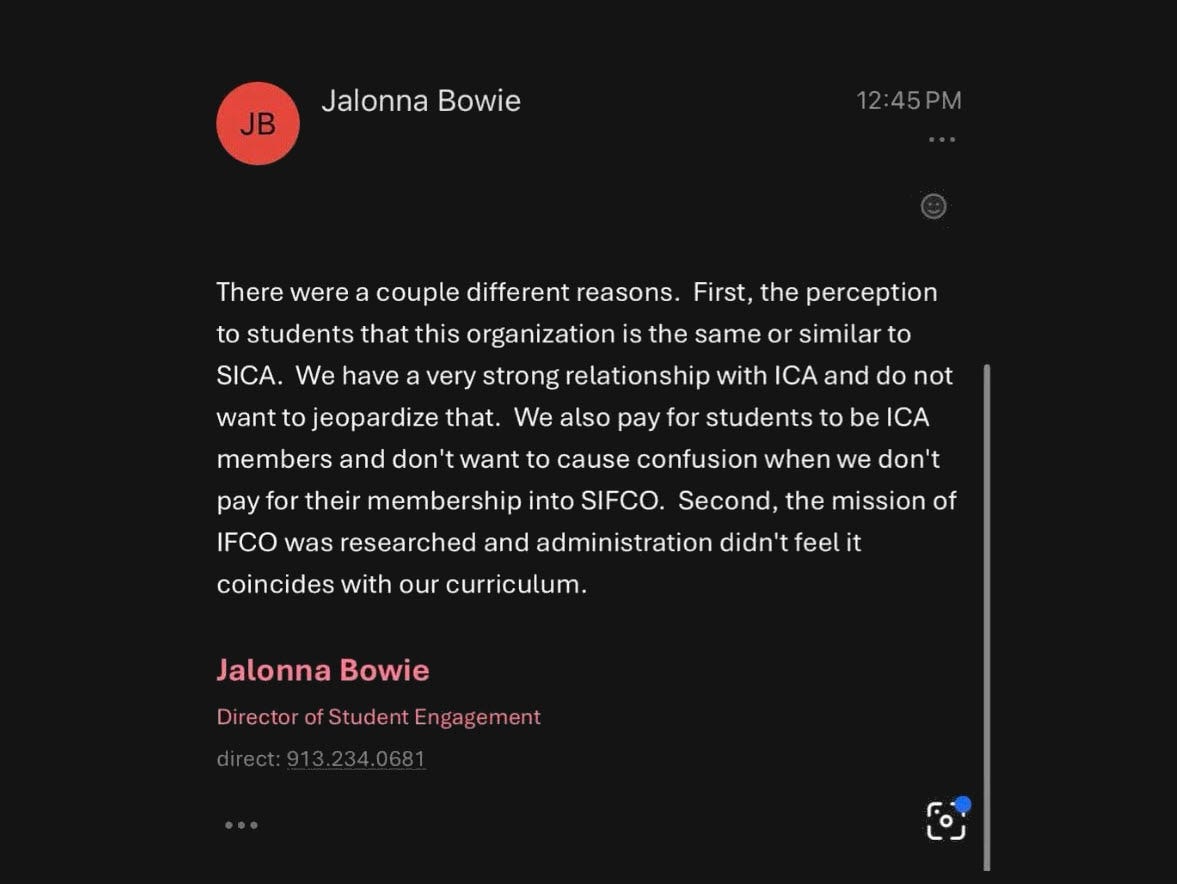
This rationale raises a fundamental question: if the mission of an organization dedicated to the protection and promotion of vertebral subluxation is incompatible with a chiropractic curriculum, then what exactly does that curriculum represent?
“If the IFCO’s mission does not align with a chiropractic college, then the problem is not the IFCO, it is the direction of the education itself.”
Carl Cleveland’s Alignment With the WFC and the Message It Sends
The banning of the Student IFCO club is not an isolated incident but part of a larger picture. Carl Cleveland III has prominently supported the World Federation of Chiropractic as a Platinum Sponsor and Partner, despite the WFC’s long record of marginalizing vertebral subluxation and promoting policy statements antithetical to subluxation-centered practice. This alliance, paired with the banning of the Student IFCO, communicates clearly to students which philosophical orientation Cleveland University considers acceptable and which it seeks to exclude.
Institutions reveal their values not only by what they endorse but by what they forbid.
“You cannot champion the future of chiropractic while suppressing the very ideas that define its identity.”
A Pattern Consistent With the Chiropractic Cartel
Cleveland’s decision fits seamlessly into a broader pattern long associated with the chiropractic cartel: centralized control, suppression of dissent, regulatory consolidation, and political favoritism. Northwestern’s well-documented controversy involving automatic ACA enrollment of students, reportedly orchestrated by Michele Maiers, mirrors Cleveland’s approach. In both cases, administration aligned students with preferred organizations while sidelining groups that challenge the dominant political narrative.
None of this is accidental. These institutions often operate in coordination with the NBCE, FCLB, WFC, ACA and other entrenched entities that seek to shape the profession according to their preferred model, particularly one that minimizes or eliminates vertebral subluxation.
NBCE and FCLB Stonewalling Student IFCO on Part IV Centralization
While Cleveland was shutting the door on the Student IFCO, the NBCE and FCLB were busy ignoring formal inquiries submitted by the Student IFCO regarding the impending centralization of the Part IV exam. The students who must take, pay for, and plan their futures around this exam asked fair and reasonable questions about how centralization would affect scheduling, travel, scoring, and fairness. The response was silence.
This silence is not neutral. It communicates exactly how regulators view the role of students in the licensing machinery: essential for revenue, irrelevant to governance.
“When regulators refuse to answer the people most affected by their decisions, they reveal a system built for control, not service.”
Meanwhile, the ICA Collapses Under Its Own Weight
Cleveland’s justification for banning Student IFCO rested heavily on its “strong relationship” with the ICA. Yet while this loyalty is being invoked to restrict student organizations, the ICA itself is in a state of unprecedented internal disintegration. Governance failures, election controversies, censorship, financial instability, and the erosion of confidence among long-serving members have shaken the organization to its core.
In recent weeks, the fallout became impossible to ignore. Several former ICA board members and leaders, individuals with decades of institutional knowledge, abandoned the organization altogether. They have now joined the IFCO, bringing with them not only their leadership experience but also the influence and philosophical clarity associated with Dynamic Essentials.
CLICK HERE for more on that story
This realignment is historically significant. The IFCO has long been dismissed by cartel-aligned institutions, yet it is now being strengthened by leaders fleeing dysfunction and political decay.
Students Are Not Fooled by Attempts to Control Their Choices
Censorship, exclusion, and top-down control rarely produce the results institutions hope for. Students can see the patterns emerging across chiropractic colleges, and they understand that decisions like Cleveland’s are not about confusion or curricular alignment. They are about protecting political relationships and maintaining the façade of unity with organizations that have drifted far from chiropractic’s foundational principles.
“Every attempt to suppress subluxation-centered ideas has only highlighted their importance and renewed student interest in them.”
A Profession in the Midst of Realignment
Cleveland’s ban on the Student IFCO, Carl Cleveland’s sponsorship of the WFC, the NBCE and FCLB’s refusal to engage with students, the forced ACA enrollments at Northwestern, and the implosion of the ICA are not isolated pieces of information. They form a coherent narrative that reflects a profession in conflict over identity, governance, and purpose.
In the midst of this conflict, the IFCO is emerging as the organization that not only refuses to abandon vertebral subluxation but is also gaining the momentum, leadership, and philosophical strength needed to define the future.
The realignment is underway. The cracks in the cartel are widening. And students, despite every attempt to silence or steer them, are recognizing where integrity resides and gravitating toward it.
The profession now stands at a crossroads, and Carl Cleveland’s decision may ultimately be remembered not for the restriction it created, but for the movement it inadvertently accelerated.
