COVID-19 in Pregnancy: Rising Risks for Children’s Development Amid Vaccine Debates
Originally published: 2025-11-08
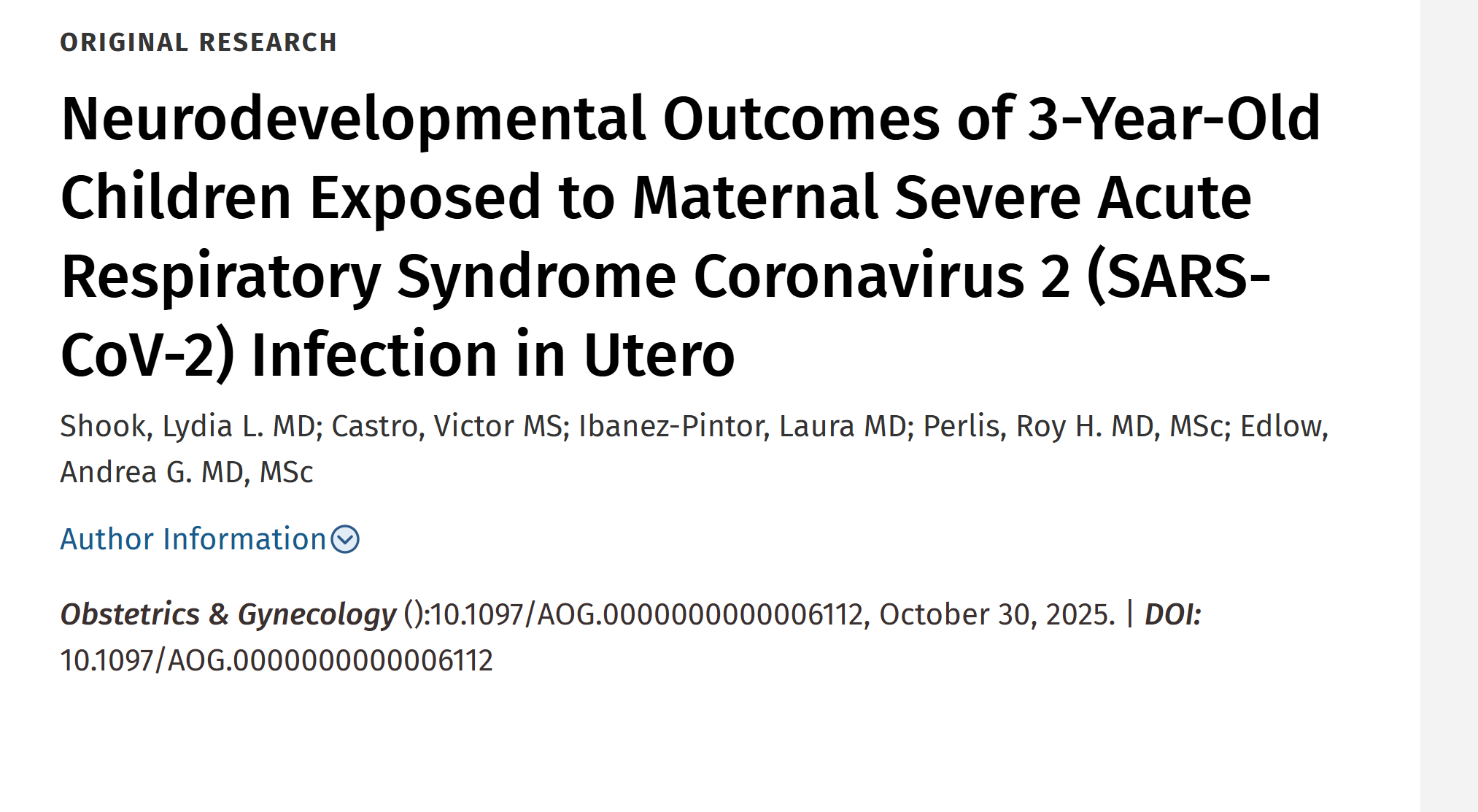
In a landscape still scarred by the COVID-19 pandemic, a recent study has reignited discussions about maternal health, child development, and the role of vaccines. Published in Obstetrics & Gynecology, the research examines over 18,000 births and suggests a connection between COVID-19 infection during pregnancy and increased odds of neurodevelopmental issues in children. But as the authors advocate for vaccination to prevent such infections, broader controversies swirl, including evolving federal recommendations and concerns that the vaccines themselves may pose even greater risks.
CLICK HERE for a copy of the study
The Study’s Core Findings: Infection’s Shadow on Early Childhood
The retrospective cohort study, led by researchers from Massachusetts General Hospital, analyzed electronic health records from births between March 2020 and May 2021. It compared 861 children exposed to maternal SARS-CoV-2 infection in utero with over 17,000 unexposed peers, tracking outcomes up to age three using diagnostic codes for conditions like speech delays, motor issues, and autism spectrum disorder.
Key results paint a concerning picture: 16.3% of exposed children received a neurodevelopmental diagnosis by age three, versus 9.7% in the unexposed group. After adjusting for variables like maternal age, race, insurance, and preterm birth, this equated to a 29% higher odds (adjusted odds ratio 1.29). The link was more pronounced for third-trimester infections (aOR 1.36) and male children (aOR 1.43), though not significant for females. Autism diagnoses specifically stood at 2.7% in exposed kids compared to 1.1% in others, still a low absolute risk, but noteworthy.
“These results support a biologically plausible link, potentially driven by maternal immune activation affecting fetal brain development.”
— Study authors Lydia Shook and Andrea Edlow
Mechanisms at Play: Inflammation’s Role in Fetal Harm
Experts hypothesize that COVID-19’s impact stems not from direct fetal infection but from maternal inflammation. Cytokine storms and immune responses could disrupt neurodevelopment, echoing risks seen with other infections like influenza or Zika. The study could not rule out confounders such as pre-existing maternal conditions, which might heighten both COVID severity and child outcomes.
Critics, including epidemiologist Brian Lee, argue that unmeasured health factors may inflate the association, calling for larger prospective studies to establish causation.
Authors’ Push for Prevention: Vaccination as a Shield?
The researchers emphasize preventing COVID-19 in pregnancy through measures like vaccination, noting the study’s pre-vaccine era context. They advocate monitoring exposed children for early interventions, which can improve outcomes for disorders like autism.
The Vaccine Controversy: From Mandates to “Shared Decision-Making”
While the study promotes vaccination, the landscape has shifted dramatically by 2025. The U.S. Department of Health and Human Services (HHS) and CDC have moved away from universal recommendations for COVID-19 vaccines in healthy pregnant women, opting for “individual-based decision-making” or shared clinical discussions.
This change, announced in mid-2025, removes the vaccine from routine schedules for low-risk groups, including healthy pregnant adults and children, amid declining uptake and questions about long-term efficacy.
The American College of Obstetricians and Gynecologists (ACOG) expressed disappointment, claiming that data show no negative effects on pregnancy outcomes and urging vaccination to protect against severe disease.
However, some states and critics, including figures like Robert F. Kennedy Jr., have amplified concerns, tying the policy shift to analyses showing risks in pregnancy and children. On social media platforms, debates rage, with users questioning whether vaccines, not infections, contribute to developmental issues.
“The COVID vaccine for healthy children and healthy pregnant women has been removed from the CDC recommended immunization schedule.”
— JAMA report on 2025 changes
Weighing Vaccine Risks: Could They Outweigh the Benefits?
Those in love with mRNA technology cite studies showing no elevated risks from mRNA vaccines in pregnancy, including no ties to birth defects, miscarriages, or developmental disorders. A JAMA Network Open analysis of first-trimester vaccination found no increase in major congenital malformations.
Yet, other research highlights adverse events: one review noted higher relative risks of fetal loss post-vaccination compared to flu shots (RR 177), with reports of miscarriages, stillbirths, and placental issues. Naomi Wolf’s analysis of Pfizer documents alleges concealed data on waning efficacy, lipid nanoparticle accumulation in ovaries, and high miscarriage rates in trials.
Other studies report mild side effects such as vaginal bleeding or contractions, and cases of myocarditis in offspring. In some countries, data suggested elevated stillbirths and newborn issues among vaccinated mothers, including reports of discolored breast milk potentially linked to contaminants.
“Pfizer’s internal documents admitted Moderna’s dose was too dangerous due to reactogenicity... yet millions received it without warning.”
— Naomi Wolf on alleged cover-ups
Balancing Act: Infection Risks vs. Vaccine Uncertainties
COVID-19 in pregnancy undeniably heightens maternal and fetal dangers, from preterm birth to severe illness. Yet, with vaccines no longer routinely endorsed by HHS for healthy pregnancies, expectant parents face tough choices. Some experts argue infection’s developmental toll, potentially worse than rare vaccine side effects, tips the scale toward vaccination, especially for high-risk individuals. Others, citing policy shifts and anecdotal harms, advocate caution, delaying conception post-vaccination or opting out entirely.
Moving Forward: Informed Choices in a Post-Pandemic World
This study underscores the pandemic’s lingering effects, urging vigilance in maternal health. While vaccination debates persist, the consensus remains: consult healthcare providers for personalized advice. As guidelines evolve and research accumulates, one thing is clear, protecting pregnancies from infection, whatever the method, is paramount. For those affected, early screening and support can make all the difference.
