COVID-19’s Lingering Shadow: Epigenetic Echoes in Future Generations
Originally published: 2025-10-31
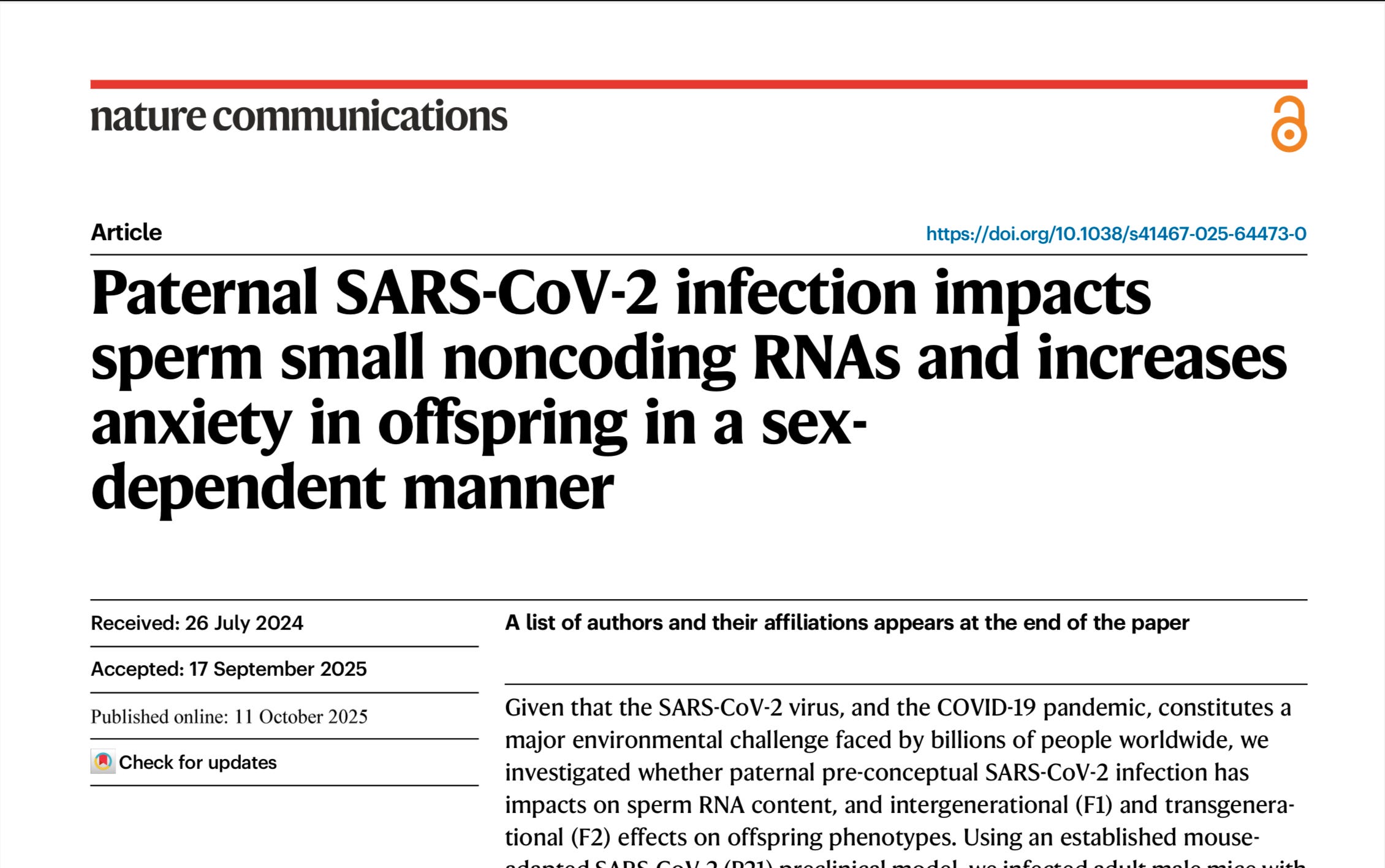
In the wake of a global pandemic that reshaped our world, we’re still uncovering its far-reaching consequences. A recent study from Australia’s Florey Institute has dropped a bombshell: COVID-19 doesn’t just affect those who catch it, it might rewrite the script for their children through changes in sperm. This isn’t science fiction; it’s cutting-edge research published in Nature Communications that challenges us to rethink the virus’s long-term impact.
The Study That Shook the Scientific Community
Published just weeks ago on October 28, 2025, the research by Kleeman et al. dives into the world of epigenetics, how environmental factors can influence gene expression without altering DNA itself. Using male mice infected with a SARS-CoV-2 strain, the team observed profound changes in sperm RNA molecules. These alterations weren’t benign; when the mice mated after recovery, their offspring exhibited heightened anxiety-like behaviors.
The experiment was meticulous: infected males recovered for four weeks before breeding, mimicking real-world scenarios where people conceive post-illness. Behavioral tests on the pups revealed avoidance patterns in open spaces and delayed exploration, classic signs of anxiety in rodents.
“Paternal SARS-CoV-2 infection alters offspring anxiety-like behaviour and hippocampal gene expression via sperm RNA changes.”
— Title of the study from Nature Communications, highlighting the direct link between infection and intergenerational effects.
Unpacking the Key Findings
Diving deeper, the changes centered on small noncoding RNAs (sncRNAs) in the sperm, which act like molecular messengers regulating gene activity. In infected fathers, certain piRNA clusters were downregulated, while others like microRNAs were upregulated. These shifts targeted genes involved in brain development, particularly in the hippocampus, the brain’s emotion control center.
Sex differences added another layer: female offspring showed more pronounced gene expression changes, with 20 genes affected compared to just two in males. Genes like Prl (prolactin) and Otx2, tied to stress and development, were key players. To confirm causality, researchers injected altered sperm RNA into embryos from uninfected parents, and the anxiety traits partially reappeared.
Transgenerational effects? The F2 generation (grandpups) had subtler issues like smaller litters but no clear behavioral shifts, suggesting the impact might fade after one generation. No major testicular damage or ongoing inflammation was found, pointing squarely at epigenetic transmission.
Human Implications: A Public Health Wake-Up Call
While this is a mouse study, the parallels to humans are chilling. Over 778 million global infections mean potentially millions of kids at risk for anxiety or neurological tweaks if the findings translate. Sperm quality dips post-COVID are already documented, with reduced motility and counts lingering for months. Experts urge delaying conception after infection and probing if vaccines blunt these effects.
But here’s the rub: this isn’t just about biology, it’s a societal reckoning. If human studies confirm this, we could see a spike in mental health issues among post-pandemic birth cohorts, straining already overburdened systems.
“If these findings translate to people, it could mean that millions of children born to fathers infected with COVID-19 may be at higher risk for anxiety or neurological changes.”
— Summary from the study’s implications, underscoring the scale of potential fallout.
From “Conspiracy Theorist” to Vindicated Visionary
Remember 2022-2023? As the world grappled with lockdowns and vaccines, anyone daring to speculate about COVID-19’s long-term effects beyond immediate symptoms was often dismissed as a tinfoil-hat wearer. Forums buzzed with warnings about fertility impacts, intergenerational risks, or hidden epigenetic bombs from the virus. Mainstream media and experts labeled them “conspiracy theorists,” lumping them with wilder claims about microchips or bioweapons.
Fast-forward to 2025, and this Florey Institute bombshell vindicates those early voices. They weren’t peddling fear; they were piecing together clues from emerging science on infections and epigenetics. Studies on other viruses, like Zika or influenza, had hinted at similar paternal transmissions, but COVID skeptics were shouted down. Now, with peer-reviewed evidence linking SARS-CoV-2 to sperm RNA changes and offspring anxiety, those “theorists” look like prophets. It’s a reminder: questioning official narratives isn’t always paranoia, sometimes it’s foresight.
This shift highlights a broader lesson in humility. Science evolves, and dismissing concerns outright can delay crucial research. Today, those once-mocked individuals can say, “Told you so,” as we confront the virus’s true legacy.
Looking Ahead: What We Must Do Next
This research isn’t doom and gloom, it’s a call to action. We need human cohort studies tracking kids of infected parents, exploring mitigation strategies like antivirals, and broadening public awareness. Delaying parenthood post-infection? It might become standard advice.
In the end, COVID-19 taught us resilience, but its epigenetic whispers remind us: pandemics don’t end when cases drop. They echo through generations. Let’s listen, learn, and prepare.
