Doctors Liable for COVID Jab Harms, Vindicating Truth-Tellers: European Court of Justice Drops a Bombshell
Originally published: 2025-04-20
The Case
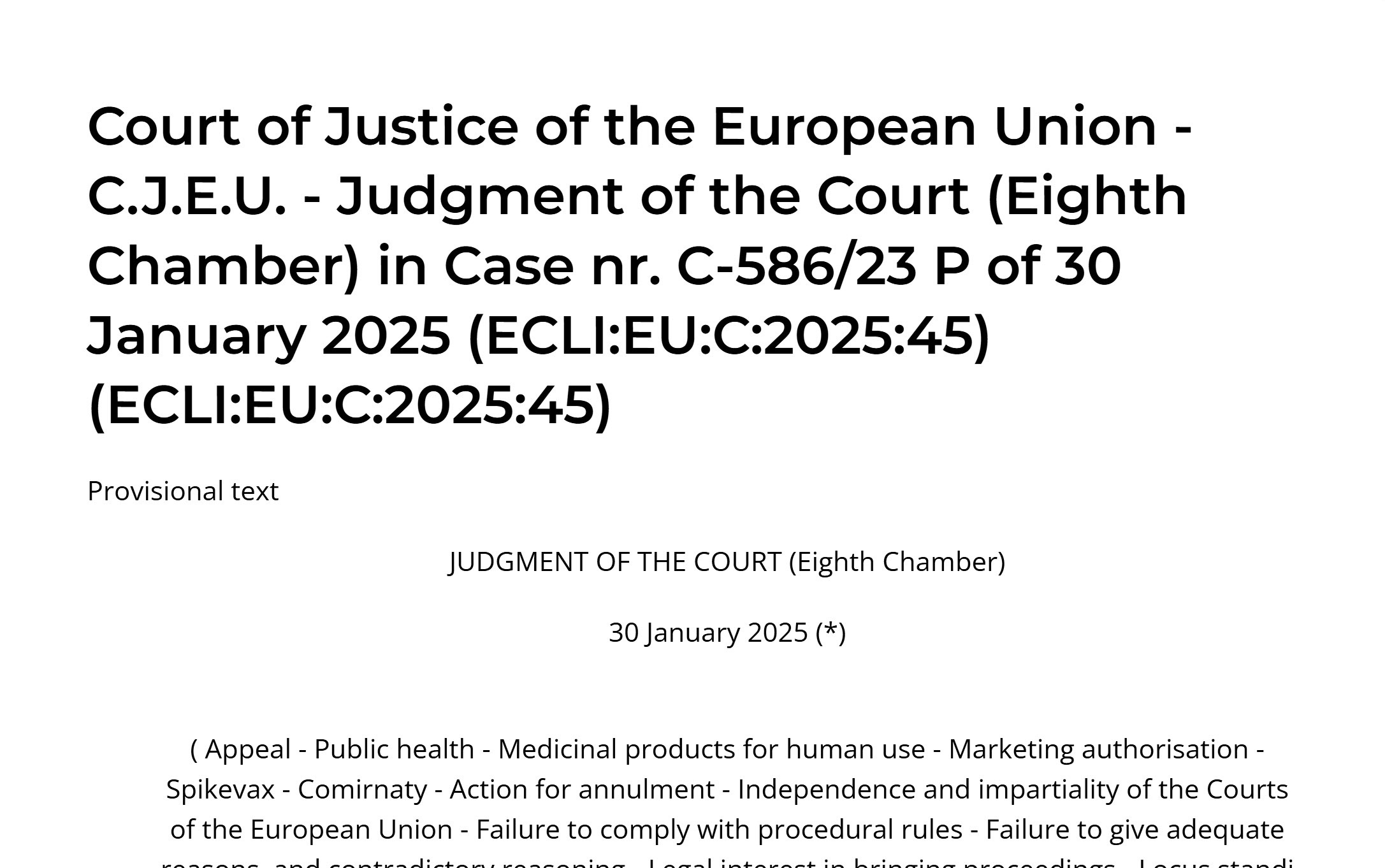
On January 30, 2025, the European Court of Justice (ECJ) delivered a groundbreaking ruling in Case C-586/23 P that has sent ripples through the medical and legal communities across the European Union. This decision, centered on the administration of COVID-19 vaccines like Spikevax (Moderna) and Comirnaty (Pfizer/BioNTech), clarifies that doctors retain full autonomy in prescribing and administering these vaccines—and with that autonomy comes potential liability for adverse outcomes. For victims of alleged medical malpractice and those labeled “conspiracy theorists” for questioning vaccine safety and mandates, this ruling is both a victory and a vindication. It challenges the narrative that vaccines were universally safe and shifts accountability back to individual medical professionals, empowering those harmed to seek justice.
“The ECJ has cracked open the door to accountability, affirming that doctors, not just regulators, bear responsibility for their actions during the COVID vaccine rollout.”
The ECJ Ruling: A Shift in Accountability
The ECJ’s ruling in Case C-586/23 P addressed critical questions about the legal framework surrounding COVID-19 vaccines. The court clarified that the European Commission’s marketing authorizations (MAs) for vaccines did not mandate their use by doctors. Instead, medical professionals had the freedom—and responsibility—to assess each patient’s needs before prescribing or administering vaccines. Crucially, the court confirmed that a medical prescription was required for vaccine administration, a requirement often overlooked during the chaotic vaccine rollout.
This decision dismantles the notion that doctors were merely following orders from health authorities or the European Medicines Agency (EMA). By emphasizing doctors’ autonomy, the ECJ has opened the door to potential civil and criminal liability for medical professionals who failed to exercise due diligence, particularly in cases where vaccines were administered without proper patient assessment or informed consent.
A Victory for Victims of Malpractice
For individuals who suffered adverse effects from COVID-19 vaccines, the ECJ ruling is a beacon of hope. Many patients claim they were pressured into vaccination without adequate disclosure of risks or consideration of their medical history. The court’s affirmation that doctors are not shielded by EU marketing authorizations empowers these victims to pursue legal action against medical professionals who may have acted negligently.
“Victims now have a clearer path to justice, as the ECJ ruling underscores that doctors cannot hide behind blanket authorizations when harm occurs.”
The ruling also highlights the legal significance of the prescription requirement. Reports suggest that many vaccine doses were administered without individualized prescriptions, potentially rendering those acts “contra legem” (against the law). This opens the possibility of lawsuits in national courts, where victims can argue that improper administration contributed to their injuries. In countries like Italy, where protections for doctors exist under laws like Law 76/21, plaintiffs may still succeed by proving gross negligence—a threshold now more attainable thanks to the ECJ’s clarification.
Vindication for the “Conspiracy Theorists”
Throughout the COVID-19 pandemic, those who questioned the safety, efficacy, or rapid deployment of vaccines were often dismissed as “conspiracy theorists.” Critics raised concerns about rushed clinical trials, undisclosed side effects, and coercive vaccination policies. The ECJ ruling validates many of these concerns by implicitly acknowledging that the vaccine rollout was not infallible and that medical professionals bore a duty to scrutinize their actions.
The court’s emphasis on doctors’ autonomy undermines the narrative that vaccines were universally safe or that questioning them was irrational. By holding doctors accountable for their decisions, the ECJ indirectly supports the skeptics who argued that blind trust in institutions like the EMA or pharmaceutical companies was unwarranted. Posts on platforms like X have celebrated the ruling as a turning point, with users noting that it “proves we weren’t crazy to demand accountability.”
“Labeled as fringe, the so-called conspiracy theorists are now seeing their warnings about unchecked medical interventions gain legal traction.”
Implications for the Future
The ECJ’s decision is likely to reshape the legal landscape for vaccine-related litigation in Europe. National courts will now play a pivotal role in determining whether doctors’ actions met the standard of care required. This could lead to a wave of lawsuits, particularly in cases involving severe adverse effects like myocarditis, thrombosis, or neurological disorders linked to COVID-19 vaccines.
Moreover, the ruling challenges the top-down approach to public health that characterized the pandemic. It sends a message to medical professionals and regulators alike: individual responsibility cannot be outsourced to blanket policies or authorizations. For those who felt silenced or coerced during the vaccine rollout, this is a powerful affirmation of their right to question and seek redress.
A Call for Continued Vigilance
While the ECJ ruling is a significant step forward, it is not a panacea. Victims of malpractice will still face challenges in proving negligence or causation in court, particularly given the complexity of vaccine-related injuries. Similarly, skeptics must remain cautious, as the ruling does not dismantle the broader public health framework that supported vaccine mandates. Misinterpretations of the decision, such as claims that it opens doctors to charges of “attempted murder,” risk undermining its true significance and should be avoided.
“This ruling is not the end but the beginning of a broader reckoning for how we balance medical autonomy, patient rights, and public health.”
Conclusion: A New Era of Accountability
The ECJ’s ruling in Case C-586/23 P marks a pivotal moment for those harmed by COVID-19 vaccines and for those who dared to question the prevailing narrative. By affirming doctors’ autonomy and potential liability, the court has empowered victims to seek justice and validated the concerns of skeptics who were once marginalized. As national courts begin to apply this ruling, the focus will shift to individual accountability, ensuring that the lessons of the pandemic are not forgotten. For victims and truth-seekers alike, this decision is a hard-won victory—one that demands continued vigilance to ensure justice prevails.
