Exploring Cellular Memory Beyond the Nervous System
Originally published: 2025-01-26
Introduction
Recent groundbreaking research challenges the age-old belief that memory resides solely in the brain. This study, led by Nikolay Kukushkin, demonstrates that non-neural cells, such as those in the kidney and nerve tissues, also have the capacity to learn and form memories. This discovery has profound implications for our understanding of memory, learning, and the human body's interconnectedness. For chiropractic, which rests on the principles of innate and universal intelligence and vitalism, this research provides an intriguing opportunity to reexamine how these philosophies may be reflected on a cellular level.
Cellular Memory: A Fundamental Property of Life
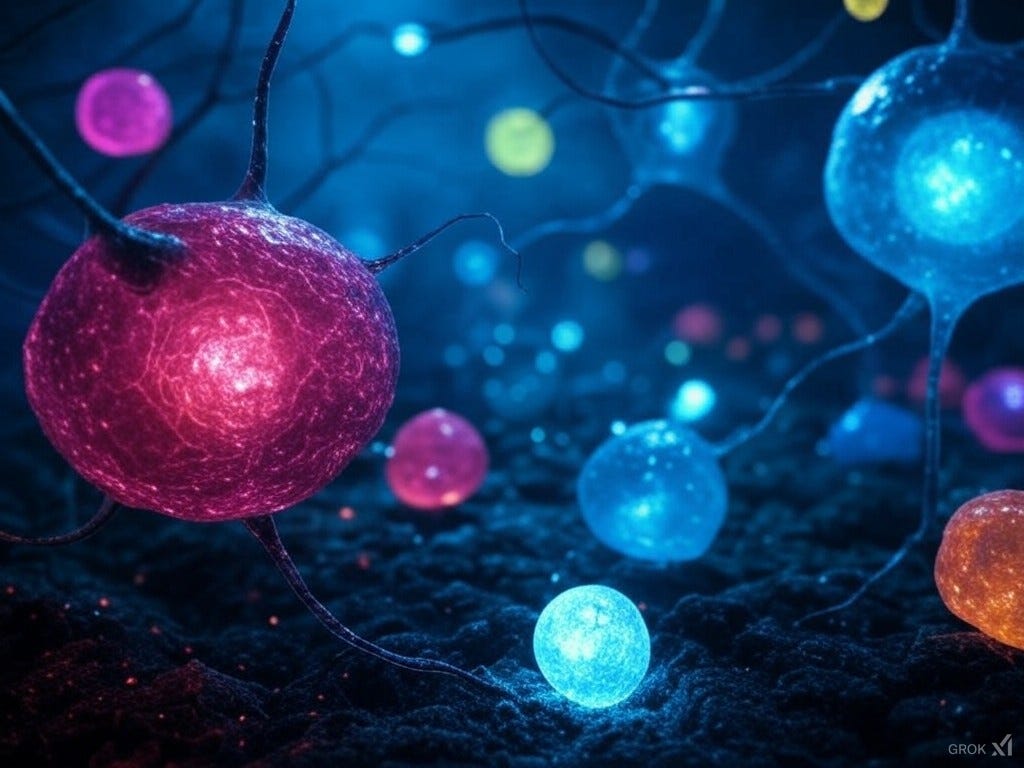
The study used human kidney (HEK293) and nerve tissue cells that were engineered to produce a glowing protein when a "memory gene" was activated. This is the same gene that neurons use during learning. Researchers found that when these cells were exposed to four spaced pulses of chemicals, the memory gene activation was stronger and longer-lasting compared to a single, continuous stimulus. This phenomenon, known as the "massed-spaced effect," suggests that spaced repetition leads to more effective and durable learning—similar to how memory functions in the brain.
Interestingly, this discovery was not limited to neurons. The same effects were observed in other cells, which suggests that the ability to learn and remember may be a fundamental property of all living cells. Kukushkin's previous research on sea slugs demonstrated that spaced electric shocks could improve their response, showing that even simple organisms can learn better when stimuli are repeated at optimal intervals. This new research extends the concept of cellular learning to humans, hinting that every cell in our body may possess its own form of "memory."
Chiropractic Perspectives: Innate Intelligence and Vitalism
Chiropractic philosophy has long embraced the concept of innate intelligence—the idea that the body possesses an intrinsic capacity to self-regulate and heal itself. This innate intelligence “flows” through the nervous system, orchestrating the body’s functions. However, this new research takes this concept a step further by suggesting that all cells—not just those directly connected to the nervous system—may have their own form of intelligence or memory.
The idea of cellular memory aligns well with the principle of vitalism in chiropractic, which posits that life is more than the sum of its biochemical processes. If cells throughout the body possess memory and can learn from past experiences, it supports the notion of an organizing, intelligent force inherent within the body. Every cell could potentially contribute to the overall health and adaptation of the organism, reflecting the interconnectedness emphasized in chiropractic care.
Implications for Chiropractic Practice
For chiropractors, this research opens up fascinating new avenues for considering how chiropractic adjustments might influence not only the nervous system but also the body's broader cellular intelligence. The adjustments chiropractors make are intended to remove obstructions to the body's innate intelligence, restoring the ability to heal and function optimally. If all cells are capable of storing memories, it raises questions about how chronic subluxations or other bodily stresses might create negative cellular memories that impact overall health.
Moreover, the concept of non-neural memory could provide insight into why patients sometimes experience significant health changes after chiropractic care. Perhaps adjustments are not merely restoring proper nerve function but also affecting cellular memories stored in organs or tissues. This aligns with the idea that chiropractic care doesn’t just alleviate physical pain but supports a more profound, systemic healing process, impacting everything from emotional well-being to immune response.
Beyond the Brain: The Power of Cellular Memory
Kukushkin’s research challenges us to rethink how we perceive the body’s ability to adapt and remember. If cells in the digestive system, the skin, or even cancer cells can learn from past experiences, it suggests a deeper level of bodily intelligence. For instance, the pancreas might “remember” eating patterns, which could influence metabolic health, or cancer cells might retain “memories” of chemotherapy that impact treatment effectiveness.
Chiropractors have always emphasized the importance of treating the body as an interconnected whole, guided by innate intelligence. This research underscores that perspective, suggesting that memory and learning are distributed properties of life itself, present throughout the body. It challenges the reductionist approach that limits memory to the brain and instead invites us to view every cell as an active participant in the process of health, adaptation, and learning.
Closing Thots
The concept of cellular memory provides a powerful validation of chiropractic principles, particularly those that emphasize the body's intrinsic capacity for healing and self-regulation. If memory is a fundamental property of all cells, then the innate intelligence that chiropractors speak of may be an even more profound, unifying force than previously thought. This research encourages both practitioners and patients to see the human body not as a collection of isolated systems but as an integrated network of intelligent, learning cells, each contributing to the whole.
As chiropractic continues to evolve, it is worth exploring how these findings might influence future approaches to care. Could chiropractic adjustments influence cellular memories beyond the nervous system? Could enhancing cellular communication and memory be part of the healing process? These are exciting questions that invite further exploration, reinforcing the vitalistic view that life is an expression of a deeper intelligence present within every cell of our being.
