Foundation for Vertebral Subluxation Advances Research Mission at 2025 Adaptability Symposium
Originally published: 2025-05-14
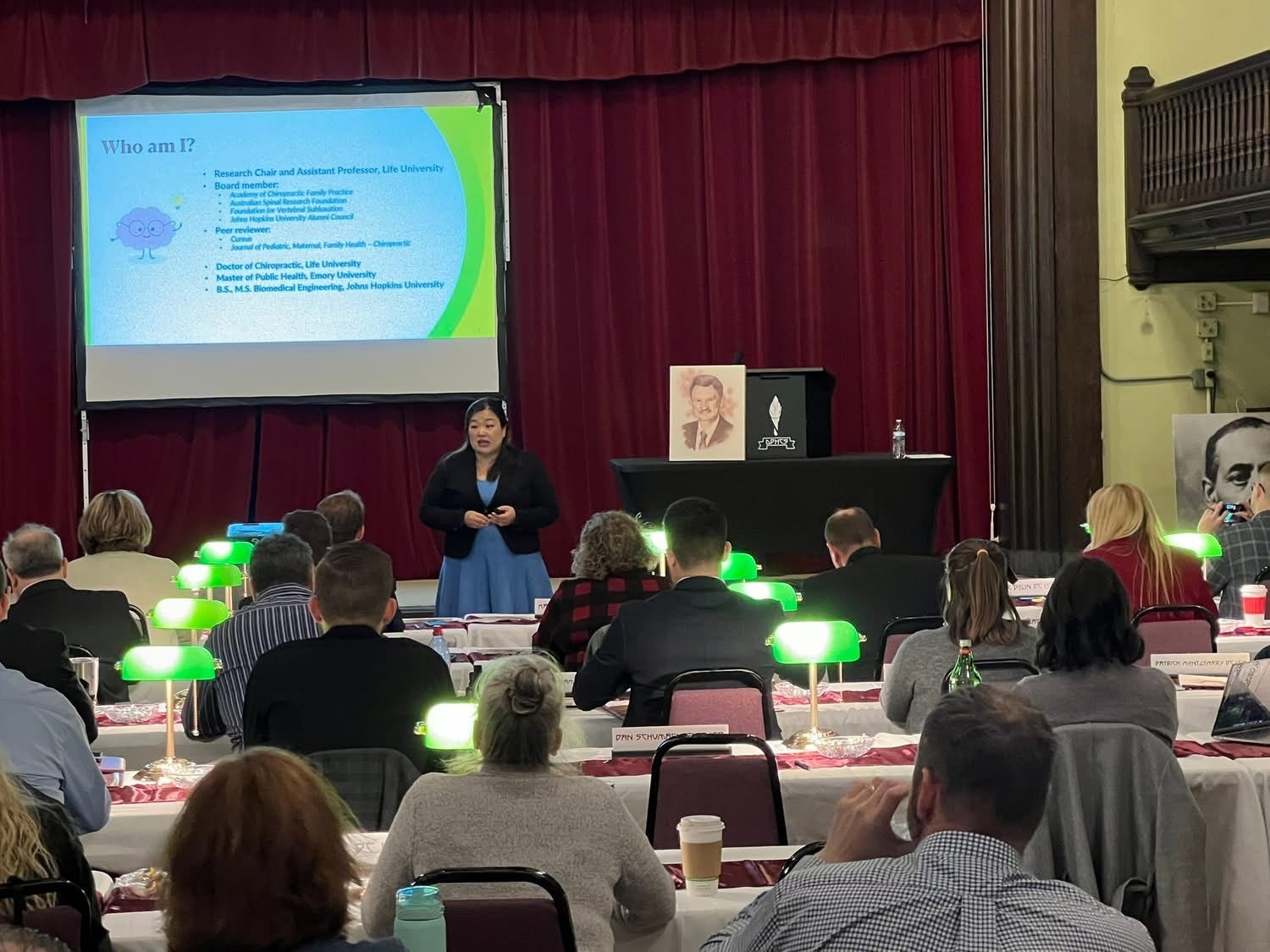
The Foundation for Vertebral Subluxation (FVS) continued its mission of advancing subluxation-centered research and education at the 2025 Adaptability Symposium in Davenport, Iowa. Representing the Foundation, Board Member Christie Kwon, DC, MS, MPH delivered a dynamic and wide-ranging 2.5-hour lecture to attendees, bridging chiropractic philosophy with cutting-edge scientific investigation.
FVS at the Forefront: Building the Future of Subluxation Science
Kwon’s presentation served as a bold affirmation of the Foundation’s leadership in redefining research through a lens consistent with chiropractic’s core tenets.
The Foundation’s mission is clear: rigorous science rooted in chiropractic principles.
Her talk underscored the unique role that FVS plays in fostering a new generation of researchers trained to ask the right questions—and use the right language—when studying vertebral subluxation and its relevance to health.
Protecting the Lexicon: Why Language Matters in Research and Identity
A central theme of the presentation was the defense of a subluxation-centered lexicon in chiropractic research and publication. Dr. Kwon stressed that language is not a peripheral concern, but foundational to professional identity.
Language is not a technicality—it’s the foundation of how we think, research, and teach
She urged attendees to recognize that terms like vertebral subluxation carry conceptual weight and clinical implications, and abandoning them for generic or reductionist terminology weakens the profession’s position in both the scientific and public arenas.
Community-Based Research: A Chiropractic Public Health Imperative
Kwon also made a compelling case for participatory, community-based research that involves both providers and patients in defining what health outcomes matter.
The future of chiropractic research lies in community, collaboration, and clarity.
True chiropractic science must include both objective measures, such as physiological biomarkers, and subjective indicators like improvements in quality of life, adaptability, and well-being as reported by patients.
Operationalizing Vertebral Subluxation for Scientific Progress
One of the highlights of the lecture was Dr. Kwon’s discussion of her 2023 publication, Secondary Analysis of a Dataset to Estimate the Prevalence of Vertebral Subluxation and Its Implications for Health Promotion and Prevention. Conducted during her tenure as an FVS Research Fellow while earning her MPH at Emory University, the study tackled a major gap in chiropractic science: the lack of data on the prevalence of vertebral subluxation.
We must define vertebral subluxation scientifically—or risk letting others define it for us.
Dr. Kwon also explained that clear definitions are not academic exercises—they are prerequisites for funding, policy inclusion, and meaningful scientific outcomes that reflect chiropractic’s unique contribution to public health.
HRV and ANS Biomarkers in Ongoing CCR Projects
In her role as Research Chair at Life University’s College of Chiropractic, Dr. Kwon also shared insights from current projects within the Brain-Body Team at the Center for Chiropractic Research (CCR). These studies utilize advanced technology from MindWare Technologies to measure autonomic nervous system (ANS) biomarkers, with a particular focus on heart rate variability (HRV).
Health is more than numbers. It’s how people live, function, and adapt.
HRV is emerging as a key indicator of the body's ability to respond and adapt to stress, aligning closely with chiropractic’s foundational focus on adaptability and nervous system integrity.
From Harvard to the Future: fMRI and the Brain-Body Connection
The lecture concluded with a look toward future research initiatives combining HRV data with functional MRI (fMRI) to assess changes in brain connectivity resulting from chiropractic care. Sponsored by FVS in 2018 to complete an fMRI fellowship at Harvard University’s Martinos Center for Biomedical Imaging, Dr. Kwon is now uniquely positioned to conduct pioneering studies in this area.
By linking heart rate variability with brain imaging, we can illuminate how chiropractic care transforms the nervous system.
These upcoming projects aim to visualize how chiropractic interventions influence central and peripheral nervous system function, offering powerful scientific validation of chiropractic’s neurologic impact.
The Adaptability Symposium, hosted annually since 2014 by The Center for Chiropractic Progress in partnership with the DPhCS program under the leadership of Dr. Rob Sinnott, remains one of the few venues where chiropractic philosophy and science are fully integrated. Dr. Kwon’s lecture not only reinforced the Foundation’s research vision, but also spotlighted the deepening scientific rigor behind the subluxation-centered model that FVS continues to champion.
