Guarding the Sacred Trust: Why Jack Bourla’s Warning Should Shake Every Chiropractor Awake
Originally published: 2025-11-15
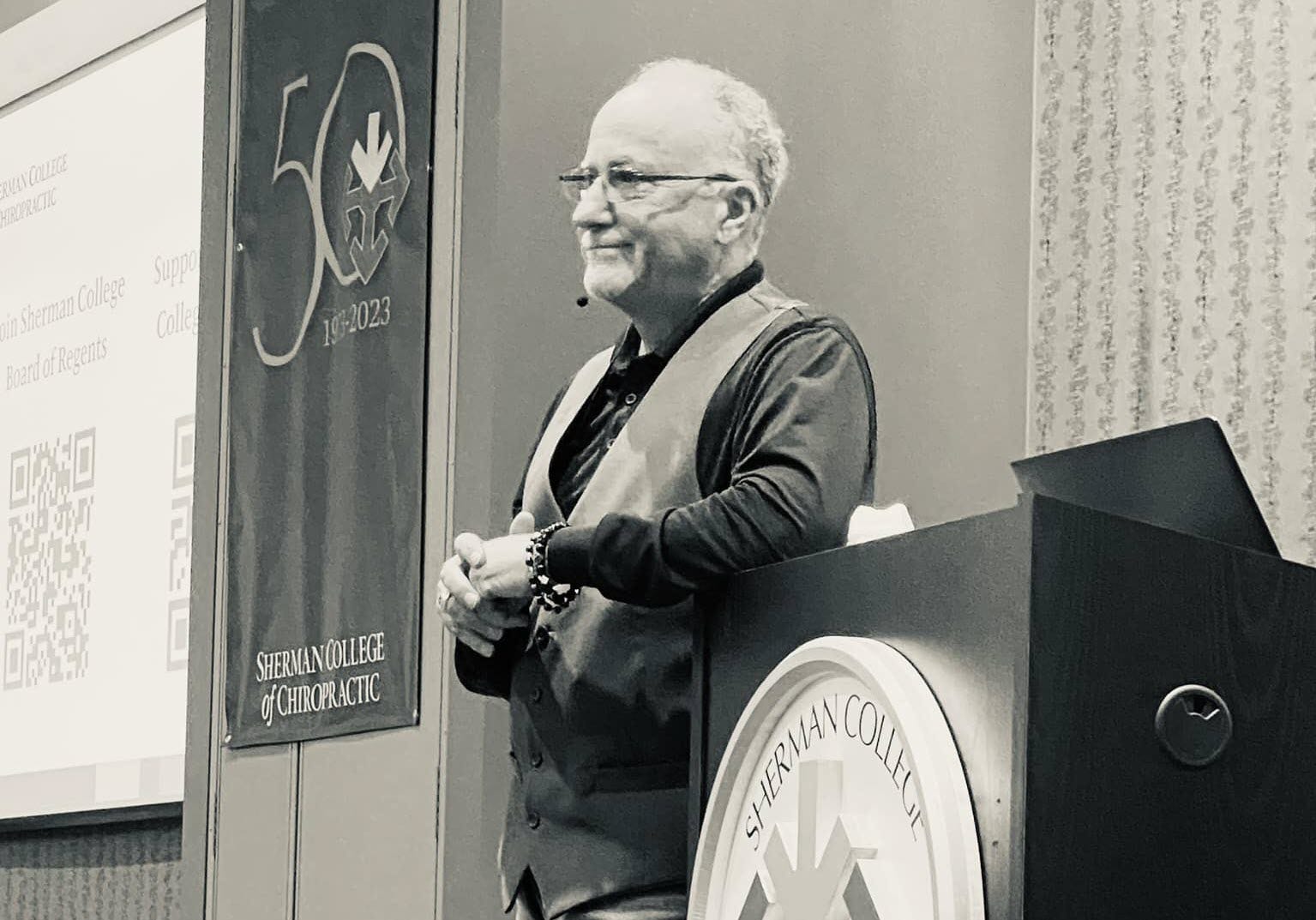
A President Sounds the Alarm
When the sitting president of Sherman College of Chiropractic steps into the public square and essentially says, “Chiropractic is losing its soul,” every chiropractor ought to pause.
In a recent social media post addressed “Dear chiropractors,” Jack Bourla, DC did not mince words. He called out the growing divide between what we say we want as a profession and what we actually do. He warned that chiropractic is drifting away from its roots, that powerful forces are reshaping it into something “nearly unrecognizable from its origins,” and that traditional chiropractic is “losing ground at a rapid rate.”
This is not just another social media rant. Coming from the president of a subluxation centered chiropractic college, it is a line in the sand.
“Chiropractic is losing its identity. It happened slowly yet subtly at first and now it is happening quickly and openly.”
Jack Bourla, DC
Unity Without Surrender
Bourla begins with a simple but devastating observation:
“We find ourselves desiring unity yet our actions say ‘division.’”
For years, unity has been used as a weapon in chiropractic. Unity has too often meant, “get in line behind the medicalization of chiropractic” or “stop talking about vertebral subluxation because it makes the profession look bad.” The message has been clear: if you insist on chiropractic as the analysis and correction of vertebral subluxation for the fullest expression of life, you are the problem, not the solution.
Bourla flips that narrative on its head. He reminds chiropractors that we already have a well defined profession, established by our foreparents. Some, he notes, have decided they “know better” and are actively trying to change the profession into the very thing DD and BJ warned us about.
Unity, in this context, cannot mean surrender. It must mean alignment around chiropractic’s reason for being.
“Use critical thinking and do not be intimidated by group think.”
The Identity Crisis Inside Chiropractic
Bourla’s central thesis is blunt: chiropractic is losing its identity.
He describes a process that started “slowly yet subtly” and has now accelerated into the open. What once was a simple, beautiful, vitalistic science, art, and philosophy centered on things natural is being morphed into a procedure based, symptom focused, third party driven musculoskeletal service line. The language is changing. The curricula are changing. The exams and accreditation standards are changing. And when those shift, the profession follows.
“We are allowing well funded and unified organizations to take over the profession.”
That one sentence condenses what many chiropractors feel but struggle to articulate. Networks of organizations, boards, testing bodies, accrediting agencies, and trade associations have become so intertwined that they now function as a de facto cartel, defining what counts as chiropractic and who gets to practice it.
Bourla calls out another uncomfortable trend. Some chiropractors have “lost our ability to think critically” or are becoming so apathetic that they “scoff at the admonishment” we were given by DD and BJ. That is not just a philosophical loss, it is a practical one. A profession that stops asking, “Does this make sense?” becomes easy to control.
“Some of us seem to have lost our ability to think critically and are becoming so apathetic that we no longer care.”
The Battle Over Vertebral Subluxation
The most pointed part of Bourla’s post is his warning about organizations that seek to erase chiropractic’s central focus:
“I am disturbed by some recent appointment(s) of people to organizations that seek to remove chiropractic’s reason for being, the location, analysis, and assisting the body to adjust vertebral subluxations which are a detriment to living life optimally.”
This is the core of the current struggle.
If chiropractic is not fundamentally about vertebral subluxation and its impact on the expression of life, then anything goes. The profession can be reshaped into pain management, rehab, primary care, injection based practice, or whatever the dominant institutions and payers find most convenient or profitable.
Bourla is reminding the profession that vertebral subluxation is not a side issue, it is the center. Take it away and chiropractic becomes a label, not a distinct discipline.
“Traditional chiropractic is losing ground at a rapid rate. Some of us are staying strong.”
Those staying strong are the ones insisting that chiropractic remains what it has always been: the analysis and correction of vertebral subluxation to restore and enhance the body’s ability to organize, adapt, and heal.
Dynamic Essentials, IFCO, and a Different Future
Bourla does not just lament. He points to signs of hope.
He notes that he is “encouraged by the recent news that many of the leaders of Dynamic Essential have joined the IFCO.” That matters. Dynamic Essentials has, for decades, nurtured a deep well of chiropractic philosophy, practice, and community. IFCO has positioned itself as one of the few international organizations explicitly committed to keeping chiropractic anchored in vertebral subluxation and the sacred trust.
In other words, there is a counter movement that refuses to be absorbed into the cartel like structures that have captured so much of the profession.
“If you are looking to get involved in keeping chiropractic pure, look at the IFCO and the Chiropractic Freedom Coalition.”
By naming not only IFCO but also the Chiropractic Freedom Coalition, Bourla is signaling something else: this is not just about personal practice style, it is about policy, regulation, accreditation, and law. It is about organizing to resist the ongoing attempts to redefine chiropractic from the top down.
The Sacred Trust Is Not a Slogan
Bourla’s closing lines echo BJ’s famous charge:
“We have been given a sacred trust and we have been asked to guard it well. Let’s do so.”
In some circles, “sacred trust” has been reduced to a nostalgic slogan, something printed on posters or recited at events. Bourla treats it as a real obligation in real time. If chiropractic is being systematically reshaped, then guarding the sacred trust is not sentimental, it is strategic and urgent.
Guarding that trust means:
• Refusing to surrender the vertebral subluxation to politics, appeasement, or academic fashion
• Challenging the well funded and unified organizations that seek to erase chiropractic’s identity
• Supporting institutions, associations, and coalitions that actually defend the profession’s core purpose
• Modeling in practice and in public what a vertebral subluxation centered chiropractor looks like in the twenty first century
“Chiropractic depends on us to keep it pure.”
Where Do We Go From Here?
Bourla’s post is, in many ways, a litmus test.
If a chiropractor reads it and feels attacked, chances are they have already made peace with or actively support the transformation he is describing. If they read it and feel relief, recognition, and a little righteous anger, they are the ones he is calling to action.
The questions that follow his post are simple:
• Will we continue to follow the crowd or finally stop and ask, “Does this make sense?”
• Will we sit quietly while chiropractic is made nearly unrecognizable from its origins?
• Or will we align with those who are organizing to resist, to rebuild, and to restore?
Bourla has done his part by using his platform as president of Sherman College to say what many in the trenches feel. The rest is on us.
The sacred trust has always depended on individual chiropractors choosing to stand, to think critically, and to refuse to let others redefine their life’s work.
