“In the Room,” On the Menu: What Jason Jaeger’s FCA Interview Reveals About a Failed Strategy
Originally published: 2025-09-15
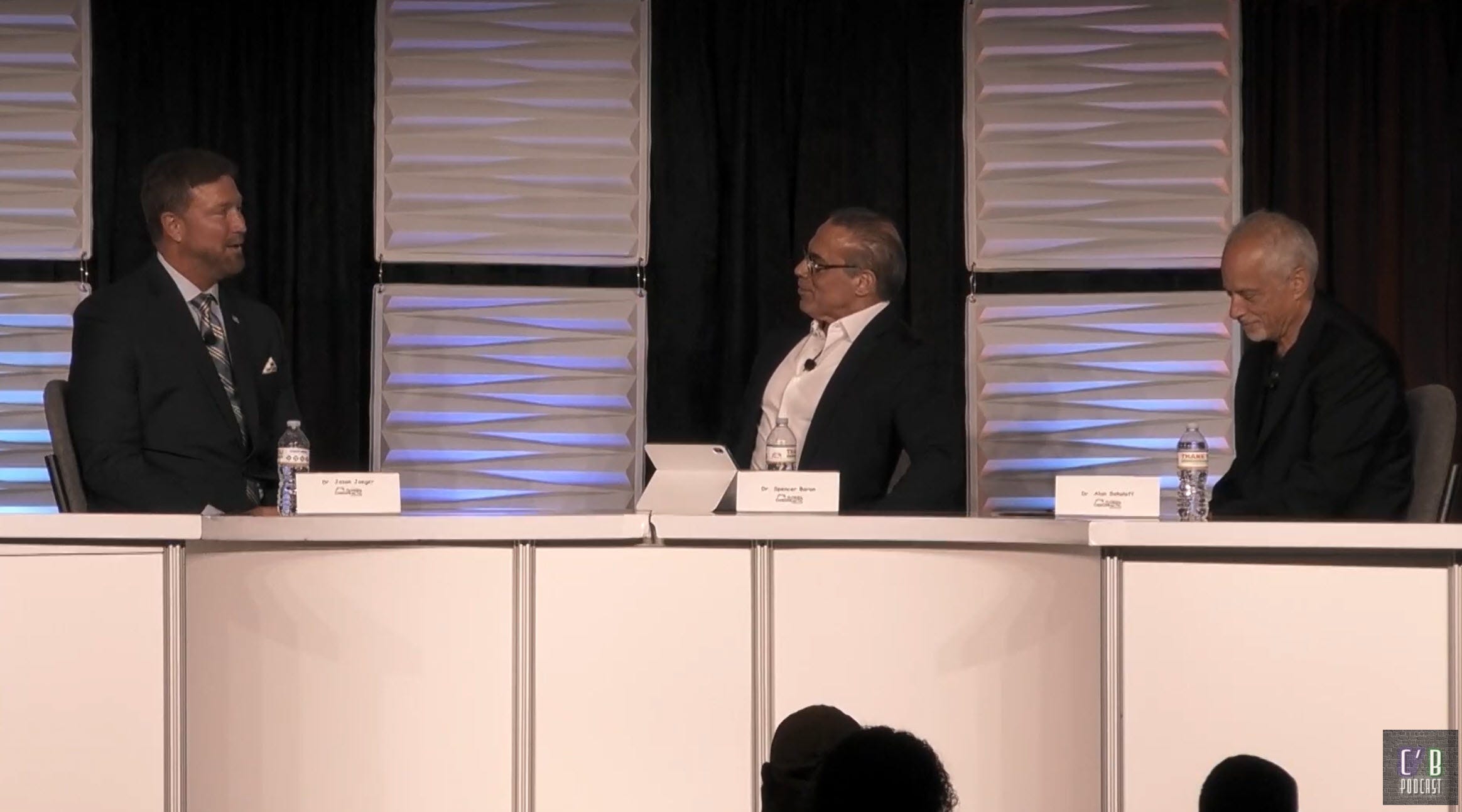
The set-up
At the August 2025 Florida Chiropractic Association convention, Dr. Jason Jaeger sat for a live interview that played like a greatest-hits reel of the profession’s old playbook. The message was polished, the delivery confident, and the themes familiar: expand Medicare coverage, chase parity, speak with one voice, and get in the room. What was missing was any meaningful acknowledgment of the restraint-of-trade dynamics that have shaped chiropractic for decades, the monopolies and conflicts that define the Cartel, and the exam and accreditation machinery that keeps it all in place.
“If we get covered for more than the spinal adjustment… exams… 97 codes… what the carrot is is that you can’t opt out.”
Medicare-first, culture-last
Jaeger’s central proposal is to expand Medicare coverage of chiropractic services and let the change “trickle down” to commercial insurers and state plans, even projecting a massive revenue windfall that he says will purchase cultural authority. The problem is threefold. First, it trades autonomy for access because the explicit “carrot” is the inability to opt out once broader coverage is accepted, which is a centralizing lever rather than a liberation strategy.
Second, it reprises the Mercedes 80s fantasy that higher reimbursement solves structural problems, when history shows easy money entrenched gatekeepers, fed coding mills, and distracted the profession from building independent standards and science. Third, it ignores who gets to define compliance, since expanding federal coverage hands even more power to the same organizations that write the rules, run the exams, influence accreditation, and sit on state boards. If the Cartel decides what “parity” looks like, parity becomes a leash.
“What changes with $140 billion… cultural authority.”
“One voice” unity, for whom
Jaeger calls for the ACA and ICA to present a single public voice and blames slow progress on a “vocal, nauseous, loud minority on the left and the right,” without defining who those people are or what they stand for. This is framing rather than argument. Unity can be virtuous, but only if it is unity around transparent, competitive, and non-coercive structures. Otherwise, it becomes silence with better branding and consolidates authority in the very hands critics identify as the problem.
“We have two associations… could we come together for the betterment of chiropractic?”
“Seat at the table” versus being on the menu
Jaeger invokes the World Federation of Chiropractic and the well-worn Gerry Clum line about needing a :seat at the table”. The fuller doctrine, as Clum advanced it for years, is that we must have a seat at the table so we are not on the menu and that we should change them from within through compromise.
The record is in, that model failed.
While insiders negotiated incrementalism, the Cartel consolidated exams, accreditation leverage, and regulatory relationships. The table did not change, the table captured the room.
“If you don’t have a seat at the table, you’re what’s for dinner.”
The silence that speaks
Given Jaeger’s roles, the omissions matter more than the slogans. In the interview he avoids NBCE Part IV and its centralization scheme, CCE Policy 56 and the pass-rate tether that drives school behavior, FCLB and the exam-regulator revolving door, EBAS and opaque governance, and any discussion of accreditation alternatives or the authority of states to recognize them.
Instead, we get a reimbursement sermon. That is not an accident; it is a narrative that keeps attention off the machinery that decides who gets licensed, who gets accredited, and who gets silenced.
The conflict triangle, hiding in plain sight
The contradictions are glaring. Jaeger is a regulator as a member of the Nevada Board of Chiropractic Physicians, an exam gatekeeper as a director of the NBCE, and a political actor as a director of the ICA during its public fight over WFC alignment. That triangle, board, exam, and association, is precisely how control replicates. State boards lean on NBCE and CCE, FCLB coordinates the states, associations bless the arrangement, and dissenters are labeled the “loud minority.” If the people urging everyone to “be in the room” also control the rooms, your voice is a prop, not a lever.
FCA, the Summit, and controlled conversations
The venue matters. This was the FCA convention, a hub for the secretive Chiropractic Summit Group, an invite-only coordination meeting for the same organizations critics identify as the Cartel. Jaeger was in that room. Why is he supporting secret meetings as an NBCE Director, state board member and ICA Board member?
Jaeger also attended the recent meeting of the International Chiropractic Education Alliance, a WFC-spawned effort to steer global chiropractic education norms. In that context, unity looks less like a bridge and more like alignment with the enforcement arm.
Who exactly is that “loud minority”
When a leader derides unnamed colleagues as a “vocal, nauseous, loud minority” and claims “most DCs are aligned,” the likely target is anyone challenging exam centralization, accreditation monopolies, and state-level deference to private organizations. If those are the people being sidelined, the minority is doing the majority of the reform work.
What he did not debate, and why it matters
The interview sidestepped the central fights of our time: why concentrate Part IV, raise costs, and shrink access if the goal is cultural authority; why keep Policy 56’s pass-rate tether that forces schools to game student progression and graduation; why allow a global NGO to set domestic education tone and policy language; why keep governance opaque at affiliated for-profit entities; and why not champion states’ explicit power to recognize equivalent accreditors and to uncouple licensure from a single private exam vendor. Silence on these questions is not neutrality, it is consent.
The real work, not the easy lines
If chiropractic is going to reclaim independence and credibility, the agenda is not “more CPT codes.” A serious platform ends exam monopolies by allowing multiple psychometrically validated clinical competency pathways, publishes item-bank governance rules, and bans writing private vendors into law or rule. It fixes accreditation capture by replacing pass-rate tethers with audited, program-based clinical competency outcomes and by permitting recognition of equivalent accreditors through transparent state standards. It de-entangles regulators by enforcing conflicts-of-interest rules that bar simultaneous service on state boards and on exam or accreditation bodies, with published recusals and affiliations. It opens the books by mandating financial and governance transparency for NBCE, CCE, FCLB, and affiliated entities, including for-profit subsidiaries. It protects competition by using state and federal antitrust tools to stop coercive tying, exclusive dealing, and group boycotts dressed up as “unity.” And it empowers practitioners and students by guaranteeing due process in progression and graduation decisions, prohibiting forced external exams as graduation conditions, and creating complaint hotlines outside Cartel channels.
“Being in the room only matters if the room is not locked by the exam vendor, the accreditor, and their friends on your state board.”
Bottom line
Jaeger is an articulate advocate for a Medicare-first, unity-now path that has already been tried. It did not change the table from within; it cemented it. The interview’s most striking feature is not what he said, but what he refused to touch. Until leaders confront exam centralization, accreditation control, and the revolving door openly and specifically, calls for cultural authority are cover stories, not solutions.
Look for a follow-up article about Jaeger’s derogatory comments on the “vocal, nauseous, loud minority”.
