JAMA Cries as Big Pharma’s Grip on Vaccine Policy Slips with ACIP Overhaul
Originally published: 2025-06-17
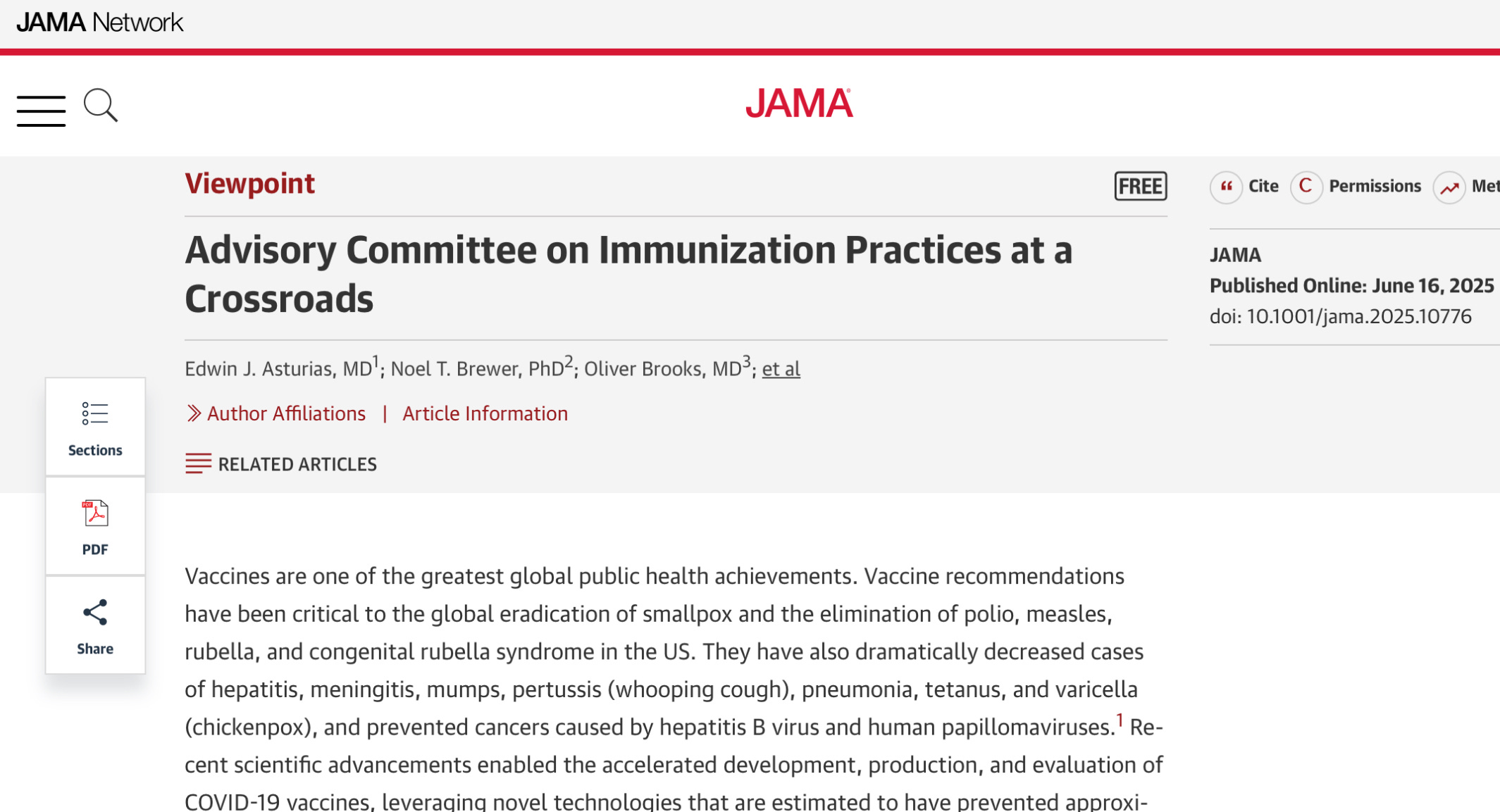
On June 16, 2025, the Journal of the American Medical Association (JAMA) published a scathing critique of Health and Human Services (HHS) Secretary Robert F. Kennedy Jr.’s recent overhaul of the CDC’s Advisory Committee on Immunization Practices (ACIP), which saw the dismissal of 17 members and the appointment of eight new ones. JAMA’s article, dripping with indignation, reveals the medical-pharmaceutical establishment’s panic as its decades-long control over vaccine policy—policies that critics argue have harmed countless children—begins to crumble. Kennedy’s bold restructuring, announced on June 11, 2025, is a historic reckoning for an industry accused of prioritizing profits over safety, and JAMA’s outcry only underscores how deeply the status quo fears transparency and accountability.
JAMA’s attack on the new ACIP betrays their fear: the era of unchecked pharmaceutical influence is ending.
Meatthew McCoy DC, MPH
JAMA’s Outburst: A Defense of the Old Guard
JAMA’s article, penned by prominent public health figures, decries Kennedy’s replacement of the ACIP’s 17-member panel as a reckless politicization of science, warning that the new eight-member committee lacks the expertise to guide vaccine policy. The piece laments the loss of the previous members, appointed under the Biden administration, who were set to serve until 2028, and questions the credentials of appointees like Vicky Pebsworth, RN, PhD, and Robert W. Malone, MD. Yet, this criticism reeks of desperation from a medical establishment that has long relied on a compliant ACIP to rubber-stamp vaccine mandates and shield pharmaceutical giants from scrutiny.
For decades, critics argue, the ACIP has operated as a cog in the medical-pharmaceutical machine, endorsing vaccines with questionable safety profiles while dismissing reports of adverse reactions. The committee’s ties to industry, through research grants and advisory roles, have fueled public distrust, with declining childhood vaccination rates and rising skepticism reflecting the consequences. JAMA’s defense of this system reveals its allegiance to a power structure that Kennedy’s reforms threaten to dismantle.
The old ACIP was a revolving door for Big Pharma. Kennedy’s changes are a win for kids and parents.
The Real Issue: Losing Control Over Vaccine Narratives
At the heart of JAMA’s complaint is the fear that the new ACIP, with members like Pebsworth (a nurse and National Vaccine Information Center board member) and Malone (a vocal vaccine safety advocate), will prioritize patient safety and informed consent over industry interests. The article accuses the appointees of lacking vaccinology expertise, conveniently ignoring their diverse credentials in pediatrics, epidemiology, and health policy. This selective outrage betrays JAMA’s true concern: a committee no longer beholden to pharmaceutical agendas might expose the flaws in vaccines that have been aggressively pushed on children for decades.
The medical-pharmaceutical complex has long dictated vaccine schedules, downplaying adverse events like neurological disorders and autoimmune conditions that parents have linked to childhood vaccinations. By appointing independent thinkers who demand “definitive safety and efficacy data,” as Kennedy stated on X, the new ACIP threatens to unravel this narrative. JAMA’s attempt to frame this as a scientific travesty is a thinly veiled effort to protect the profits and influence of an industry that thrives on public compliance.
A Reckoning for Big Pharma’s Legacy
Kennedy’s overhaul, announced just two days after dismissing the prior ACIP on June 9, 2025, is a direct challenge to the vaccine industry’s stranglehold on public health. The new members, including Martin Kulldorff, PhD, and Cody Meissner, MD, bring fresh perspectives and a commitment to evidence-based medicine, untainted by the conflicts of interest that plagued their predecessors. This shift is a victory for the medical freedom movement, which has fought tirelessly to protect children from what they see as a one-size-fits-all vaccine regime that ignores individual risks.
JAMA’s article warns that the ACIP’s upcoming meeting on June 25–27, 2025, could weaken vaccine recommendations, potentially reducing access and coverage. But for advocates, this is precisely the point: policies should reflect rigorous science and patient choice, not the demands of an industry that has profited billions while families bear the burden of vaccine injuries. The journal’s hand-wringing over “public trust” ignores the reality that trust was eroded by years of dismissing parental concerns and suppressing debate.
“JAMA mourns the loss of Big Pharma’s puppets, but parents celebrate a committee that might finally listen.”
David Mansdoerfer, former HHS official, on X
Transparency Over Tyranny: The Path Forward
The new ACIP, with its streamlined eight-member panel, is poised to restore accountability to vaccine policy. By demanding gold-standard safety data and amplifying voices like Pebsworth’s, who has championed informed consent through her work with NVIC, the committee can address the harms inflicted on children under the guise of public health. Kennedy’s vision, as articulated in his Wall Street Journal op-ed, is to rebuild a system that serves patients, not corporations—a goal that JAMA’s elite contributors clearly find threatening.
As the medical freedom movement gains momentum, JAMA’s complaints only highlight the establishment’s disconnect from the public it claims to serve. Parents, clinicians, and advocates are rallying behind the new ACIP, hopeful that it will usher in an era of transparency where vaccine policies prioritize safety and choice. The pharmaceutical industry’s days of unchecked power are numbered, and JAMA’s outcry is merely the sound of a fading empire.
