LIFE to Remain on Probation with CCE
Originally published: 2025-07-21
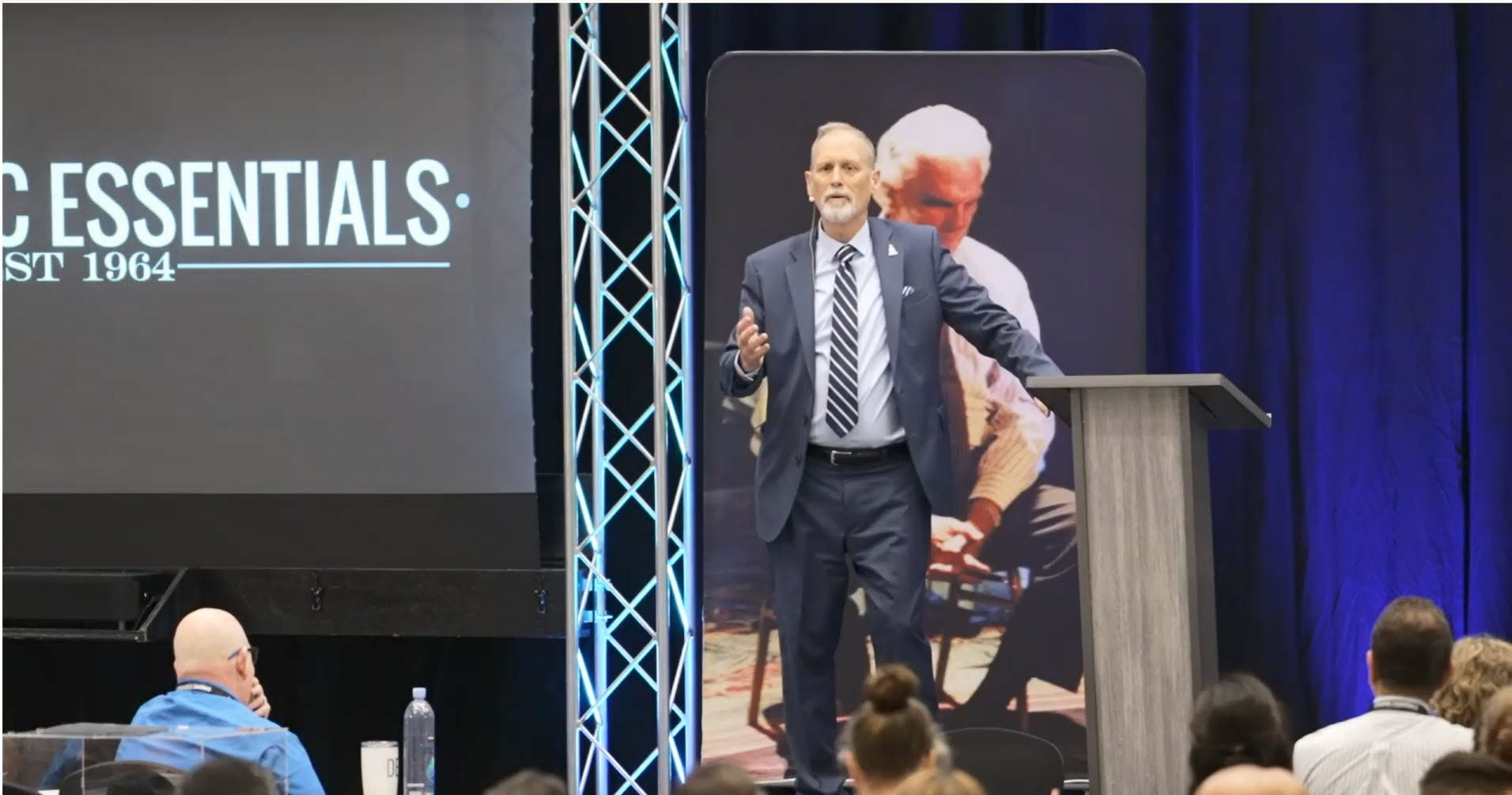
“There’s only been two times in the history of chiropractic that a college has been through a year of probation and still not compliant… One was June 7, 2002. The second was July 11, 2025.”
—Dr. Brian McAulay
Another Year of Probation With a Heavy Price Tag
On July 18th, 2025, speaking to a crowd of chiropractors at the Dynamic Essentials (DE) meeting, Life University President Dr. Brian McAulay made public what many inside the profession had been holding their breath about: the Council on Chiropractic Education (CCE) chose not to revoke Life’s accreditation during its July 11 meeting. Instead, it extended Life’s probation for one more year.
The announcement was met with polite relief, but beneath it lay the deeper cost of survival. To stay in the CCE’s good graces, Life University has now fully capitulated to the regulatory structure that defines today’s chiropractic cartel.
Policy 56 and the Tyranny of the Timeline
At the heart of Life's probation is CCE Policy 56, which demands that 80% of graduates pass all four parts of the National Board of Chiropractic Examiners (NBCE) exam within six months of graduation. According to McAulay:
“The number was 77%, not 80%. The irony is that our students actually passed at an 89% rate overall, but they weren’t passing within six months.”
That single detail, timing, not competency, is what triggered probation and threatens Life’s accreditation. This artificial standard, enforced by CCE through Policy 56 and powered by NBCE’s monopolized exam structure, has nothing to do with whether students are ultimately qualified to practice.
The Cartel’s Grip: CCE, NBCE, and Now Life
McAulay’s comments laid bare the desperation that Policy 56 creates. Facing the threat of losing accreditation, just as it did in 2002, Life made a fateful decision:
“Beginning Fall Quarter 2025, those students who have not passed all four Parts (I, II, III, IV) will not be eligible for graduation.”
Let that sink in. A private university now refuses to award academic degrees to students who have completed all coursework, clinicals, and institutional requirements, unless they also pass a private, third-party licensure exam.
This is more than policy alignment. This is submission. Life has not just bowed to Policy 56, it has chosen to go even further than what the CCE mandates, making NBCE success a prerequisite for graduation itself.
“CCE says they must pass within six months. Life says: no diploma until they pass all four parts.”
Part IV Centralization: The Hidden Hand Tightens
All of this plays out against the backdrop of the NBCE’s controversial centralization of Part IV, the high-stakes and completely unnecessary, practical exam that prior to now was administered on college campuses and has long been controversial within the profession. While NBCE now claims it will offer the exam up to 48 times per year and has not raised exam fees, these logistical defenses miss the core issue:
The exam itself is unnecessary, unvalidated, and imposed without accountability.
No equivalent of Part IV exists in medicine, dentistry, nursing, or other health professions. Those professions rely on institutional competency certification, not a private monopoly’s practical exam. In chiropractic, however, NBCE continues to act as the sole gatekeeper, despite being accountable to no one.
With Life University now requiring all four NBCE parts be passed before graduation, students must clear a private, unregulated barrier that has no proven correlation to real-world competency and was never part of the original academic covenant between school, student, or regulatory boards.
This is not about timing or testing access. It’s about consolidated control and institutional surrender to a licensure cartel that has exceeded its authority for decades.
“NBCE holds the key to the diploma, and CCE dictates the lock. Life has simply agreed to bolt it shut.”
The profession must ask: who decided this was necessary? And who benefits from keeping it this way? Because it’s certainly not the students,or the future of chiropractic.
This isn’t education policy, it’s cartel enforcement. NBCE holds the key to the diploma, and CCE dictates the lock. Life has simply agreed to bolt it shut.
The Real Harm: Students as Collateral
McAulay was forthright about the emotional weight of the July 11 decision:
“Imagine how I felt walking into that room on Friday… I knew we had a case. But I also knew what had happened back in 2002.”
He may feel relief, but students face uncertainty, delay, and financial harm. Their futures now hinge not just on mastering chiropractic, but on navigating a closed, centralized, and privatized licensure gauntlet.
What This Means for the Movement to Dismantle the Cartel
While the July 11 outcome is a temporary reprieve for Life University it is a stark reminder of the structural injustice at the core of chiropractic education today. The CCE-NBCE cartel has created a compliance machine that leaves schools with one option: obey, or die.
But Life’s capitulation also provides new fuel for legal and political challenges. As students are denied degrees, not because of academic failure but because of NBCE delay, the stage is set for lawsuits, borrower defense claims, and regulatory scrutiny of CCE’s recognition.
“This isn't about educational quality. It's about statistical manipulation and survival in a system designed to punish schools and students alike.”
Final Thought: One More Year At What Cost?
Life got another year. But it came at a price: institutional autonomy surrendered, academic freedom undermined, student welfare jeopardized and the hand of the Cartel strengthened.
We must now ask: how many more chiropractic programs will be pushed into similar submission? How many more students will be left waiting, stranded at the intersection of education and monopoly?
The cartel is tightening its grip. The question is: will the profession rise to break it—or continue to bow until nothing remains of chiropractic’s independent spirit?
It’s time to say no. It’s time to fight back.
