Maine's Vaccine Mandate: A Defiant Holdout Against Federal Reform
Originally published: 2025-09-16
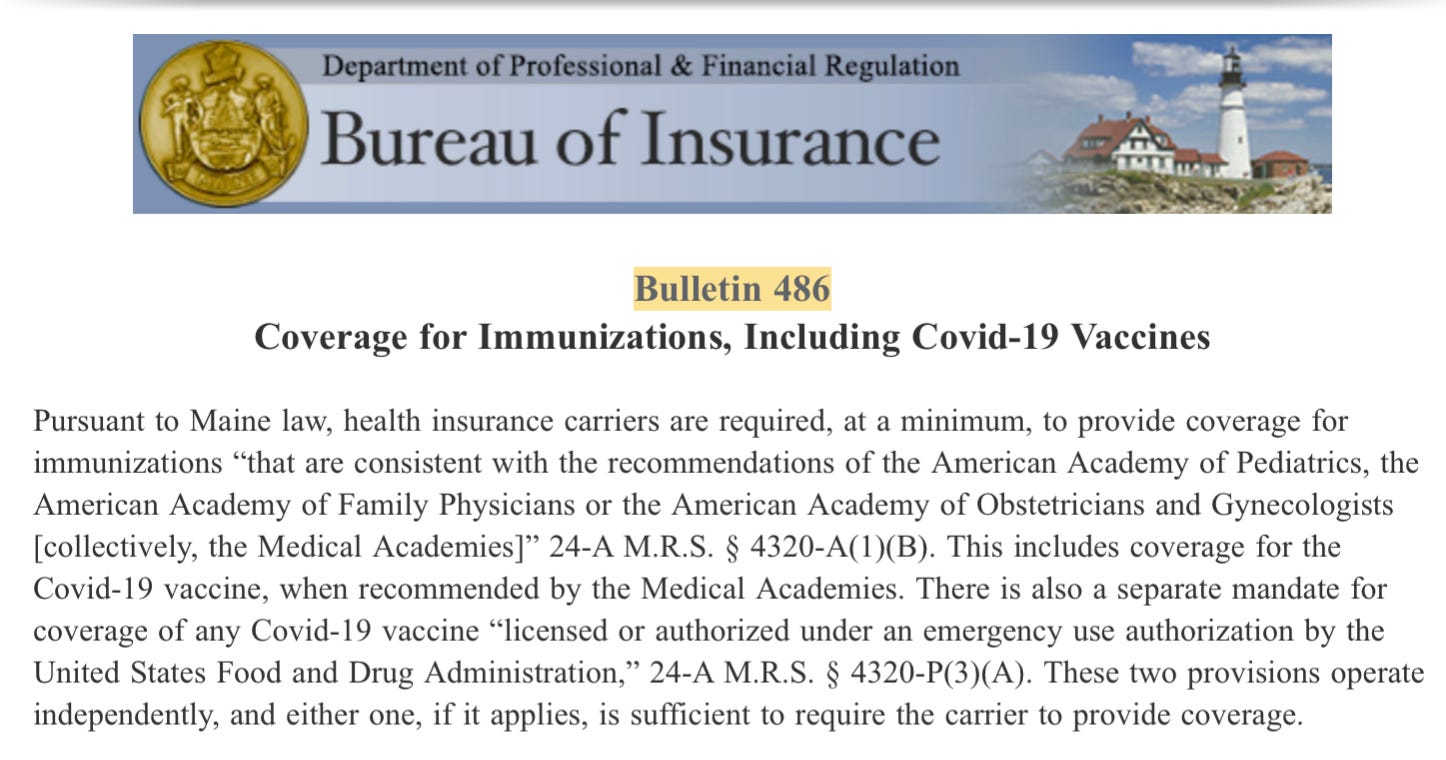
In a move that reeks of overreach and outdated dogma, the Maine Bureau of Insurance has issued Bulletin 486, reinforcing mandatory coverage for COVID-19 vaccines. Dated September 12, 2025, this directive isn't just about health, it's a stark reminder of how the administrative state, pharmaceutical giants, and the medical establishment continue to collude in perpetuating a charade that's increasingly being exposed by whistleblowers, independent research, and public scrutiny. Even more telling, it flies in the face of sweeping federal reforms under HHS Secretary Robert F. Kennedy Jr., highlighting a dangerous rift between state-level inertia and a national push for evidence-based skepticism.
Decoding Bulletin 486: What It Really Says
At its core, the bulletin mandates that health insurance carriers in Maine cover immunizations aligned with recommendations from the American Academy of Pediatrics, the American Academy of Family Physicians, or the American Academy of Obstetricians and Gynecologists, collectively dubbed the "Medical Academies." This extends explicitly to COVID-19 vaccines, whether they're fully licensed or merely authorized under emergency use by the FDA.
But it doesn't stop at coverage. The law demands that carriers foot the bill for the vaccine and its administration without any cost-sharing or prior authorization. The only caveat? Insurers can push for in-network providers, but only if it doesn't cause delays.
"Where the Covid-19 vaccine is a mandated coverage... Maine law also requires carriers to cover the cost of the Covid-19 vaccine and all associated costs of administration, without cost sharing or prior authorization."
This quote from the bulletin highlights the no-exceptions approach, effectively turning insurance into a subsidy pipeline for vaccines that many now question for their efficacy and safety. In a post-reform landscape, this feels like willful blindness.
Extending the Mandate to Self-Insured Plans
The bulletin goes further by pressuring carriers acting as administrators for self-insured and level-funded plans. These aren't directly under state mandate, yet the Superintendent "expects" them to inform plan sponsors about the Medical Academies' recommendations and "encourage" compliance.
This subtle arm-twisting exemplifies how administrative edicts blur the lines between voluntary guidance and enforced policy, dragging even private entities into the fold, regardless of the federal government's pivot away from blanket endorsements.
The Administrative State's Iron Grip, and Its Clash with Federal Reality
Bulletin 486 is a textbook case of the administrative state in action, a vast, unelected bureaucracy that operates with little accountability, issuing directives that carry the weight of law. Here, the Maine Superintendent of Insurance, Robert L. Carey, isn't just informing; he's shaping behavior through expectations and mandates rooted in statutes like 24-A M.R.S. § 4320-A and § 4320-P.
This isn't new. During the height of the COVID era, similar administrative maneuvers across states and federally amplified Pharma's agenda, bypassing legislative debate and public input. But in 2025, with HHS Secretary RFK Jr. at the helm, the federal narrative has shifted dramatically. Kennedy has fired all 17 members of the Advisory Committee on Immunization Practices (ACIP) in June, vowing to reconstitute it with a focus on transparency and safety data to restore public trust. The FDA, under his influence, has limited updated COVID shots to those 65 and older or immunocompromised. Meanwhile, the Trump administration's "Make America Healthy Again" (MAHA) roadmap explicitly targets excessive vaccine use as part of a broader assault on chronic disease drivers.
Maine's bulletin, however, remains tethered to the Medical Academies' recommendations, groups that haven't budged from broad COVID endorsements, even as federal policy demands rigorous reevaluation. This disconnect isn't accidental; it's a deliberate act of defiance, where state-level admins shield the old guard from RFK's reforms. As states like Maine push back, millions could face out-of-pocket costs federally, but here, the charade persists through mandated subsidies.
"When carriers are acting as administrators for self-insured and level-funded health benefit plans, the Superintendent expects carriers to make plan sponsors aware... and encourage all plan sponsors to follow the provisions of this Bulletin."
Such language reveals the administrative state's playbook: "Encourage" often translates to "enforce through backchannels," ensuring the system's cogs keep turning, even as Washington dismantles the machine.
Big Pharma and the Medical Profession: Partners in the Charade
Enter the collusion. The Medical Academies aren't neutral arbiters; they're intertwined with pharmaceutical funding and influence. Pfizer, Moderna, and others have poured billions into research grants, sponsorships, and lobbying that shape these organizations' recommendations. When the bulletin ties coverage to their endorsements, or FDA approvals, which have been criticized for rushed processes and conflicts of interest, it's essentially mandating taxpayer and premium-payer subsidies for Big Pharma's products, in direct opposition to Kennedy's thimerosal bans and ACIP overhaul.
The medical profession, once a bastion of "do no harm," has become complicit. Doctors and academies echo the narrative, often sidelining dissenting voices through censorship or professional ostracism. This bulletin perpetuates that by making vaccine coverage seamless and cost-free, discouraging any hesitation from providers or patients, while federal chaos under RFK exposes the cracks, from exaggerated dose counts for kids (closer to 30 than his claimed 90) to broader policy upheaval.
But the charade is cracking. Leaked documents, lawsuits against vaccine manufacturers, and studies questioning long-term efficacy (like those highlighting myocarditis risks or waning immunity) are exposing the house of cards. Yet here we are in 2025, with Maine's bureaucracy doubling down, ensuring Pharma's revenue stream remains uninterrupted while the medical elite maintains its authority, defying a federal reckoning.
Why This Matters: The Exposed Charade and a Call for Resistance
This isn't just about one state's insurance bulletin, it's symptomatic of a broader system where the administrative state acts as Pharma's enforcer, with the medical profession providing the veneer of legitimacy. The COVID narrative, once unquestionable, is now fraying under the weight of real-world data and accountability demands from RFK's HHS. Mandates like this force-feed the agenda, ignoring growing public distrust and calls for transparency, even as federal policies limit access and scrutinize safety.
As exposures mount, from VAERS data anomalies to whistleblower testimonies, policies like Bulletin 486 highlight the desperation to cling to control. It's time for citizens, insurers, and even self-insured employers to push back, demanding evidence-based reforms over blind adherence. Maine's stand against RFK's vision isn't protection, it's obstruction, a last gasp of the old collusion in a new era of reform.
"This Bulletin is intended solely for informational purposes. It is not intended to set forth legal rights, duties, or privileges..."
The disclaimer's irony is palpable: While it claims no legal force, the expectations it sets could very well dictate real-world outcomes, underscoring the insidious nature of this collusion, and its growing irrelevance in a federally transformed landscape.
In the end, Bulletin 486 isn't progress, it's a relic of overreach, begging for scrutiny in an era where the truth is finally emerging.
