Medical Burnout or Subluxation Management?
Originally published: 2025-11-21
A Study That Reveals the True Burden of Primary Care
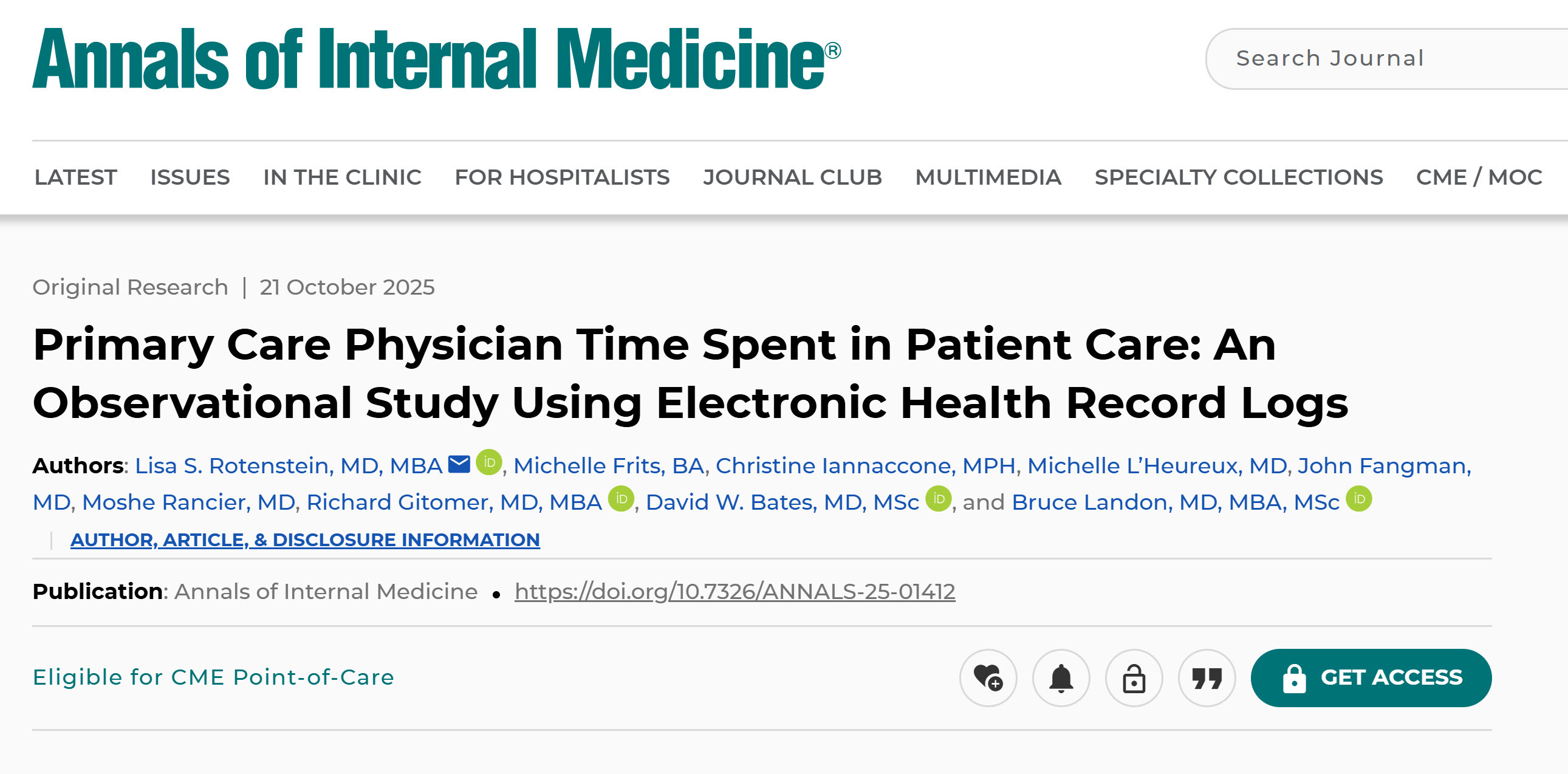
The recent cross-sectional observational study from the Mass General Brigham system offers a revealing and, frankly, sobering look at what primary care has become in modern healthcare. By analyzing electronic health record logs and administrative data from 406 attending primary care physicians across 33 clinics, the researchers sought to quantify the true workload required to manage a patient panel, including both visible and invisible responsibilities. When all of this time was accounted for, the picture that emerged was one of relentless demand, long hours, and a workload model that has become almost impossible to sustain.
The study found that full-time PCPs spent a median of more than 2,844 hours per year on patient care, which translates into nearly sixty-two hours a week. Much of this work goes beyond face-to-face interactions, involving charting, managing messages, ordering and reviewing diagnostics, handling insurance processes, responding to medical advice requests, and countless other administrative tasks that rarely show up on a schedule. The researchers noted that patient complexity, age, message volume, Medicaid populations, and panel composition all contributed to greater time demands, making primary care one of the most labor-intensive roles in the healthcare system.
Call-Out Quote:
“Primary care physicians are working nearly sixty-two hours a week just to keep up, much of it invisible and uncompensated.”
Why the Chiropractic Cartel Wants Chiropractors to Step Into This Collapsing Model
This is the environment the Chiropractic Cartel insists chiropractors should step into, promoting the narrative that chiropractors ought to rebrand themselves as primary care physicians. Yet the very profession they want us to emulate is struggling under the weight of its own structural dysfunction. Primary care is widely recognized as the most overburdened, least supported, and lowest-compensated corner of the healthcare system, even though its practitioners shoulder enormous responsibility and liability. It is puzzling, and deeply concerning, that leaders within the CCE, NBCE, FCLB, and ACA are pushing the chiropractic profession toward a role that medical physicians themselves find unsustainable.
The chiropractic educational structure is not designed for this shift, nor are practice models, reimbursement systems, support resources, or malpractice frameworks aligned with the demands of medical primary care. Yet none of these realities seem to temper the Cartel’s desire to force chiropractors into a collapsing model, one that already consumes the time, attention, and energy of clinicians who are trained specifically for its demands and who still find themselves overwhelmed. Rather than advocating for clarity, sustainability, or professional identity, the Cartel appears to be naïvely chasing legitimacy by aligning with a system that is visibly cracking under pressure.
Call-Out Quote:
“Primary care is the lowest-paid, most overworked, and most exploited sector of medicine. Why would chiropractic attempt to adopt that identity?”
Chiropractic’s True Identity Has Nothing to Do With Medical Triage
This direction stands in stark contrast to the founding vision of the chiropractic profession. Chiropractic was never intended to be a medical triage discipline, nor a managerial role overseeing pharmaceuticals, diagnostics, or case coordination. Its purpose has always been rooted in the analysis and correction of vertebral subluxation, supporting the optimal expression of human physiology, structure, and function. That role is not only distinct, it is essential. It addresses the integrity of the nervous system, supports the body’s inherent capacity for self-regulation, and operates within a salutogenic model focused on health, coherence, and adaptability.
Attempting to convert chiropractic into a cheaper version of primary care does not elevate the profession. It dilutes it, drags it into bureaucratic quicksand, and undermines the very attributes that make chiropractic unique and valuable. The study on PCP workload should serve as a cautionary reminder that adopting medical roles without adopting medical infrastructures only results in overextension, burnout, and confusion about professional purpose.
Call-Out Quote:
“Chiropractic’s strength is in subluxation management, not in absorbing the collapsing administrative burden of primary care.”
A Sustainable Path: Embrace the Role Only Chiropractors Can Fill
The Chiropractic Cartel’s aspiration to position chiropractors as primary care practitioners shifts maximum responsibility onto chiropractors while offering none of the structural support that primary care physicians receive, insufficient as that support already is. It is a strategy that benefits regulatory bodies and political allies far more than it benefits chiropractors or the public. It grants these organizations the prestige they covet, while placing chiropractors at the mercy of a system that is already failing those within it.
The path forward for chiropractic does not lie in chasing the identity of a profession that is stretched to its breaking point. It lies in reclaiming the clarity and confidence of our own heritage as specialists in vertebral subluxation, practitioners who facilitate neurologic integrity and enhance the body’s capacity to heal and function. This is the role that aligns with chiropractic’s philosophy, its science, its art, and its future.
When we stay grounded in that identity, we strengthen not only our profession but the countless people who depend on us for care that cannot be duplicated anywhere else.
