Montana Drug Bill Fails by ONE Vote in Senate Committee but Remains Alive Through Procedural Maneuver
Originally published: 2025-04-16
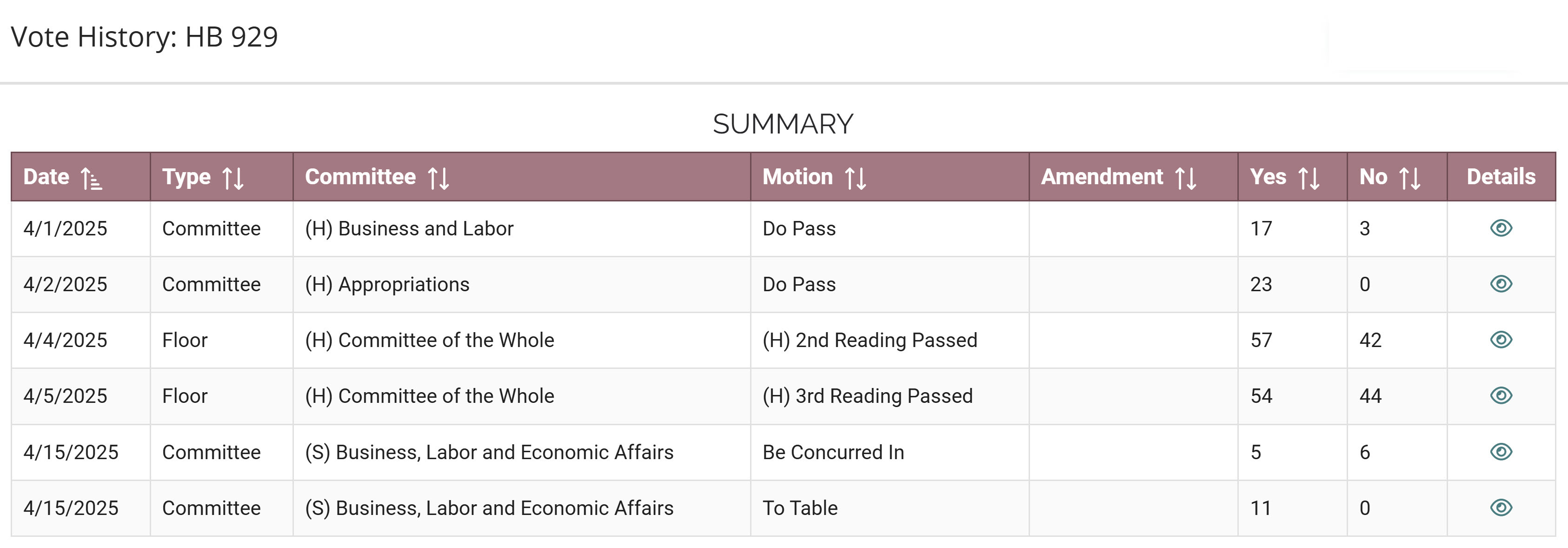
House Bill 929, which would grant chiropractors in Montana drug-prescribing authority, was defeated by a single vote (6–5) in the Senate Business, Labor, and Economic Affairs Committee on April 15, 2025. However, in a procedural maneuver, the bill was tabled, allowing it to be revived at any time this session through a “blast” amendment—a reminder that the battle is far from over.
CLICK HERE to view the final vote and discussion on the Bill
The hearing opened with a notable statement from the committee chair, who explained that bill sponsor Rep. Greg Oblander had apologized for his performance at the previous hearing, blaming his lack of preparation and clarity on suffering from kidney stones at the time. While the excuse drew quiet sympathy, it underscored growing concerns about the professionalism and urgency behind the bill’s backers.
Senators Who Voted “No” Speak to Division, Capture, and Chaos
Senators opposing the bill emphasized the fractured state of the chiropractic profession, the lack of clarity around oversight and education, and the visible regulatory conflicts of interest behind the legislation.
Senator Weber called out the internal dysfunction, stating:
“The only way they’re going to come together and get something done is if we don’t pass this bill.”
Senator Hunter, drawing from his EMT experience, said:
“It seemed like there were a lot of people that were not informed of what was going on.”
He went on to suggest that the Montana Board of Chiropractors should include medical doctors and pharmacists to ensure balance if drugs are added to the scope.
Senators Loge and Phelan also opposed the bill, voicing discomfort with the insider-driven nature of the process and the unresolved professional conflicts at its core.
“Yes” Votes: Leaning on the ACA and Vague Assurances
Supporters of the bill continued to describe HB 929 as “optional,” minimizing the significance of what critics call a foundational shift in the profession. The bill, they claimed, simply gives chiropractors the option to prescribe certain medications with further training—yet the structure and standards for that training remain undefined.
Senator Novak, originally a skeptic, said she changed her mind after “removing emotion,” stating:
“If they want to expand their scope and further their education… then they’re allowed to do that.”
Senator Gillespie said he supported giving “everyone a seat at the table,” though failed to acknowledge that hundreds of chiropractors had already been shut out of that table by the MCA’s process.
The ACA’s Fingerprints Are Everywhere
What became abundantly clear during the hearing was the outsized influence of the American Chiropractic Association (ACA) in pushing this legislation. Proponents repeatedly cited the ACA’s support and used its endorsement as justification for expanding chiropractic scope, even as most chiropractors across Montana and nationally remain unaffiliated with the organization.
The ACA’s current president, Dr. Marcus Nynas, formerly led the Montana Chiropractic Association (MCA)—the same group lobbying for HB 929. Dr. Ryan Oblander, son of the bill’s sponsor, now owns Nynas’ practice. Three of the five members of the Montana Board of Chiropractors—Drs. Murack, Walter, and Rising—are ACA members, with two also serving on the MCA board, all while actively supporting the bill they would later regulate.
This closed circle of political, regulatory, and professional control confirms what many chiropractors and lawmakers feared: a textbook case of regulatory capture, with HB 929 serving as the vehicle to achieve a long-planned national agenda.
The Bill Failed—But It’s Not Dead
Though narrowly voted down, HB 929 was immediately tabled, allowing it to be brought back to the floor via a blast motion. Proponents are already working behind the scenes to revive it, and with the ACA and MCA committed to seeing this pass—not just in Montana, but as a precedent for other states—this fight is far from over.
Unless the chiropractic profession speaks with one voice and makes it crystal clear that drugs are not part of chiropractic, legislation like HB 929 will continue to reappear—if not this session, then the next.
ChiroCongress: Silent Partner in the Betrayal of Chiropractic
Adding to the controversy surrounding HB 929 is the deafening silence of ChiroCongress, the national trade organization that claims to represent over 50 state chiropractic associations that are mostly aligned with the ACA—including the Montana Chiropractic Association (MCA) which is actually an Affiliate of the ACA.
Despite branding itself as a champion for chiropractic and publicly promoting the profession as drug-free, ChiroCongress did not issue a single statement opposing HB 929. Even more troubling, when activists, concerned chiropractors, and professional organizations reached out to ChiroCongress President Dr. Brian Stenzler to request support, they were flatly denied.
Stenzler refused to comment publicly on the Bill when contacted.
This betrayal is especially glaring given that ChiroCongress’s strategic plans and promotional materials have long emphasized chiropractic’s unique identity as a drugless healing profession. Yet when the profession in Montana needed them most—when chiropractic itself was under assault from within—ChiroCongress chose to protect its political alliances over its principles.
How can ChiroCongress look itself in the mirror after abandoning the very foundation of chiropractic? The answer may lie in its deeper entanglements. ChiroCongress is not just a passive observer; it is a core member of the secretive Chiropractic Summit, a behind-the-scenes coalition dominated by the same organizations aggressively pushing for scope expansion to include drugs. As we've documented before, this Summit operates with no transparency, no public accountability, and a history of suppressing dissenting voices within the profession.
ChiroCongress’s failure to speak out against HB 929 exposes a dangerous double game: publicly selling the image of principled, drug-free chiropractic while privately enabling the very organizations determined to destroy that identity. In doing so, it has aligned itself with a cartel of gatekeepers more interested in power and control than in preserving chiropractic’s core philosophy. Its silence on HB 929 wasn’t neutrality—it was complicity.
As one opponent warned at the hearing:
“It lost the vote, but not the war.”
The future of drug-free chiropractic—and the credibility of state regulation—now depends on what Montana’s chiropractors and citizens do next.
CLICK HERE to view the final vote and discussion on the Bill
