Montana’s HB 500 Defeated by One Vote: How Close the Chiropractic Profession Came to Losing Its Identity
Originally published: 2025-03-09
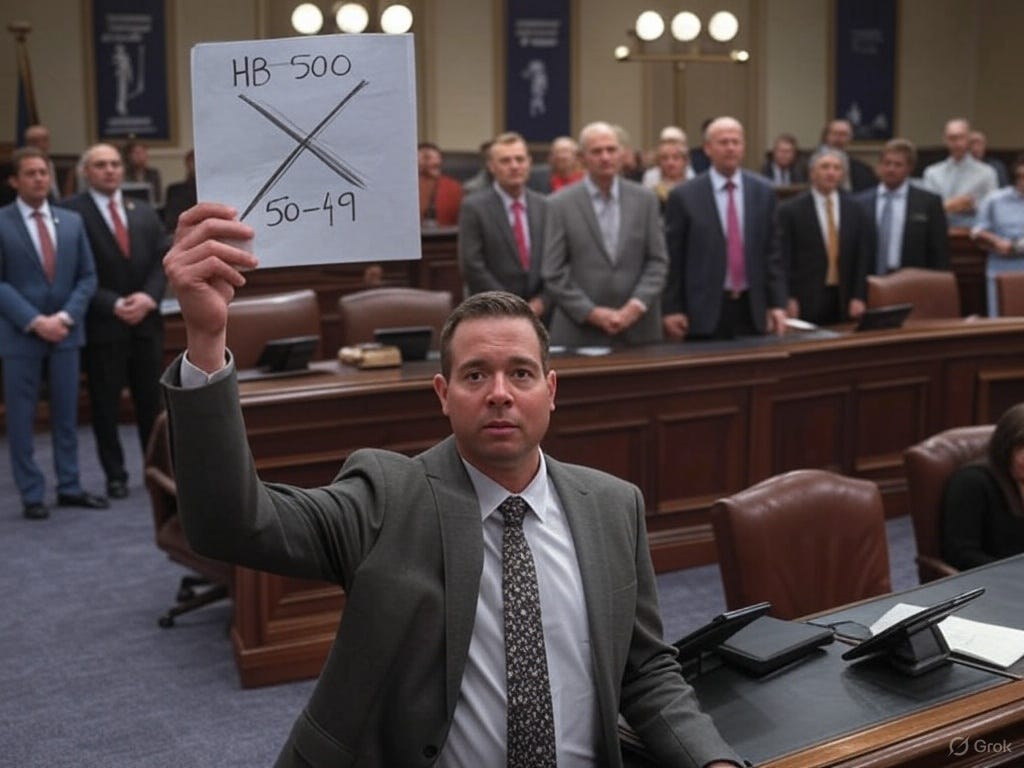
In a dramatic and narrowly decided vote, Montana House Bill 500 (HB 500) — the bill that would have allowed chiropractors to prescribe drugs — was defeated by a single vote. The bill failed 50–49, marking a major victory for chiropractors and advocates of drug-free chiropractic care.
But this victory was far too close for comfort. The chiropractic profession in Montana — and across the country — came within one vote of abandoning its identity as a distinct, drug-free healing profession.
What’s even more concerning is that only three chiropractic college presidents — from Palmer College, Sherman College, and Life West — had the courage to speak out publicly against the bill. Despite the enormous implications for the profession, the silence from the rest of the chiropractic education community was deafening.
Adding to the controversy, HB 500 was introduced by Greg Oblander, DC — a Republican member of the Montana House of Representatives and the Montana Chiropractic Association’s (MCA) Chiropractor of the Year for 2024. The very fact that a chiropractor, honored by the state’s leading association, spearheaded an effort to grant chiropractors prescriptive authority raises serious questions about the direction of the profession and the MCA’s influence.
Greg Oblander and the MCA’s Push for Drugs
Greg Oblander, DC, was named Montana Chiropractor of the Year by the MCA in 2024 — the same year he introduced HB 500. The MCA, which has deep ties to the American Chiropractic Association (ACA), has been leading the charge to expand the scope of chiropractic practice to include prescription drugs.
This is not about improving patient care — it’s about remaking chiropractic into a branch of allopathic medicine. The MCA and ACA’s vision for chiropractic mirrors the medical model, relying on pharmaceuticals rather than the foundational chiropractic principles of spinal alignment and nervous system function.
Had HB 500 passed, Montana would have become a testing ground for similar efforts across the country. The bill’s defeat represents a major setback for the pro-drug faction within chiropractic — but the fact that it came down to a single vote shows just how far the profession has drifted from its core values.
Three Chiropractic College Presidents Took a Stand
Only three chiropractic college presidents — out of more than a dozen schools in the U.S. — issued public statements opposing HB 500. Their willingness to take a stand underscores the gravity of the threat and the need for leadership in protecting chiropractic’s identity.
CLICK HERE for copies of all three letters
Palmer College: Chiropractic Was Never Meant to Include Drugs
Dr. Dennis Marchiori, DC, PhD, Chancellor of Palmer College of Chiropractic, the oldest and largest chiropractic college in the world, issued a powerful statement opposing HB 500:
"Palmer spent years researching and carefully crafting an identity for chiropractors as the primary care professionals for spinal health and well-being. Chiropractic focuses on neurological and musculoskeletal integrity and aims to favorably impact health and well-being, relieve pain and infirmity, enhance performance, and improve quality of life—without drugs or surgery."
Marchiori made it clear that the professional identity of chiropractors depends on maintaining a drug-free model. He warned that introducing pharmaceuticals into chiropractic care would blur the profession’s identity and confuse the public about what chiropractic stands for.
Sherman College: Chiropractors Are Not Trained to Prescribe Drugs
Dr. Jack Bourla, DC, ACP, President of Sherman College of Chiropractic, called the idea of chiropractors prescribing drugs "reckless" and "a threat to public safety." In his statement, Bourla emphasized that chiropractors receive no meaningful pharmacology training and that attempting to grant prescriptive authority would endanger patients:
"Prescribing medications has never been within the scope of chiropractic care. It is, and should continue to be, outside of our scope of practice. Chiropractors are not trained to prescribe medications, and our students are in no way prepared to be prescribers of medication."
"A weekend-style course which ultimately allows chiropractors to participate in the drug prescribing business seems risky at best."
Bourla's blunt statement exposes the absurdity of HB 500 — chiropractors simply do not have the training to safely prescribe pharmaceuticals.
Life West: Chiropractic Must Remain Drug-Free
Dr. Ron Oberstein, DC, President of Life Chiropractic College West, framed HB 500 as a direct threat to the profession’s integrity and public safety. He pointed out that expanding scope to include drugs would contradict chiropractic’s drug-free philosophy and expose patients to increased risk:
"Patient safety must be the foremost consideration when contemplating any expansion of a healthcare provider’s scope of practice. Introducing prescription rights to a profession without extensive pharmacological training would only increase these risks, potentially endangering public health."
Oberstein highlighted the contradiction at the heart of HB 500 — chiropractic is sought out by millions because it offers a natural, drug-free alternative to medicine. Adding prescription drugs to chiropractic care would undermine that trust and confuse patients about what chiropractic really is.
The Montana Medical Association Also Rejected HB 500
The chiropractic college presidents weren’t the only ones to push back. Dr. Ernest J. Gray, MD, President of the Montana Medical Association, also publicly opposed HB 500.
"The Art and Science of the Chiropractor is the manipulation and rebalancing of the spinal and skeletal system to achieve whole body health. It has never advocated for the use of pharmaceutical agents as a part of their treatment modalities."
Gray’s statement reinforces a fundamental point: Chiropractic and medicine are not the same profession—and they never should be. Chiropractors are trained in spinal care and nervous system health, not pharmacology.
Why Did Only Three Schools Speak Out?
The fact that only three chiropractic colleges were willing to speak out publicly is disturbing. Palmer, Sherman, and Life West have long been known for their defense of chiropractic’s drug-free identity. But where were the others?
The silence from other chiropractic institutions suggests that many leaders are afraid to challenge the growing influence of the ACA and the pro-drug faction within the profession. This lack of moral clarity is why HB 500 nearly succeeded — and why the battle is far from over.
Victory—But the Threat Isn’t Over
The defeat of HB 500 is a major victory for drug-free chiropractic — but the narrow margin of defeat proves that the threat to the profession’s identity is real and growing.
The pro-drug faction within the MCA and ACA isn’t going away. If chiropractors don’t take a united stand, Montana and other states will soon face similar legislative efforts to transform chiropractic into a drug-based practice.
Chiropractic Must Stay Drug-Free
HB 500 was not about improving patient care — it was about expanding market share and creating a new revenue stream for chiropractors aligned with the medical model.
The fact that this bill was introduced by Greg Oblander, DC — the MCA’s Chiropractor of the Year — shows that this push is coming from within the profession itself. Chiropractors must decide now: Will chiropractic remain drug-free, or will it become an extension of medicine?
Montana chiropractors and their allies have shown that victory is possible — but only if the profession stands together. The future of chiropractic depends on holding the line.
