Nevada’s Missed Opportunity to Rein in Licensing Boards
Originally published: 2025-09-22
A chance to clean house
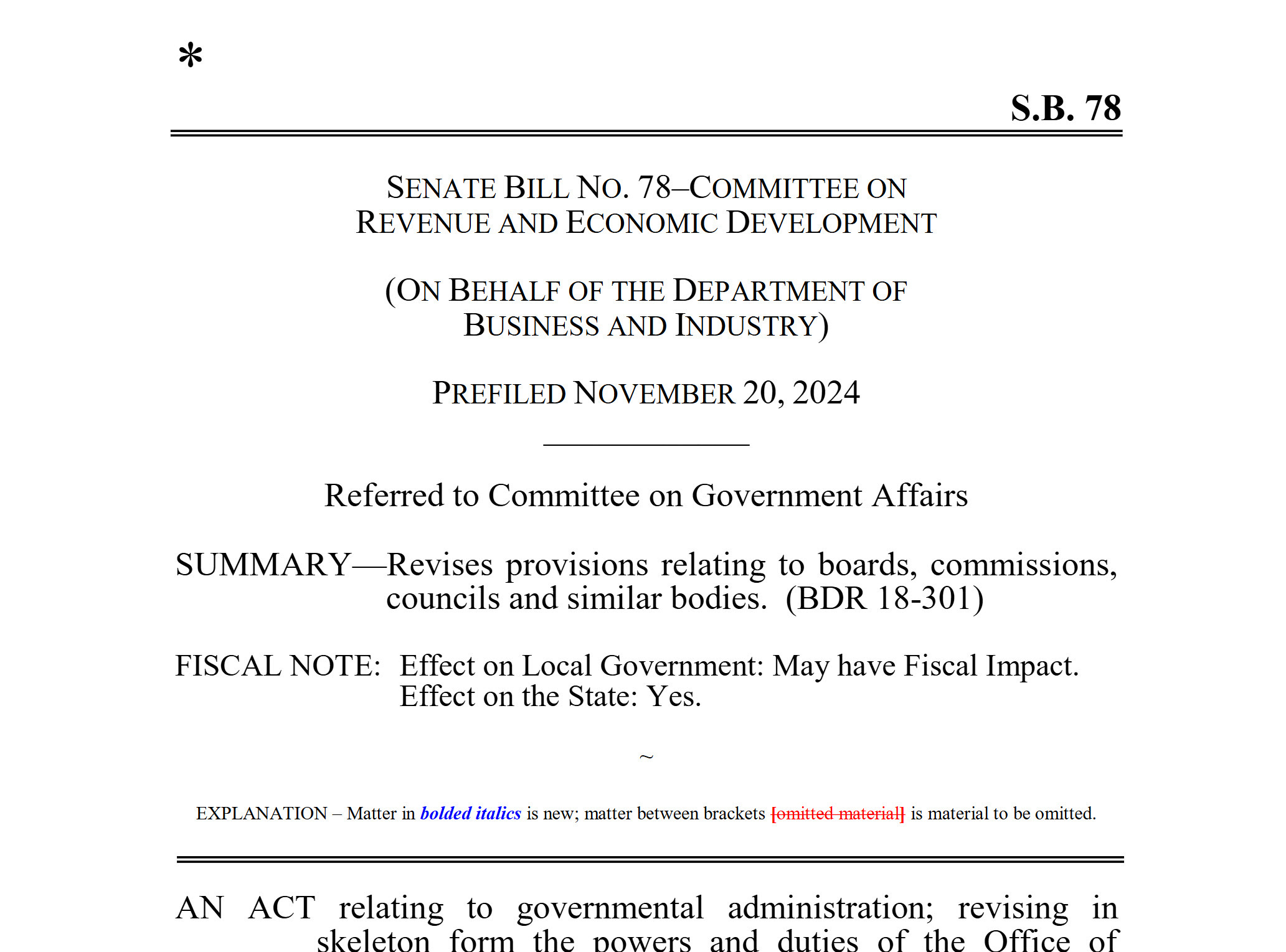
In 2025, Nevada lawmakers had the chance to address a longstanding problem: too many small licensing boards, operating with too little oversight, and often riddled with conflicts of interest. Senate Bill 78 (SB78) proposed consolidating several occupational licensing boards to improve transparency and state supervision.
Had it passed, SB78 would have disrupted the tightly woven web of chiropractic regulation in Nevada, a web dominated by the National Board of Chiropractic Examiners (NBCE), the Council on Chiropractic Education (CCE), the Federation of Chiropractic Licensing Boards (FCLB), and their state-level allies.
Instead, the bill failed. And the Chiropractic Cartel is breathing a sigh of relief.
What SB78 would have done
SB78’s most visible feature was its attack on the Board of Osteopathic Medicine. It proposed dissolving that board and transferring licensing oversight to a broader medical board dominated by MDs. The osteopathic lobby, including the American Osteopathic Association (AOA) and Nevada Osteopathic Medical Association (NOMA), fought back hard. Their opposition ultimately helped sink the bill.
But the measure wasn’t only about osteopaths. It also signaled a legislative appetite for reining in niche boards like the Chiropractic Physicians’ Board of Nevada (CPBN), which operates with extraordinary autonomy and has been central to advancing the NBCE/FCLB agenda.
“The bill’s objective was to consolidate numerous state occupational licensing boards to increase state oversight and transparency.”
Had SB78 advanced, CPBN’s power to cut special deals with the Cartel — like locking NBCE exams into law (AB 513) or embracing the FCLB’s RCSP specialty program — might have been clipped.
Why the Cartel dodged a bullet
The Chiropractic Cartel thrives on fragmentation. Each state has its own chiropractic board, but those boards often act less like independent regulators and more like enforcers of NBCE, CCE and FCLB policy. Consolidation under a larger umbrella board would have made that kind of capture harder to maintain.
Instead, SB78 died in session. That left CPBN, where NBCE Vice President Jason Jaeger is Secretary–Treasurer and Executive Director Julie Strandberg is now moonlighting on FCLB’s RCSP committee, free to push the Cartel’s agenda without added oversight.
“The Nevada Legislature adjourned in early June 2025 without passing the bill.”
The timing is telling. CPBN rushed AB 513 through the same session, ensuring NBCE’s control of exams before lawmakers could strip its autonomy. SB78’s failure cemented the victory.
The bigger picture
This isn’t just about Nevada. Across the country, occupational boards are often captured by the industries they regulate. The chiropractic world is especially vulnerable because of its small size, political fragmentation, and reliance on national testing and licensing bodies.
In Nevada, the result is that insiders like Jaeger and Strandberg can advance NBCE, CCE and FCLB initiatives with little resistance. SB78 might have broken that cycle. Its failure means the cycle continues.
“Opposition and failure: The bill drew strong opposition… Due to these advocacy efforts and broader legislative concerns, the bill was stopped and did not pass.”
What’s next?
The collapse of SB78 underscores a hard truth: the Cartel wins when oversight fails. Without consolidation or stronger transparency rules, Nevada’s chiropractic board will keep handing power to NBCE and FCLB.
It’s now up to chiropractors, patients, and independent watchdogs to demand reform. Otherwise, the “public protection” boards will keep protecting the Cartel instead.
