New Research Finds Masks Linked to Higher COVID Mortality
Originally published: 2025-03-28
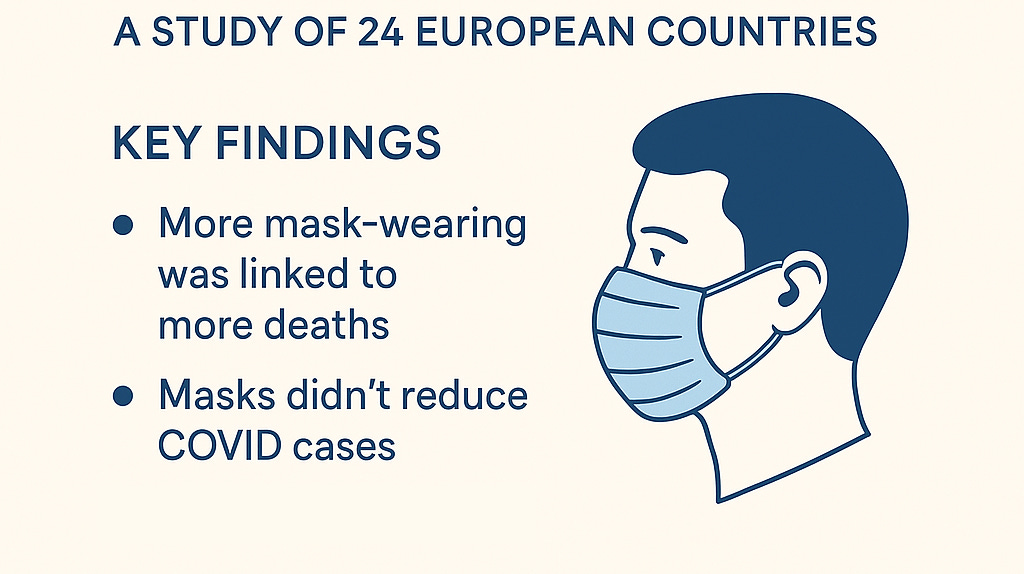
A recent peer-reviewed study published in BMC Public Health has ignited new questions about the real-world impacts of mask mandates during the COVID-19 pandemic. Conducted by researchers Daniel V. Tausk and Beny Spira, the study analyzed data from 24 European countries between 2020 and 2021 to explore the relationship between mask-wearing, COVID-19 deaths, and excess mortality. And what they found was unexpected: countries with higher mask usage tended to have higher excess death rates.
The Surprising Associations
The authors used both bivariate and multivariate statistical methods to examine how closely mask-wearing habits were tied to key health outcomes. Here’s what stood out:
Mask usage was positively associated with excess mortality — meaning that more mask-wearing correlated with more deaths, not fewer.
Mask usage also correlated with COVID-19 deaths, but showed no relationship to COVID-19 case rates. In other words, masks didn’t appear to reduce transmission at the population level.
These findings were statistically significant and consistent across multiple models and sensitivity tests, even after accounting for other factors like age distribution, socioeconomic status, and healthcare access.
Trying to Make Sense of It: Possible Explanations
The researchers propose several hypotheses that could explain the surprising association:
Mask Re-Inhalation Hypothesis
Some suggest that masks might trap and re-concentrate virus particles, increasing viral load in already infected individuals. While no direct clinical evidence confirms this mechanism, it has been speculated in other research.Adverse Effects of Prolonged Mask Use
A number of studies have documented negative effects of long-term mask-wearing — like breathing difficulty, headaches, or elevated CO₂ levels — especially in vulnerable individuals. These effects might contribute to worse outcomes in already fragile populations.Masking as a Proxy for Stricter Policies
High mask compliance often occurred alongside other strict non-pharmaceutical interventions (NPIs), like lockdowns. It’s possible that these broader restrictions had negative secondary health effects (e.g., missed medical appointments, mental health crises) that contributed to excess mortality. However, the study controlled for NPI stringency, GDP per capita, and other potential confounders in their regression models, and the association with excess mortality remained.Reverse Causality?
One might wonder if higher death rates caused more people to wear masks, not the other way around. But the study found that in most countries, high mask usage was already in place before large COVID-19 waves hit — suggesting the masks were not a reaction to increased deaths.
The Bottom Line
We’ve long been told that wearing masks was a simple, effective way to protect ourselves and others. But this new research suggests the story might be more complicated — and that well-intended interventions may have unintended consequences.
In the pursuit of better public health, one thing is clear: science should never stop asking hard questions, even when the answers challenge our assumptions.
References: Tausk, D. V., & Spira, B. (2025). Does mask usage correlate with excess mortality? Findings from 24 European countries. BMC Public Health, 25, 913. https://doi.org/10.1186/s12889-025-22172-x
