New Research Highlights Spinal Manipulation Benefits, but Misses the Mark on Chiropractic’s Unique Value
Originally published: 2025-01-06
A Promising Study with Limited Scope
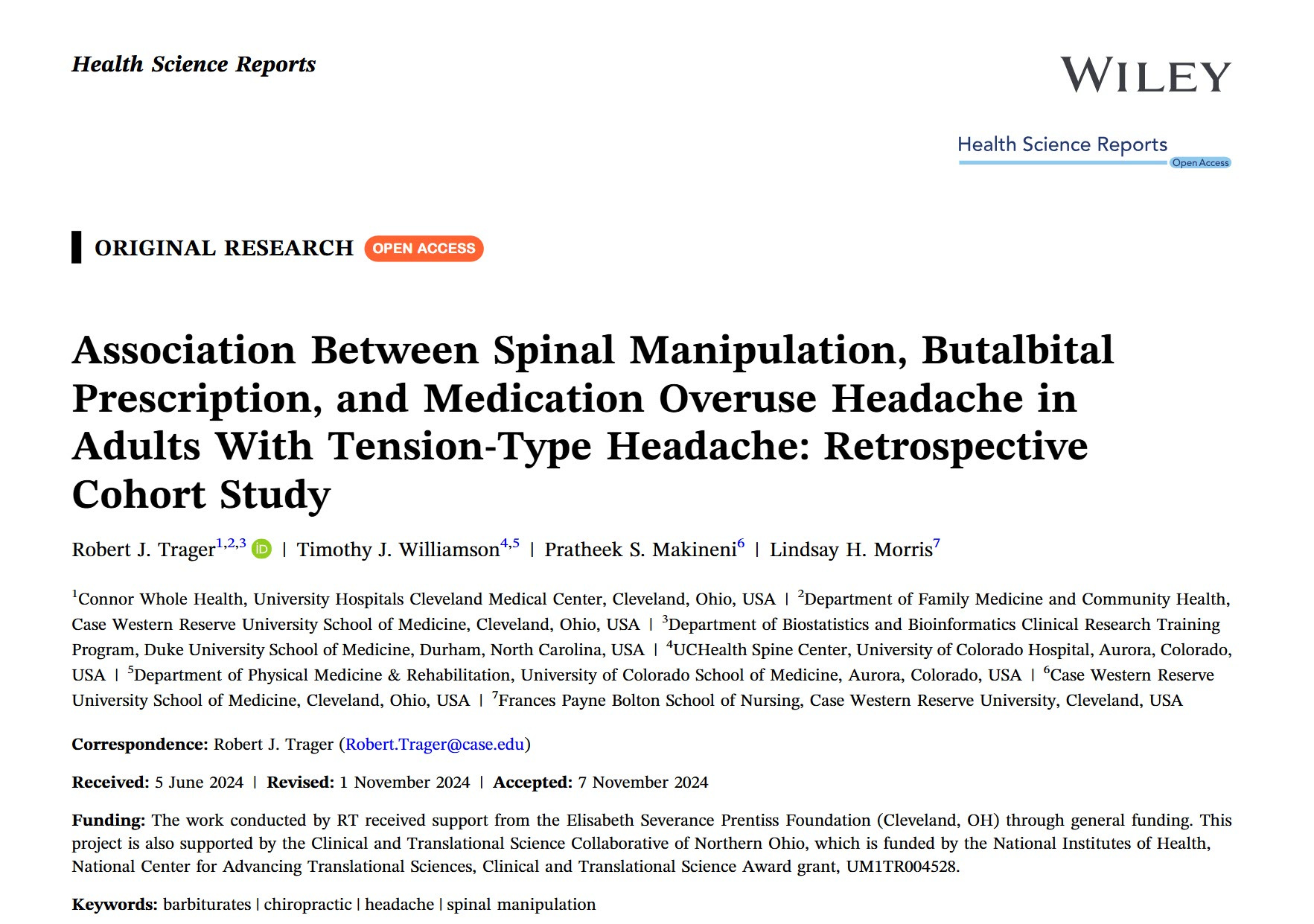
A recent study published in Health Science Reports has brought encouraging news to the chiropractic profession. The research examined the effects of spinal manipulative therapy (SMT) on tension-type headaches (TTH), finding that patients receiving SMT were significantly less likely to be prescribed butalbital, a medication often linked to medication overuse headaches (MOH). While the findings reinforce SMT as a valuable non-pharmacologic intervention, this study also serves as a cautionary tale about the risks of chiropractic failing to differentiate itself strategically in the broader healthcare landscape.
Breaking Down the Findings
The study analyzed over 6,000 adults with TTH, dividing them into two groups: those who received SMT and those who did not. The SMT group had lower rates of butalbital prescriptions (1.7% vs. 3.8%) and a reduced incidence of MOH (0.5% vs. 1.2%). These results align with existing evidence supporting SMT as an effective intervention for headache management, which is encouraging for chiropractors.
However, it’s important to temper excitement with realism. SMT is not exclusive to chiropractic—it is a common domain procedure also utilized by physical therapists, osteopaths, and other healthcare providers. This raises critical questions: What else, if anything, was done to these patients? Were lifestyle or ergonomic factors addressed? Was there co-management with other healthcare professionals? Were vertebral subluxations reduced or corrected? These unanswered questions limit the study's ability to showcase chiropractic’s unique strategic competitive advantage.
The Physical Therapy Parallel
Chiropractic’s over-reliance on procedures like SMT mirrors challenges faced by the physical therapy profession. Physical therapists have spent decades debating their identity while leaning on interventions like exercise prescriptions, which are no longer unique to their profession. As other providers adopt these interventions, physical therapists are struggling to maintain relevance, prompting a renewed focus on broader, evidence-based functional recovery paradigms.
Chiropractors should take note. Without emphasizing the unique aspects of chiropractic care—such as a focus on detecting and correcting vertebral subluxations, the chiropractic philosophy and the profound impact of nervous system function—our profession risks becoming indistinguishable from others who have cultural authority offering generic manual therapy services.
A Call to Action: Embrace and Elevate Chiropractic
This study should serve as a wake-up call for chiropractors to revisit and embrace their strategic competitive advantage. While SMT is a powerful tool, chiropractic is focused on the adjustment and correction of vertebral subluxation. Chiropractors generally have a broad scope and can give advice on diet, exercise, sleep, and ergonomics, but like SMT, none of those are unique to chiropractic—there are entire professions focused on these areas. The chiropractic profession must position itself as more than just another provider of manual therapy. We need to highlight our unique contributions to health and wellness focusing on:
Chiropractic’s Impact on the Nervous System: Unlike other professions, chiropractic care is centered on the relationship between spinal health and nervous system function, which can influence overall well-being.
Subluxation-Centered Care: Chiropractors are uniquely trained to detect and correct vertebral subluxations, providing benefits that extend beyond pain relief to overall health optimization.
Final Thoughts
The research on SMT and headaches is an opportunity to celebrate chiropractic’s contributions to non-pharmacologic care, but it also highlights a need for introspection. Chiropractors must ask themselves: Are we leveraging our unique strengths, or are we content to blend into the crowded field of manual therapy providers? The reality is that any profession who utilizes spinal manipulation can use this research to promote themselves - it is not a research study on chiropractic. It is a research study on the common domain procedure of spinal manipulation.
By focusing on our distinctive philosophy and strategic advantages, chiropractic can secure its place as an indispensable component of healthcare—not just for headache relief, but for comprehensive health and wellness focused on the management of vertebral subluxation. Let’s not let the success of SMT overshadow the broader story of chiropractic care.
This study should spark both pride and reflection, challenging chiropractors to rise above generic care and lead with the unique value that defines our profession. Now is the time to tell our story, elevate our identity, and reclaim our competitive edge.
