New U.S. Study Reinforces the Safety of Water Birth: Safe, Soothing, and Effective,
Originally published: 2025-07-24
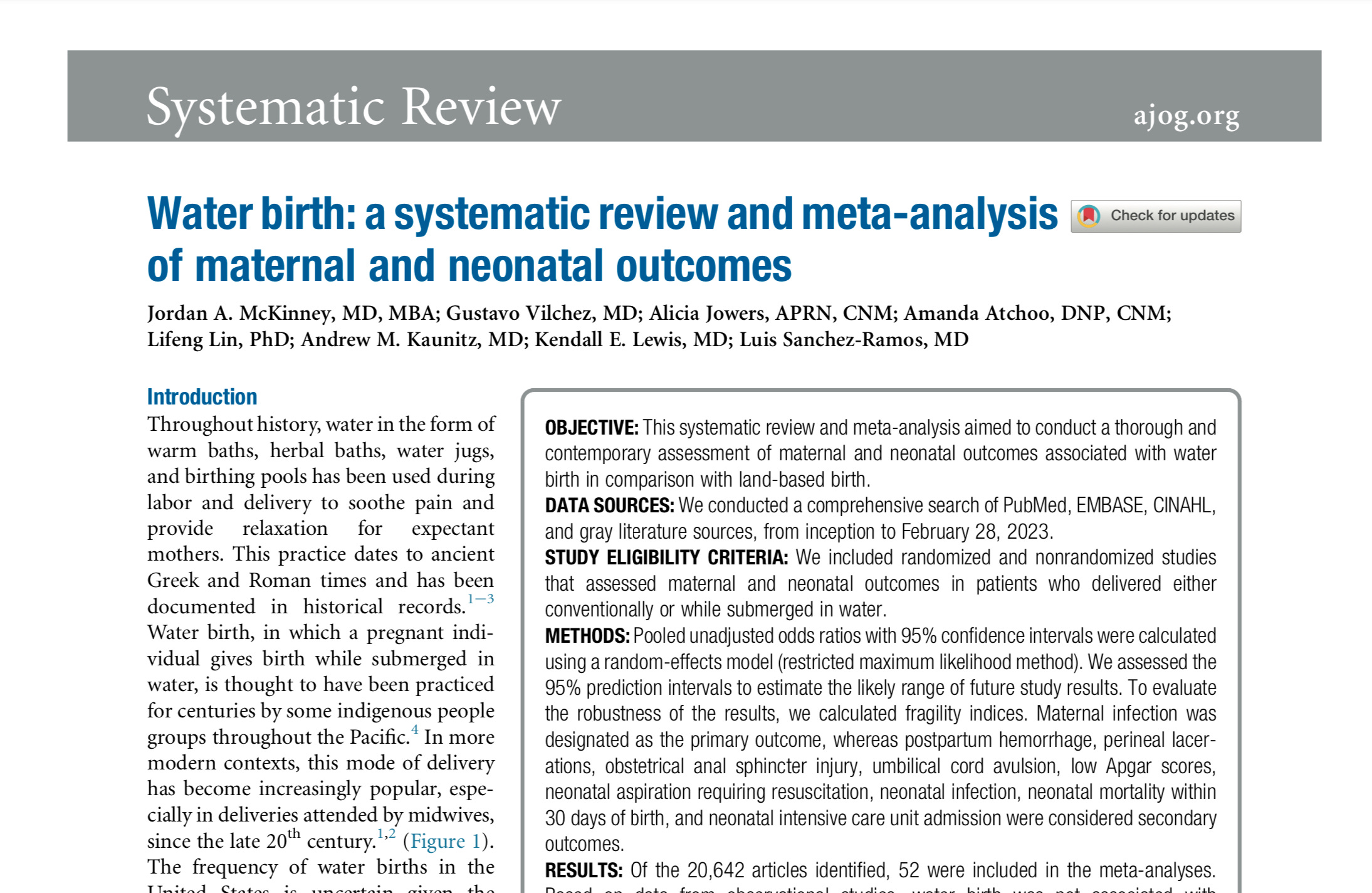
Reaffirming the Role of Water Birth in Modern Maternity Care
For decades, water birth has drawn both interest and skepticism within the maternity care landscape. Often labeled “alternative” or “controversial,” its perceived risks have been frequently cited despite a lack of robust, large-scale U.S.-based data. That has now changed.
A new study published in Birth by McKinney, Jolles, Vedam, and colleagues offers strong evidence that water birth is not only safe but may offer specific benefits to birthing women without increasing neonatal risks. This prospective observational study of over 1,200 low-risk births, including 511 water births, may shift the standard of care in community birth settings across the United States.
"Water birth was not associated with increased neonatal risk, and it conferred a lower risk of perineal laceration."
Study Design, A Clear, Comparative Approach
This prospective observational study drew data from 26 community birth centers across the United States. Researchers followed:
511 water births
712 land births (non-immersion)
All participants were healthy, low-risk individuals planning birth center deliveries attended by midwives. The researchers tracked a range of maternal and neonatal outcomes to assess both safety and benefits.
Key maternal outcomes included:
Perineal laceration rates
Postpartum hemorrhage
Maternal transfer to hospital care
Key neonatal outcomes included:
5-minute Apgar scores
NICU admissions
Umbilical cord avulsion
Respiratory distress
Findings, Safe for Baby, Protective for Mother
Neonatal Outcomes:
There were no significant differences in NICU admissions, low Apgar scores, or respiratory distress between water and land births.
Umbilical cord avulsion occurred more frequently during water birth (1.3% vs. 0.2%) but all cases were nonsevere and resolved without long-term issues.
"Water birth was not associated with any increase in severe adverse neonatal outcomes."
Maternal Outcomes:
Water births were associated with a significantly lower rate of perineal laceration compared to land births (57.5% vs. 65.7%).
There were no increases in postpartum hemorrhage or hospital transfers, further supporting water birth’s safety profile.
"Reduced perineal trauma is a significant benefit for those choosing water birth."
Implications for Birth Centers and Policy
This study directly challenges outdated policies and guidance from some professional organizations that have cautioned against water birth due to “insufficient evidence.” It offers rigorous, U.S.-based data supporting water immersion during delivery for appropriately selected, low-risk individuals under trained supervision.
Midwives, birthing centers, and informed families now have high-quality data to justify offering and choosing water birth as a viable option. This could help:
Expand access to water birth services in community settings
Reduce medical interventions, and enhance maternal comfort
Promote physiologic birth experiences that align with the body’s natural rhythms
"This is the most comprehensive prospective evaluation of water birth in the U.S. to date, and the evidence is clear."
Conclusion, Water Birth Belongs in the Toolbox of Safe, Evidence-Based Birth Options
McKinney et al.'s research reaffirms what many birth professionals have observed firsthand, water birth is safe, effective, and empowering for mothers and babies when practiced under appropriate conditions. As the U.S. maternity system grapples with rising cesarean rates, maternal dissatisfaction, and disparities in care, embracing evidence-based options like water birth may be a key step toward more humane, patient-centered birth models.
Reference:
McKinney JA, Jolles D, Vedam S, et al. Water birth, a prospective observational study of maternal and neonatal outcomes in the United States. https://pubmed.ncbi.nlm.nih.gov/38462266/
