On the Front Lines of an Unfolding Crisis: Why Chiropractors Must Be Ready for Rare but Devastating Post-Vaccine Events
Originally published: 2025-06-29
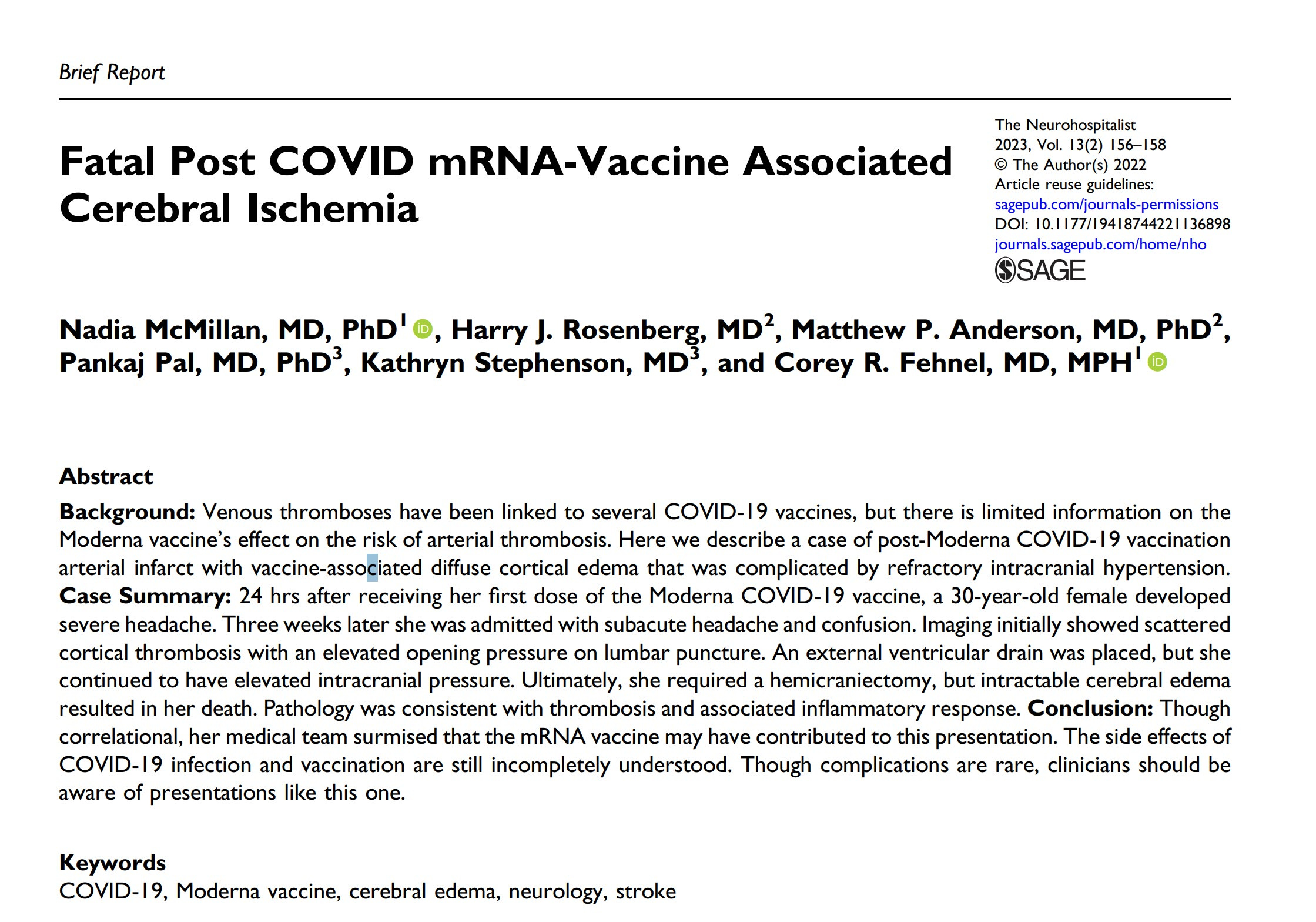
A recent case published in The Neurohospitalist describes the tragic and fatal outcome of a 30-year-old woman who developed multifocal arterial brain thromboses and cerebral edema following her first Moderna COVID-19 vaccine. The timeline and pathology suggested a possible vaccine-associated pro-thrombotic inflammatory event—ultimately resulting in brain death despite aggressive medical intervention, including surgery.
This isn’t just a neurology story. It’s a sobering reminder for chiropractors who are often among the first to see patients suffering from unexplained symptoms following viral infections or vaccination. As frontline providers—particularly for those who don’t return to conventional medical settings—chiropractors are uniquely positioned to encounter early signs of systemic complications, including neurological and vascular dysfunction.
“Chiropractors are often the first to hear the stories medicine overlooks.”
The Case That Shook a Neurology Department
Twenty-four hours after receiving her first dose of Moderna’s mRNA COVID-19 vaccine, the patient developed severe, atypical headaches. Over the following three weeks, she experienced visual disturbances, confusion, and elevated intracranial pressure. Despite hospital admission, advanced imaging, steroid and IVIG therapy, and even a decompressive hemicraniectomy, the inflammation and thrombosis were uncontrollable. Brain autopsy confirmed T-cell infiltrates and vascular thrombi without any infectious cause.
This case illustrates the kind of catastrophic presentation that could become more visible in the chiropractic office if these adverse responses continue to go unrecognized or underreported in other healthcare environments.
What Chiropractors Must Understand About Their Frontline Role
Patients may walk into your office complaining of persistent headaches, fatigue, cognitive issues, visual disturbances, or dizziness—weeks after a vaccine or illness. They may have been dismissed or told it’s “just anxiety.” When conventional medicine lacks answers, they often turn to you.
“This isn’t fear-mongering. It’s risk management.”
This is not an invitation to diagnose or treat conditions outside your scope. It is, however, a call to understand what may be happening and respond with appropriate referrals, documentation, and professional caution.
Informed Conversations, Not Diagnoses
It’s tempting to offer opinions when a concerned patient says, “My doctor said I’m fine, but something still feels off since the vaccine.” Be compassionate, listen carefully, and encourage appropriate evaluation. Avoid making causal claims, drawing conclusions, or recommending off-label treatments. The goal is to support, not to speculate.
“Your patient’s path to answers may begin with you, but it shouldn’t end with your opinion.”
Protecting Yourself While Supporting Patients
From a malpractice and risk management perspective, here’s what you should do:
Document Everything: Especially if the patient expresses concern about recent vaccination or illness. Include timelines and patient statements verbatim.
Make Timely Referrals: Don’t try to “rule out” complex pathology in your office. If symptoms are persistent, atypical, or worsening—refer immediately.
Know What’s Reportable: Chiropractors can (and should) file VAERS reports when patients present with suspected vaccine-related complications.
Avoid Scope Drift: Educate patients on spinal and nervous system function—but don’t offer theories outside your training.
“Don’t let your good intentions open the door to liability.”
Preparing for the Next Mass Casualty Event
We are living through an extended mass casualty event—one not marked by trauma, but by complex biological and societal outcomes. The COVID era continues to ripple through our communities, our nervous systems, and our clinics. Whether it’s viral injury, long COVID, or vaccine-related complications, chiropractors are increasingly on the front lines.
“In rare but catastrophic cases like this, chiropractors must tread carefully—compassion without clinical overreach.”
That means more than ever, you must protect your patients and yourself with vigilance, education, and clear boundaries.
ChiroFutures is here to help. Whether you need risk management guidance, consent templates, or support through a complex case—lean on us. That’s what we’re here for.
Stay informed. Stay within scope. Stay protected.
– The ChiroFutures Malpractice Insurance Program Team
