Ovarian Reserve and COVID-19 Vaccines: When Women’s Concerns Were Brushed Off, Science Finally Weighed In
Originally published: 2025-05-14
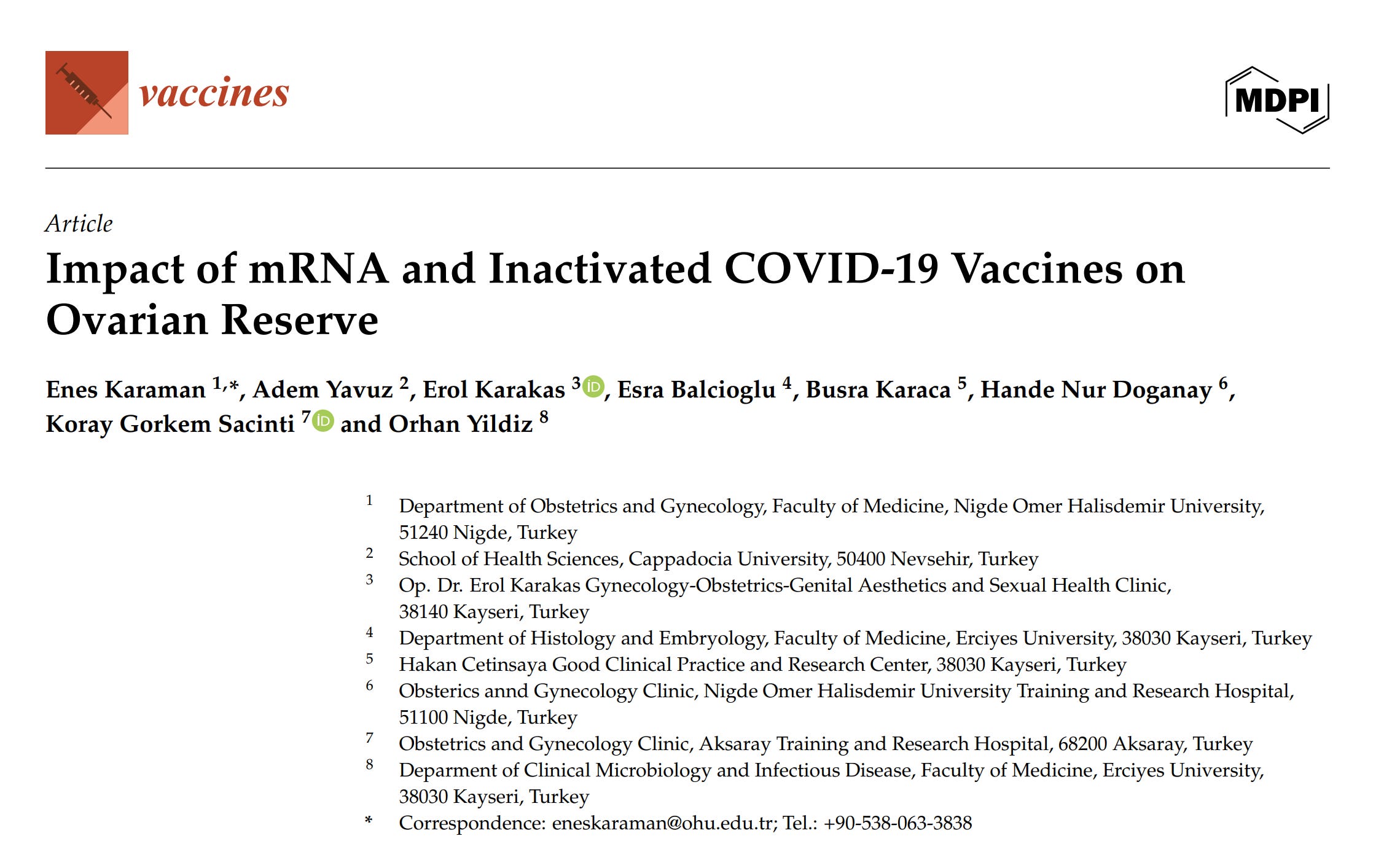
For years, women who expressed concerns about the possible effects of COVID-19 vaccines on fertility were met with ridicule, censorship, or dismissal. Experts and media outlets alike labeled these worries as “baseless,” “unscientific,” or “conspiracy theories.” But a recent peer-reviewed animal study published in the journal Vaccines (MDPI, February 2025) has brought this issue back into scientific focus—with results that merit urgent attention, further investigation, and, above all, respect for the concerns that so many women voiced early on.
The Study at a Glance
The paper, titled “Impact of mRNA and Inactivated COVID-19 Vaccines on Ovarian Reserve”, explored how these vaccines affect female reproductive biology—specifically ovarian function—in a controlled rat model.
Methodology:
Female Wistar rats were assigned to three groups: control, mRNA vaccine, and inactivated vaccine.
Researchers measured anti-Müllerian hormone (AMH) levels—a widely recognized indicator of ovarian reserve—as well as histological changes in the ovaries and markers of apoptosis such as VEGF, TGF-β1, and caspase-3.
Key Findings:
Both vaccine groups exhibited a significant increase in atretic (degenerating) follicles.
The mRNA group had a marked reduction in antral and preovulatory follicles.
AMH levels were significantly reduced in the mRNA group, indicating a potential decline in ovarian reserve.
Elevated levels of apoptosis-related proteins were found in ovarian tissues of both vaccinated groups.
“A statistically significant decrease in serum AMH levels was observed in the mRNA vaccine group.”
—Vaccines (MDPI), 2025“mRNA vaccines may exert more pronounced detrimental effects on ovarian folliculogenesis compared to inactivated vaccines.”
Not Just a Rat Problem?
While this study was conducted in animals and not humans, the implications cannot be easily dismissed. Anti-Müllerian hormone (AMH) is a biomarker used in human fertility clinics every day to assess a woman’s reproductive potential. The fact that this hormone dropped significantly post-mRNA vaccination in rats suggests the need for robust human studies, especially longitudinal research tracking fertility outcomes post-vaccination.
The authors themselves acknowledge the limitations of animal models but caution that:
“These findings highlight the need for further clinical investigations to determine whether similar impacts occur in humans.”
Vindication for the Silenced
From social media bans to employer mandates, women raising questions about fertility were cast as irrational, anti-science, or conspiracy-driven. Now, with peer-reviewed science finally catching up, we are forced to ask: How many legitimate safety signals were missed—or ignored—because of political and ideological pressure?
This study does not "prove" that COVID-19 vaccines cause infertility in women, but it does prove something else that’s been sorely missing: the concerns were always valid.
Medical Gaslighting: A Pandemic Within the Pandemic
The term medical gaslighting has gained traction in recent years, especially among women whose health complaints are too often written off as psychological or exaggerated. The pandemic exacerbated this issue on a global scale.
Instead of funding well-structured fertility studies in 2020 and 2021, public health agencies and media outlets assured the public—without evidence—that fertility risks were “zero.” The lack of precaution, and the dogmatic certainty, are now being called into question.
“The possibility of vaccine-induced effects on reproductive biology needs to be taken seriously, especially in light of global mass immunization campaigns targeting women of reproductive age.”
What Should Happen Next
Immediate funding for independent human fertility studies based on mRNA and inactivated vaccine platforms.
Reassessment of public health communications during the pandemic, especially those that dismissed female-specific health concerns.
An apology and reckoning from agencies and professionals who silenced or shamed women instead of listening.
Conclusion: A Moment for Humility and Scientific Integrity
The scientific process must always be open to new data, especially when it challenges mainstream consensus. For women who were told they were crazy, this paper is not just a research finding—it’s a vindication. Let’s make sure the next generation doesn’t have to fight this hard to be heard.
If you’ve had questions about how COVID-19 vaccines might impact fertility, you’re not alone—and you’re not wrong to ask. Science is finally beginning to catch up to what many instinctively knew all along: women deserve answers, not silencing.
Read the full study here:
MDPI Vaccines Journal – “Impact of mRNA and Inactivated COVID-19 Vaccines on Ovarian Reserve”
