RFK's Ban on Drug Ads: Treating Symptoms, Not Causes
Originally published: 2025-03-25
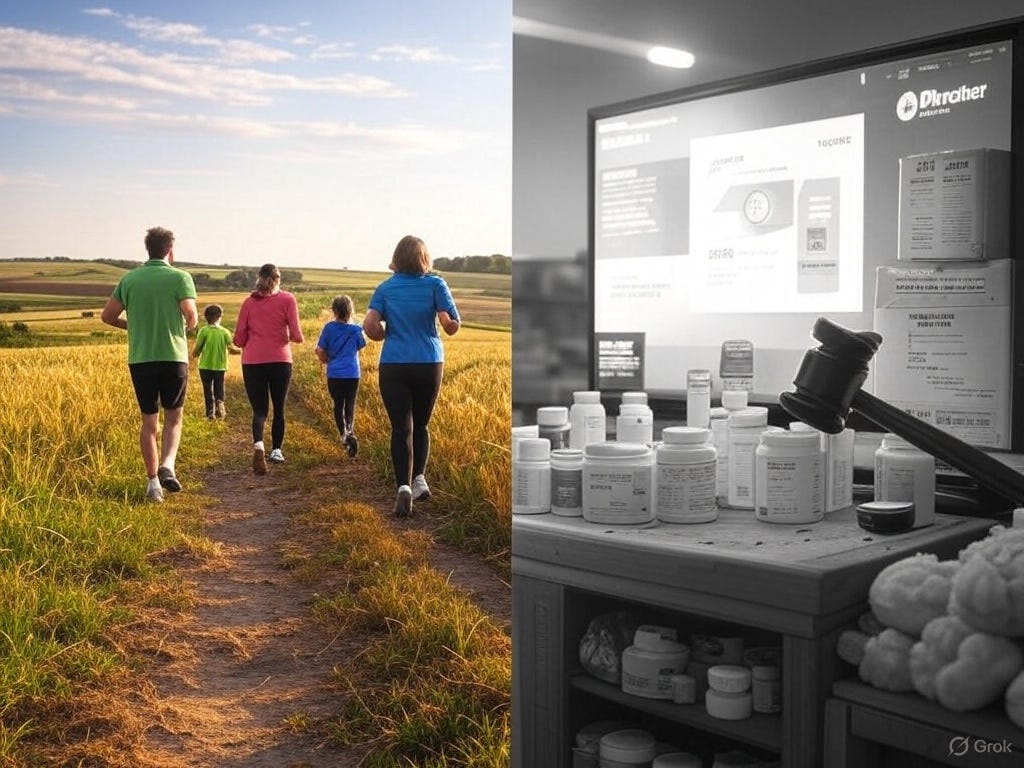
Robert F. Kennedy Jr.’s proposal to ban pharmaceutical advertising on television has ignited a firestorm of debate, pitting free speech advocates against those who see it as a step toward dismantling Big Pharma’s influence. As a cornerstone of his Make America Healthy Again (MAHA) movement, the idea promises to curb overmedication and weaken the media-pharma nexus. But here’s the rub: banning drug ads is like popping an aspirin for a broken leg—it treats a symptom, not the root cause. The MAHA vision calls for a deeper reckoning with America’s health crisis, one grounded in lifestyle, prevention, and systemic reform, not just silencing commercials.
Free Speech and Autonomy: The Constitutional Catch—and a Chilling Echo
First, there’s the legal wall. Drug ads fall under commercial speech, protected by the First Amendment as long as they’re truthful and lawful. The Supreme Court’s Central Hudson test demands a compelling government interest and narrow tailoring for restrictions—criteria a total ban struggles to meet. Past efforts, like Trump’s price disclosure mandate, crashed against this precedent, with pharma giants like Merck arguing their right to speak. A ban could face the same fate, bogged down in courts while the deeper health crisis festers.
But it’s not just legality—it’s principle. Banning speech, even slick pharma ads, echoes the censorship we endured during the pandemic and beyond. Remember the muffled voices on social media—X, YouTube, anywhere—when questioning vaccine efficacy or lockdown policies got you labeled a heretic? Posts vanished, accounts suspended, all in the name of “protecting” us from “misinformation.” Drug ads might peddle questionable pills—overhyped statins or antidepressants with laundry-list side effects—but silencing them repeats that top-down control. People should have the agency to hear the pitch, weigh the risks, and decide for themselves, just as they deserved to debate COVID measures without Big Tech playing referee. Even if the drugs are dubious, autonomy matters more than paternalism. Ads can inform, sometimes sparking doctor visits that uncover real issues. A ban assumes Americans can’t filter the hype, stripping their right to choose. MAHA should trust people to reject the “pill-for-every-ill” lie and seek root-cause fixes like diet or exercise, not gag the conversation. Less restrictive tools—better disclosures, counter-messaging—could nudge without overreaching.
A Symptom of a Sick Mindset
Drug ads aren’t the disease; they’re a symptom of a culture hooked on “outside-in” fixes. TV spots for statins or antidepressants rarely tout kale or yoga—they sell relief in a capsule. This mirrors a broader healthcare paradigm where only 3% of spending targets prevention, yet 75% of costs tie to lifestyle-driven chronic diseases. Banning ads might quiet the sales pitch, but it won’t shift the mindset that demands it. People will still chase quick fixes from doctors or TikTok if the root—poor diet, sedentary lives, stress—stays unaddressed.
The MAHA movement should dig deeper, championing salutogenic living: real food, movement, community. Drug ads amplify overmedicalization, sure—studies show they boost unnecessary prescriptions—but they didn’t invent it. That’s decades of conditioning. Silencing them treats the megaphone, not the message. A true MAHA approach would flood airwaves with prevention, not just mute the pharma hype.
The MSM-Pharma Power Play
Then there’s the media angle. Pharma pumps $6.9 billion into DTC ads yearly, with TV grabbing the bulk. Networks like CNN and NBC lean on this cash—hundreds of millions per outlet—making drugmakers a lifeline as viewership dips. Some argue a ban could kneecap MSM’s profits, eroding its sway over the masses and loosening its cozy ties with Big Pharma. Post-ban, a cash-strapped media might turn skeptic, digging into drug scandals instead of parroting press releases. Tobacco’s TV ad ban in ’71 offers a hint: coverage sharpened once the money dried up.
But here’s the catch: MSM might adapt, not collapse. Ad spending overall hit $66 billion in 2022—pharma’s slice isn’t the whole pie. Tech or insurance could step in, keeping the machine humming. And pharma’s influence isn’t just ads—it’s $375 million in lobbying, FDA revolving doors, $1.4 trillion in global muscle. A weaker MSM might amplify public distrust (already at 32% for media, per Gallup, and tanking for pharma post-opioids), but it won’t “control” the beast. Pharma could just pivot to digital—$2 billion there already—where oversight’s laxer. The symptom (ad-funded media bias) takes a hit, but the disease (systemic power) marches on.
The MAHA Paradox
This is where the ban clashes with MAHA’s soul. The movement’s about root causes—rebuilding health from the ground up, not slapping bandages on broken systems. Drug ads are a loud, annoying symptom of a culture and industry gone astray, but banning them is reactive, not transformative. It risks legal blowback, sidesteps personal agency, and leaves the lifestyle crisis untouched. Worse, it could shift pharma’s grip to darker corners—think influencers peddling pills on X—without denting its core power. And after the pandemic’s speech crackdowns, do we really want more bans? MAHA should fight for a world where people hear all sides—pharma’s included—and choose wisely, not one where choices get made for them.
A real MAHA play would double down on the cause: fund prevention, incentivize wellness, drown out drug ads with a louder vision. Let people hear the pharma pitch and reject it—not because they’re forced, but because they’re empowered. Banning ads might feel good, like smashing a TV blaring bad news, but it’s not the cure. America’s health won’t heal until we stop treating symptoms and start fixing what’s broken beneath.
