South Carolina Chiropractors and Educators Push Back Against FCLB’s Power Grab
Originally published: 2025-08-19
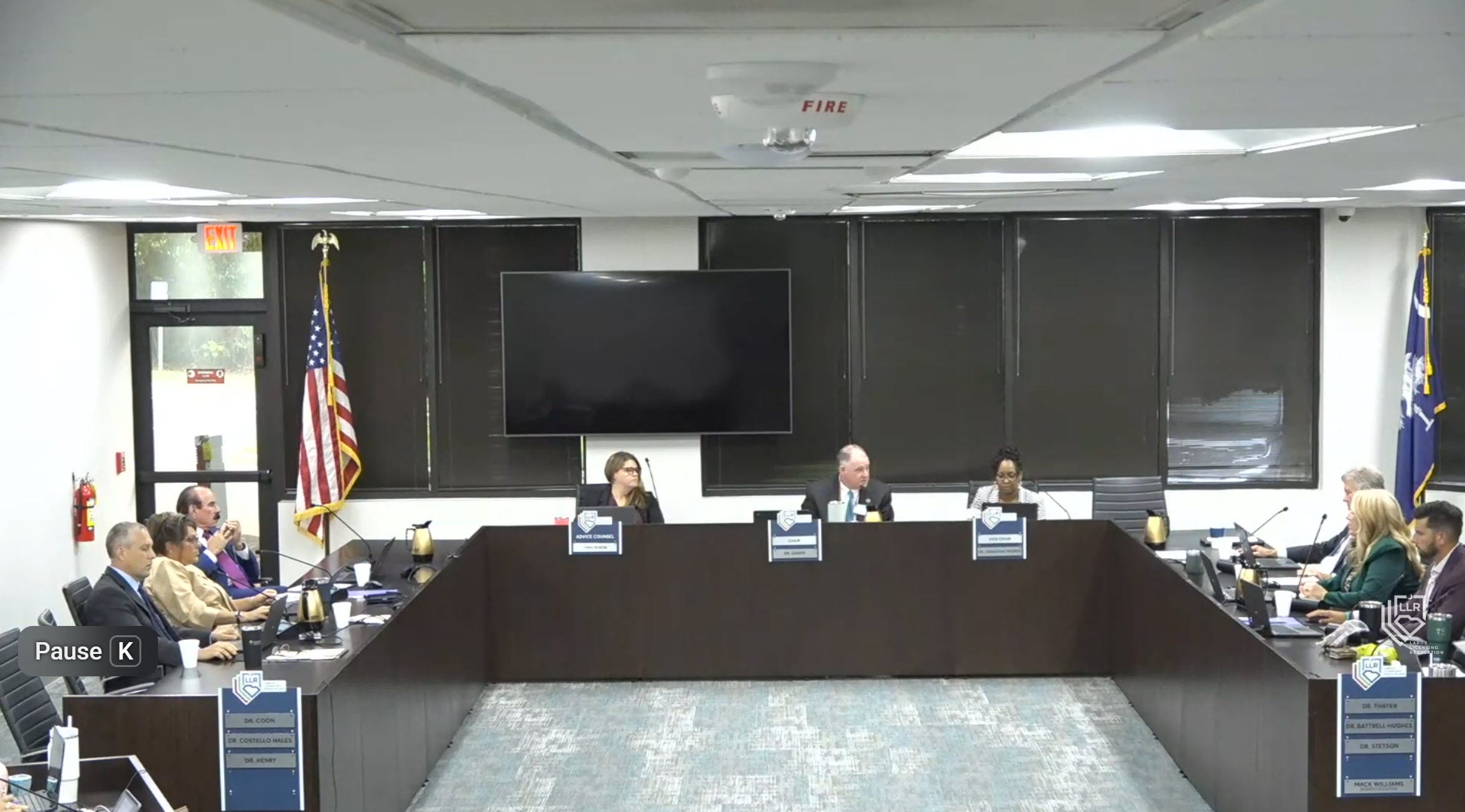
Two Institutions, One Message: Stop the RCSP
At the August 7, 2025 meeting of the South Carolina Board of Chiropractic Examiners, public testimony delivered on behalf of both the Palmetto State Chiropractic Association (PSCA) and Sherman College of Chiropractic raised the alarm about a growing threat to chiropractic regulation: the Recognized Chiropractic Specialties Program (RCSP), created by the Federation of Chiropractic Licensing Boards (FCLB).
In a powerful and principled statement, Dr. George Auger, President of the PSCA, urged the Board to reject the RCSP, calling it a dangerous move toward privatized regulation. Sherman College’s position was entered into the record via a formal letter from President Dr. Jack Bourla, warning that RCSP would jeopardize faculty credentials, undermine academic freedom, and erode the state board’s independence.
CLICK HERE for a copy of the PSCA Letter
CLICK HERE for a copy of Sherman’s letter
Together, these two voices, one representing the practicing profession, the other representing chiropractic higher education, delivered a united message: RCSP is a Trojan horse for centralized control and monopolistic oversight of chiropractic specialties.
“We are alarmed by the growing trend of state boards handing their regulatory power to private, unelected corporations.”
— Dr. George Auger, Palmetto State Chiropractic Association
What Is the RCSP?
RCSP is a program created by the FCLB, a private nonprofit corporation funded primarily by the National Board of Chiropractic Examiners (NBCE). It claims to help state boards evaluate post-licensure specialty credentials, but in practice it functions as a centralized registry of approved credentialing organizations, controlled by a small group of insiders.
RCSP is being sold to state boards as a regulatory shortcut, but it's a shortcut to regulatory abdication.
RCSP does not assess the quality or content of credentials. Instead, it approves the processes of organizations that issue specialty certifications. And those organizations must pay significant fees to be recognized, fees which may exclude smaller, independent, or philosophically diverse programs from ever gaining access.
“Should the RCSP become a de facto standard, qualified Sherman faculty could be rendered ineligible or discredited…”
— Dr. Jack Bourla, President, Sherman College of Chiropractic
Sherman College’s Warning: Threats to Faculty and Academic Autonomy
In a May 19, 2025 letter to the Board, Sherman College President Dr. Jack Bourla laid out grave concerns:
Sherman faculty hold specialty credentials in chiropractic philosophy, pediatrics, and upper cervical care through respected organizations like the ICPA and the International Federation of Chiropractors and Organizations.
None of these credentials are currently recognized by the RCSP, and there’s no guarantee they ever will be.
If the SC Board adopts RCSP, Sherman’s own faculty could be excluded from recognition in their areas of expertise, not based on merit, but based on politics and pay-to-play credentialing.
The letter also pointed out that the Board has already abdicated its authority to other private trade associations, including the ACA and ICA, as approved credentialing bodies. The addition of RCSP, another private corporation with overlapping leadership and funding ties, would further institutionalize an uneven playing field and solidify monopolistic control over specialty recognition.
A National Pattern of Regulatory Capture
“The chiropractic profession is being regulated not by the state, but by an unaccountable network of private corporations.”
— Chiropractic Freedom Coalition
The SC Board is not alone in facing this issue. Boards in Oklahoma and Connecticut have already adopted RCSP, often under the guidance of individuals with direct ties to the FCLB and NBCE:
In Oklahoma, Beth Kidd, Executive Director of the state board, also serves on the RCSP committee.
In Connecticut, Dr. Karlos Boghosian sits on the state board, is President of the NBCE, and is a former President of the FCLB.
This revolving door between private organizations and state regulators has created a system of regulatory incest, where insiders are now writing the rules they later enforce.
“Should the RCSP become a de facto standard… that would undermine our institutional integrity and threaten academic freedom.”
— Dr. Jack Bourla, Sherman College of Chiropractic
What’s Really at Stake
Academic freedom: Schools may be forced to tailor their programs to match RCSP-recognized pathways.
Credential legitimacy: Well-established certifications like those from the ICPA may be discredited.
State board independence: Public regulators have become administrative arms of private corporations.
Public trust: Citizens expect regulatory bodies to serve the public, not unelected trade groups.
Time to Reclaim Regulatory Authority
The chiropractic profession has long stood for independence, innovation, and principled care. But that future is at risk when the entities controlling licensure, education, and specialty recognition are all private corporations, funded by student loans and governed by a network of insiders.
RCSP is not about quality control. It is about control, period.
What You Can Do
Contact your state board and urge them to reject RCSP.
Demand transparency about all relationships between board members and FCLB/NBCE.
Support institutions and associations, like Sherman College and the PSCA, that are fighting for chiropractic independence.
Join the growing movement to restore local control and public accountability in chiropractic regulation
