Stacking the Deck: The NBCE’s Bylaws Amendments Threaten Accountability and Trust
Originally published: 2025-04-30
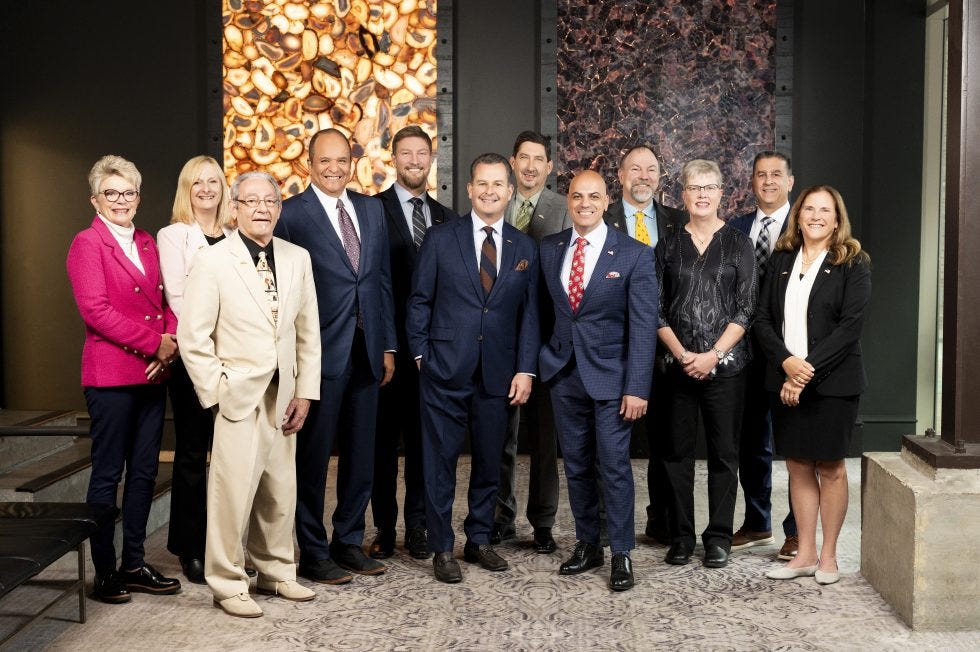
A Crossroads for the Chiropractic Profession
From April 30 to May 4, 2025, the National Board of Chiropractic Examiners (NBCE) will convene its Annual Meeting at the Hyatt Regency St. Louis Arch, alongside the Federation of Chiropractic Licensing Boards (FCLB). On the surface, it's business as usual. But just beneath the formal agenda lies a brewing storm that threatens to further erode trust in two of the most powerful—and controversial—entities in chiropractic.
At this meeting, Delegates will be asked to ratify a series of NBCE bylaw amendments that, if adopted, will eliminate long-standing term limits for various director roles. These changes come at a moment when patience with the NBCE and FCLB is running thin, and calls for reform are growing louder across the profession.
“This isn’t transparency. It’s entrenchment dressed up as administrative housekeeping.”
What the Amendments Really Do
The NBCE is proposing to remove role-specific term limits for:
District Directors (currently capped at 9 years)
FCLB-appointed Directors (capped at 9 years)
At-Large Directors (capped at 8 years)
The stated rationale? “Clarity” and “alignment” with Article IV, Section 8, which limits any director to 12 years total service. But that general cap has always existed alongside these more targeted restrictions for a reason: it prevents power from consolidating in any one seat.
Removing those limits paves the way for musical chairs, where well-connected individuals rotate through roles and maintain long-term control under the guise of change.
“The chiropractic profession is being governed by people who never leave the boardroom.”
Context: Crisis of Confidence in the NBCE and FCLB
This power play arrives amid an already tumultuous period for the NBCE and FCLB, marked by accusations of overreach, monopolistic behavior, and policy manipulation.
The relationship between NBCE and CCE was a key focus of recent complaints filed with the Council for Higher Education Accreditation (CHEA), especially concerning CCE’s Policy 56, which critics argue forces chiropractic programs to comply with NBCE exam structures at the expense of academic freedom.
The NBCE’s centralized “land grab” for Part IV testing, including the unvetted rollout of Part IV, has triggered national backlash. Students, educators, and practitioners alike have criticized the forced migration of testing to NBCE’s Greeley, CO facility, citing cost, inconvenience, and lack of educational validity.
Over 1,000 chiropractors and students have signed an online petition demanding an end to the NBCE’s high-stakes, high-cost Part IV exam, calling it outdated, irrelevant, and a barrier to entry for competent practitioners.
Importantly, chiropractic colleges themselves have expressed strong opposition to the NBCE’s unilateral changes to the Part IV exam process. Schools have repeatedly voiced concerns over centralized testing, lack of transparency, and the absence of valid educational justification for the changes. Yet, the NBCE has continued to forge ahead, ignoring the very institutions that are responsible for educating the next generation of chiropractors.
“The profession is speaking, but NBCE leadership is too busy rewriting the rules to listen.”
Consolidating Power When Reform Is Needed
Rather than confronting these criticisms with humility and structural reform, the NBCE appears to be circling the wagons. The proposed amendments are part of a larger pattern—tightening the Board's internal grip while loosening its accountability to the broader profession.
Even worse, the Committee on Bylaws—which recommended these changes—is composed entirely of current District Directors, making it a self-interested body that now seeks to eliminate the very term limits that apply to them.
“This isn’t reform. It’s regime protection.”
Delegates: The Profession Is Watching
The Delegates who attend this meeting in St. Louis are being handed more than a procedural vote. They are being asked whether chiropractic’s governance will remain open and accountable—or slide further into a closed loop of insiders protecting insiders.
By voting NO on these amendments, Delegates will send a message that:
Term limits exist for a reason.
Governance must evolve through inclusion, not insulation.
Power in chiropractic should flow from the profession—not be hoarded by a few.
“In a time of escalating criticism, the NBCE is not opening the doors. It’s locking them.”
Final Word: Reform or Rebellion?
The 2025 NBCE Annual Meeting could have been a chance to address real concerns—from testing overhauls to monopolistic partnerships. Instead, the organization is asking its Delegates to sign off on weakening the very safeguards meant to protect against abuse.
The chiropractic profession has had enough of top-down decision-making and opaque leadership. The Delegates in St. Louis now stand between meaningful reform and the further calcification of a chiropractic cartel.
