Stephen Welsh: From the Mattress King of China to the Architect of the ICA’s Collapse
Originally published: 2025-10-19
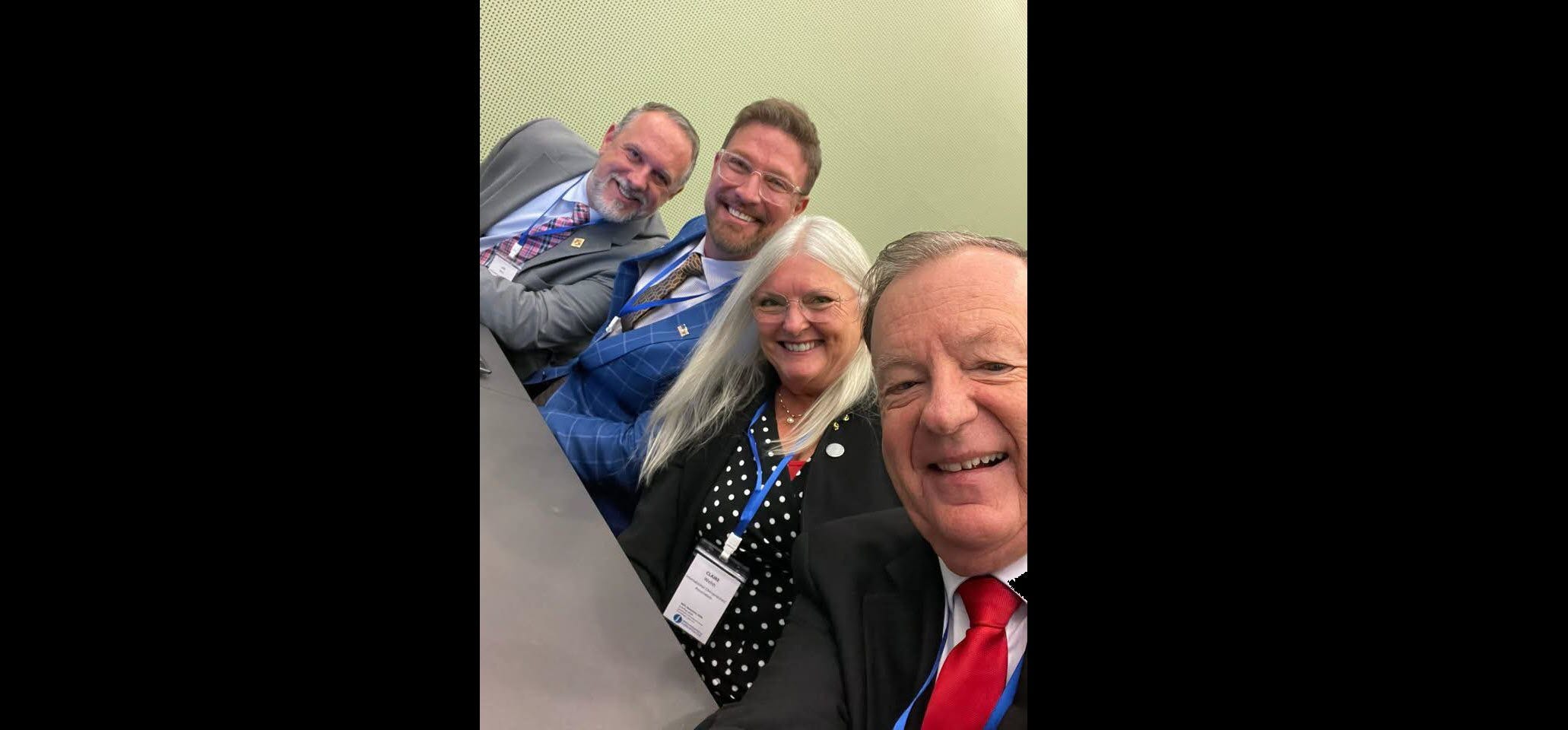
For more than a decade, one name has appeared repeatedly at the center of every major controversy within the International Chiropractors Association (ICA): Stephen Welsh, DC.
Once billed as a “unifier,” Welsh’s tenure across various roles, from ICA President to CEO to Board member, has instead left a legacy of dismantled governance, lost democracy, philosophical compromise, and financial opacity. His “Big Tent” rhetoric promised inclusivity but delivered control, entrenching power in the hands of a small elite while marginalizing the subluxation-centered chiropractors who built the ICA’s historic identity.
“Every scandal in the ICA, governance, elections, philosophy, finances, leads back to the same committee, the same decisions, and the same man.”
The Governance Coup: How Democracy Was Quietly Erased
The foundation of the ICA’s crisis lies in governance, and Welsh was its architect.
Under the previous model, the Representative Assembly (RA), the elected body representing members, was responsible for forming a Nominating Committee. This committee put forward a slate of officers for President, Vice President, Secretary, and Treasurer. If no opposition emerged, the slate was confirmed. If there was opposition, the membership voted directly to decide leadership.
This democratic safeguard was dismantled under Welsh’s direction. The new system established a Governance Committee composed entirely of Board members, giving the Board complete control over leadership selection. Nominations now come only from within the Board, and only the Board votes on who serves in officer positions.
The Representative Assembly and membership were effectively eliminated from governance, reducing the ICA to a self-perpetuating oligarchy.
“The governance model has been turned upside down, transforming a democratic association into a closed circle of power.”
The Governance Committee has since become the nexus of corruption, its secrecy and lack of accountability central to nearly every major crisis the ICA has faced, from the Georgia election interference and fraud to the illegal CEO appointment and the manipulation of bylaws.
The Georgia Election Scandal: Democracy Denied
In what has become known as the ICA’s Georgia Election Fraud Scandal, multiple members, including Drs. Matthew McCoy, Brian Lieberman, Drew Henderson and a dozen other Georgia members, filed formal complaints after documented evidence showed ICA officials interfering in the Representative Assembly election.
Welsh, serving as CEO at the time, obstructed oversight, and allowed an ineligible candidate to remain on the ballot, and ignored repeated calls for transparency. In fact the candidate was asked to throw his name in the ring by Welsh himself even though Bruce Salzinger was an ACA member and had ony become an ICA member in order to do Welsh a favor and unseat Lieberman. When the Governance Committee was asked to investigate, it refused to respond entirely, a move that members described as “dictatorship, not governance.”
Despite confirmed election irregularities, no disciplinary actions were taken. Instead, Welsh was later appointed to the Board, cementing the perception that accountability was dead within the ICA.
“They forced you to surrender your ballot, to give up your right to elect your leadership.”
The Bylaw Overhaul: Power Without Permission
Welsh’s greatest achievement in consolidating control came in 2020, when the Board pushed through a sweeping bylaw overhaul.
Although members voted against adopting the new bylaws, Welsh and the Board implemented them anyway, citing ambiguous legal advice that supposedly permitted them to override the will of the membership.
These bylaws eliminated member voting rights entirely and made the Board self-electing and self-perpetuating.
Even more disturbing, the Governance Committee, again led by Welsh loyalists, was given near-total power over nominations, disciplinary matters, and internal procedures. It became the enforcement arm of ICA’s authoritarian shift.
Stephen Welsh’s “Big Tent”: A Strategy of Accommodation and Erosion that Became a Trojan Horse for ACA Integration
From his earliest years in ICA leadership, Stephen Welsh DC championed what he called a “Big Tent” strategy, an approach framed as inclusion but viewed by many as the systematic dilution of ICA’s subluxation-centered identity. Under Welsh’s vision, the ICA began courting organizations historically aligned with the American Chiropractic Association (ACA), many of which advocate for expanded scope of practice, drug privileges, and “primary-care” language.
Welsh presented this outreach as a form of bridge-building, but critics describe it as capitulation, a political maneuver to align ICA with the Chiropractic Cartel (CCE, NBCE, FCLB, ACA, WFC) and prepare the ground for merger.
“Welsh’s ‘Big Tent’ wasn’t about inclusion, it was about infiltration.”
Georgia: The Prototype for the “Big Tent”
The first and most visible example was Welsh’s campaign to affiliate the Georgia Chiropractic Association (GCA), an ACA-aligned organization, with the ICA, despite the existence of the Georgia Council of Chiropractic (GCC), a long-standing ICA affiliate founded by Sid Williams and DD Humber to defend subluxation-based chiropractic. Welsh is listed as a current member of the GCA on its website.
Multiple ICA members, reported that Welsh brought Dr. Leanna Kart, then-president of the GCA, to an ICA convention to lobby Representative Assembly members for the GCA’s admission as an affiliate. When members objected, citing GCA’s ACA ties and its active endorsement of the ACA’s Medicare Scope Expansion & Drug Bill, Welsh reportedly erupted in anger and was ruled “out of order” during the session
Welsh’s persistence in pushing the GCA, still listed on the ACA website as a “related organization”, raised concerns of deliberate sabotage of the GCC, the principled Georgia affiliate. Members believed Welsh was trying to hurt the GCC and looking at a merger with the ACA down the road.
Pennsylvania: Promotion of ACA Affiliates and Anti-Subluxation Speakers
The “Big Tent” experiment expanded to other states. In 2019, the ICA under Welsh openly promoted the Pennsylvania Chiropractic Association (PCA) and its convention, despite PCA’s formal ACA affiliation and endorsement of the same drug-expansion bill. The PCA event featured Carlo Ammendolio, a self-proclaimed “subluxation denier” who called the vertebral subluxation “old hat” and “Dark Ages.”
Rather than defend ICA’s principles, Welsh justified the promotion as part of his “Big Tent.” Critics argued that the ICA was now paying dues to organizations that ridiculed the very concept of vertebral subluxation.
“The ICA wasn’t defending subluxation anymore, it was sponsoring its critics.”
Policy Consequences: Aligning with ACA Bills and Scope Expansion
Welsh’s “Big Tent” extended beyond associations to legislative advocacy. In 2019, he publicly encouraged leaders to support both the ICA and ACA Medicare bills, saying “there’s nothing to be gained by forcing anyone to choose sides.” The ACA bill, of course, sought drug privileges through full-scope parity for chiropractors.
His phrasing, “it’s not necessarily an either/or”, stunned ICA members, many of whom saw it as a total betrayal of the ICA’s historic opposition to drugs and medicalization.
A Pattern of Governance Manipulation
The Georgia affiliate and election controversies later exposed how Welsh’s “Big Tent” politics intertwined with governance manipulation. During the 2024 Georgia Representative Assembly election, Welsh, acting as interim CEO, altered election timelines and allowed an ineligible candidate, ACA member Dr. Bruce Salzinger, to remain on the ballot.
Evidence in the Henderson letters and the McCoy and Lieberman complaint shows that Welsh used his administrative control to delay the process and override the ICA Secretary’s authority
Members alleged that this was done to ensure Salzinger’s election and an act consistent with Welsh’s long-term effort to consolidate power within a compliant leadership circle sympathetic to ACA and WFC policy.
National Implications: Redefining “Unity” as Submission
In every case, Georgia, Pennsylvania, and the national legislative front, Welsh invoked the language of “unity” and “common ground.” In practice, it meant moving the ICA closer to ACA orthodoxy while sidelining those who resisted. The Representative Assembly was stripped of meaningful authority, dissenters were expelled from ICA forums, and bylaw changes concentrated power in a governance committee composed largely of Welsh’s allies.
This concentration of control made it possible for him to advance controversial relationships, with ACA affiliates, with the WFC, and with commercial partners in China, without member oversight.
The “Big Tent” as a Cover for Capture
What began as rhetoric about inclusion became a framework for political and philosophical capture. Under Welsh’s “Big Tent,” principled ICA affiliates were undermined, anti-subluxation groups were elevated, and the organization’s own election processes were compromised to maintain that trajectory.
The Georgia scandal, in particular, demonstrates how administrative power and ideology converged: by manipulating election rules, Welsh ensured that the ICA’s future leadership would align with his pro-ACA, pro-WFC agenda.
“The Big Tent didn’t unify the profession, it suffocated the ICA from within.”
At ICA conventions, anti-subluxation speakers from the WFC and ACA were promoted, while traditional voices were excluded. The Pennsylvania Chiropractic Association, an ACA-aligned group and signatory to the ACA’s Medicare Scope Expansion and Drug Bill, was even endorsed by ICA under Welsh’s presidency.
“This is not leadership, it is betrayal, trading principle for political acceptance.”
The Berlin Fiasco: When Subluxation Was Called “Rubbish”
You would have thought that the embarrassing display of unprofessional and disruptive behavior of presenters and attendees at the WFC Conference in Berlin in March of 2019 would have sealed the deal in regards to the ICA getting out of the World Federation of Chiropractic. The behavior involved attacks on practitioners who focus on the management of vertebral subluxation and included the throwing of water bottles onto the stage and clapping and cheering as the management of subluxation was denigrated.
Instead of dropping its membership and denouncing the WFC for sanctioning such behavior along with the WFC’s decades long attacks on subluxation and those who practice it, Welsh praised the WFC “. . . for the excellent work done by the WFC in advancing the interests of the chiropractic profession around the world.”
According to those who attended, the Chair of the WFC Research Council at the time, Greg Kawchuk DC, Ph.D, compared bringing a child to a vitalistic chiropractor to bringing them to a Catholic priest at a children’s school.
In addition to comparing chiropractors who practice in a subluxation model to child molestors, Kawchuk was also a co-author on a paper titled: “Chiropractic, one big unhappy family: better together or apart”.
His co-authors included fellow subluxation deniers Charlotte Leboeuf-Yde, Stanley I. Innes, Kenneth J. Young, and Jan Hartvigsen. The paper denigrates the practice of chiropractic in a vitalistic salutogenic, subluxation model and was promoted from the WFC platform.
Leboeuf-Yde and her colleagues have been attacking subluxation management and the chiropractors who practice that way for some time.
Instead of withdrawing ICA’s support or demanding accountability, Welsh, then ICA President, chose a weak “diplomatic response”, claiming the organization would “work through channels” rather than take a stand.
This incident solidified the growing perception that Welsh’s ICA had become a junior partner in the Chiropractic Cartel, unwilling to defend chiropractic’s foundational principles when it mattered most.
“When subluxation was mocked on the world stage, the ICA’s leader stayed silent.”
The Long Tenure Problem: Staying Beyond the Rules
Adding to the governance crisis, Welsh has now served on the ICA Board for over 11 years, exceeding the nine-year limit established by the ICA’s own bylaws. The claim is that the bylaws “reset” the clock. His extended presence has fueled accusations that he treats the ICA as personal property rather than a member-driven institution.
Each extension of his influence, through officer roles, committee control, or bylaw manipulation, has come at the expense of transparency, accountability, and the very democracy that once defined the ICA.
The Mattress King of China: Hidden Interests and Global Entanglements
In addition to his domestic influence, Welsh’s expanding international ventures have raised questions about financial conflicts of interest and divided loyalties.
Dubbed by some as “The Mattress King of China,” Welsh has cultivated deep business ties in China, promoting chiropractic through trade and health initiatives often linked to Chinese manufacturing and investment sectors. He played a key role in the China International Chiropractic and Spinal Health Summit and helped broker an MOU between Life University, the ICA, and Chinese organizations to “expand chiropractic in Mainland China.”
While these efforts were marketed as professional outreach, they blur the line between professional diplomacy and personal business development.
Sources close to the ICA say that Welsh’s Chinese partnerships involve furniture and mattress ventures, and that his ongoing push for ICA’s alignment with the World Federation of Chiropractic (WFC), an organization with deep WHO and UN ties, may not be purely ideological.
“If Welsh stands to benefit from Chinese partnerships, it raises serious questions about whether his global alliances serve chiropractic, or his own bottom line.”
To date, there has been no public disclosure of any financial or business conflicts related to Welsh’s activities in China or his global affiliations.
The Common Thread: Governance Failure and Conflicted Alliances
Whether the issue is election fraud in Georgia, the illegal CEO appointment, the bylaw overhaul, or international entanglements, every major crisis within the International Chiropractors Association (ICA) traces back to the collapse of governance and the unchecked power of a small inner circle, led or enabled by Stephen Welsh.
The Governance Committee has become the ICA’s central instrument of control: opaque, unaccountable, and repeatedly weaponized to suppress dissent and consolidate authority. What began as a committee designed to uphold structural integrity has devolved into a shield for misconduct and a lever for political manipulation. From altering election timetables to protecting ineligible candidates, Welsh’s interventions illustrate how the governance system itself has been hijacked to serve personal and factional interests.
“The ICA’s disease isn’t philosophical confusion, it’s governance rot.”
The Georgia Election Scandal: A Case Study in Manipulation
In Georgia, that governance rot became undeniable. Welsh, acting as interim CEO, directly inserted himself into the state’s Representative Assembly election, altering dates, overriding eligibility rules, and maintaining the candidacy of ACA member Salzinger, who had joined the ICA less than a year prior and was therefore ineligible under the bylaws. When members like McCoy, Lieberman, Henderson and a dozen others challenged the irregularities, Welsh responded dismissively, admitting the election had been delayed but offering no lawful justification. The decision to proceed anyway, against the Secretary’s finding of ineligibility, exposed a deliberate abuse of authority.
The ensuing complaints detailed a pattern of intimidation, election tampering, and governance subversion. Yet, as correspondence shows, ICA President Joe Betz minimized Welsh’s conduct as an “error in judgment,” a characterization that members described as “gaslighting.” The result: no accountability, no reform, and a deepening loss of trust.
Welsh’s “Big Tent” and the Georgia Connection
Welsh’s conduct in Georgia cannot be understood in isolation. It reflects his long-standing push to align ICA with ACA-affiliated state associations that openly promote drug privileges and expanded scope of practice, an agenda fundamentally at odds with ICA’s founding principles. In Georgia, Welsh repeatedly sought to affiliate the Georgia Chiropractic Association (GCA), an ACA-aligned group, over the long-standing ICA affiliate, the Georgia Chiropractic Council (GCC). His efforts were rebuffed by the Representative Assembly, but he persisted, reportedly shouting down members who opposed the move. Witnesses described his behavior as “out of order” and “completely disrespectful,” a moment that crystallized how far governance norms had eroded under his influence.
“Why does Dr. Welsh want an ACA-aligned organization to be an ICA affiliate so badly?”
The Network: Welsh, Jaeger, and Ouzts
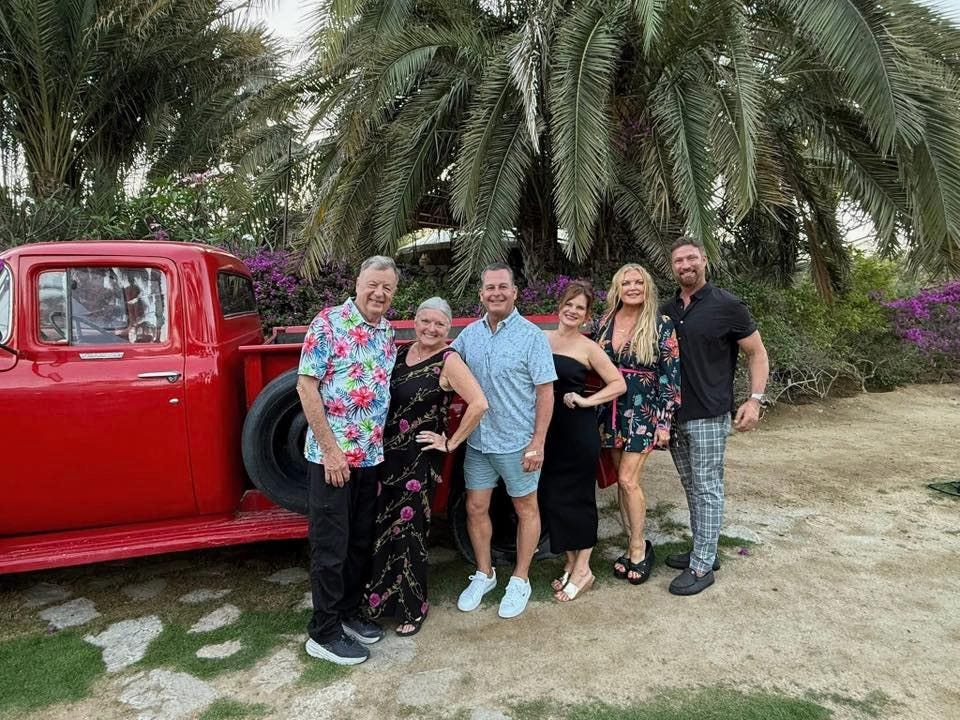
The broader web of influence extends beyond ICA. The relationship between Welsh, Dr. Jason Jaeger, and Dr. Norman Ouzts, captured in a now-circulating photo vacationing together in Cabo, illustrates a convergence of power between ICA leadership and the National Board of Chiropractic Examiners (NBCE). Jaeger, who serves on both the NBCE and ICA Boards and is Secretary of the Nevada Chiropractic Board, is closely aligned with Welsh’s governance approach. His advocacy for centralized authority and his ties to Ouzts, the NBCE’s executive, form a triangle of mutual protection and shared interests that explain ICA’s silence on the NBCE’s Part IV centralization scheme.
The friendship network between these three men helps clarify why ICA has refused to join the Chiropractic Freedom Coalition or oppose NBCE’s consolidation of power in Greeley. Their mutual alignment, political, financial, and philosophical, has rendered the ICA complicit through inaction, even as students and state boards have protested the NBCE’s overreach.
International Entanglements: The ICEA Connection
Compounding the concern is ICA’s quiet acquiescence to global initiatives that mirror this domestic power consolidation. The International Chiropractic Education Alliance (ICEA), a coalition that includes both the NBCE and the Council on Chiropractic Education (CCE) as founding members, advances an international framework for chiropractic education and regulation that systematically excludes subluxation-based philosophy. Welsh’s record of appeasement toward the World Federation of Chiropractic (WFC), which helped spawn the ICEA, further demonstrates his alignment with the very institutions dismantling the ICA’s historic mission. ICA Board member Jaeger’s participation in the ICEA is a slap in the face to decades of ICA members fight against such educational consolidation.
The Pattern Comes Full Circle
From local election tampering in Georgia to international alliances that marginalize vertebral subluxation, Welsh’s leadership has revealed a consistent pattern: centralized control, erosion of member sovereignty, and accommodation of the medicalized factions that ICA was created to resist. His “Big Tent” rhetoric has served as a cover for merging vitalistic chiropractic into the same cartel system that controls accreditation, licensure, and testing worldwide.
And yet, as multiple documents show, the real story isn’t just about one election or one man, it’s about a governance system deliberately re-engineered to eliminate accountability. Until that system is dismantled, the ICA’s crisis of integrity will persist.
“Every scandal in the ICA leads back to the same place, the governance committee. And every time, Welsh is standing there.”
Conclusion: The Cost of Compromise
Stephen Welsh promised unity and modernization. What he delivered was consolidation and corruption. The ICA that once stood as the voice of principled chiropractic now teeters on irrelevance, its membership disenfranchised, its leadership discredited, and its credibility eroded by the very man who claimed to protect it.
As Georgia Council Vice President Dr. Drew Henderson put it, “This is not reform, it’s dismantling.”
The question now is whether the ICA can rebuild from the wreckage Welsh leaves behind, or whether it will become another casualty of compromise in the age of the Chiropractic Cartel.
“Integrity and principle cannot survive governance built on deception.”
