Study Reveals Long-Term Immune Changes in mRNA-Vaccinated Young Adults A Year After the Shot
Originally published: 2025-04-18
Introduction
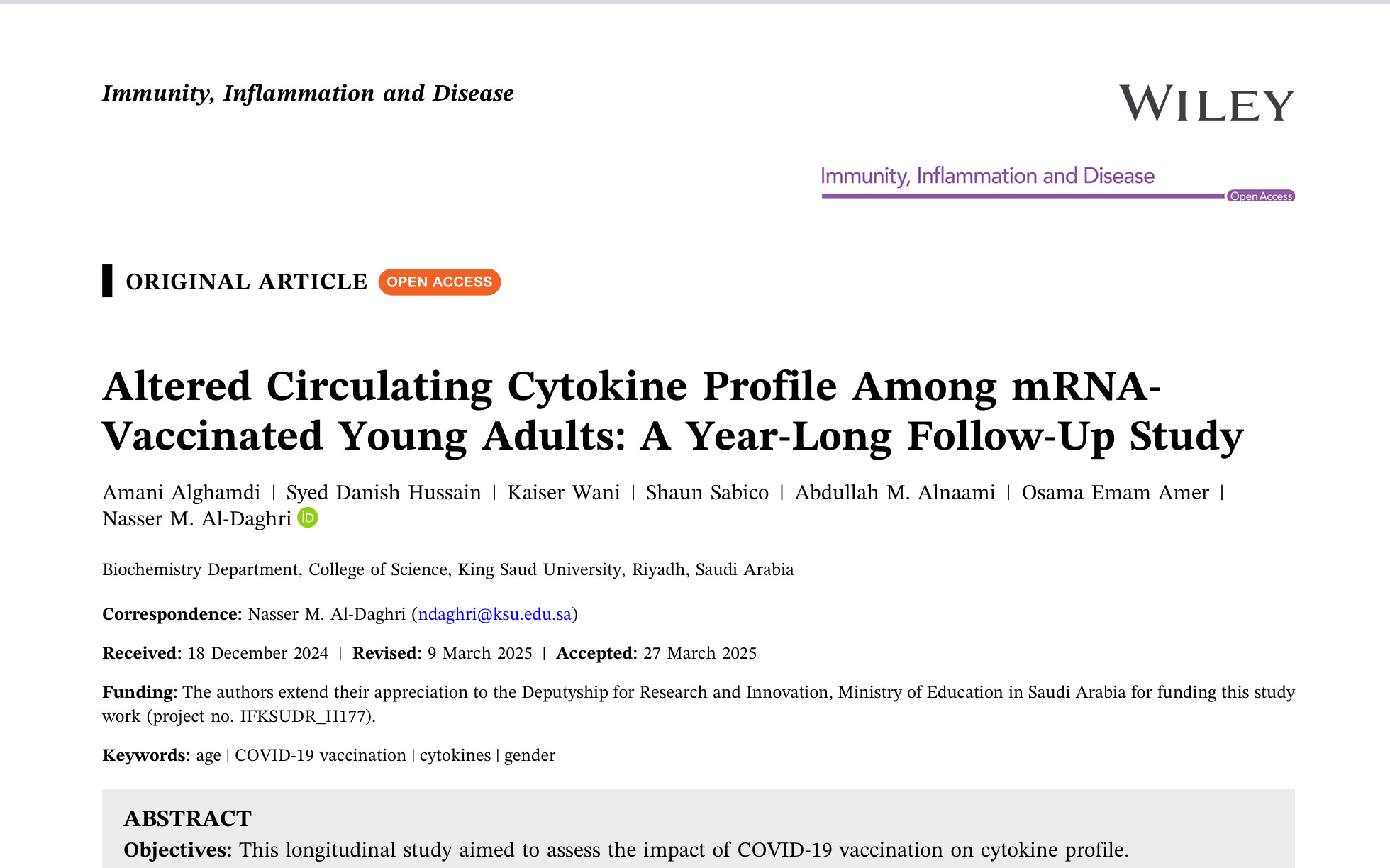
A newly published peer-reviewed study in Immunity, Inflammation and Disease is making waves in the scientific community — not because it reveals immediate safety concerns, but because it uncovers persistent, measurable immune system changes in healthy young adults one year after receiving mRNA COVID-19 vaccines. The study, led by researchers in China, tracked cytokine profiles over a 12-month period and found a significant rebalancing of the immune system, with both upregulated and downregulated markers that could have long-term implications.
“This altered immune signature suggests a sustained shift in immune homeostasis post-vaccination,” the authors conclude.
Study Design and Findings
The study included 46 healthy young adults who received two doses of an mRNA COVID-19 vaccine and were followed at multiple timepoints: pre-vaccination, and then 14, 90, 180, and 360 days afterward. The researchers measured the levels of over 40 cytokines — small proteins that mediate and regulate immunity, inflammation, and hematopoiesis.
What they found was striking: although some pro-inflammatory cytokines spiked early after vaccination (as expected), certain cytokines remained significantly altered even 12 months later. Notably, elevated levels of IL-8, TNF-α, and MCP-1 persisted in several participants — all of which are associated with chronic inflammation and tissue damage if left unchecked.
At the same time, levels of other critical immune mediators, including IL-2 and IL-15 — which play a role in T-cell proliferation and antiviral response — showed suppression at various follow-ups.
“The long-term balance of the cytokine network may be disrupted by mRNA vaccination,” the study states, cautioning that this disruption may have “yet-uncertain health implications.”
Implications for Pediatric and Prenatal Populations
While this particular study focused on young adults, the findings resonate deeply within the ongoing debate about mRNA vaccine administration to more vulnerable populations — especially pregnant women and children, whose immune systems are either developing or adapting to new demands.
Cytokine signaling is especially critical during fetal development and early childhood, with tightly regulated immune pathways ensuring normal neurological, cardiovascular, and immunological growth. Persistent dysregulation in these systems — even subtle shifts — could compound over time and manifest as inflammatory or autoimmune conditions later in life.
For pregnant women, any therapy that alters inflammatory cytokines like TNF-α and IL-6 must be approached with caution. These cytokines are known to influence placental function, fetal brain development, and even behavioral outcomes in offspring, as shown in numerous preclinical studies.
Reframing "Safe and Effective"
This study does not claim that mRNA vaccines are unsafe — but it does raise red flags about a one-size-fits-all approachto mass vaccination without long-term follow-up. It adds to a growing body of literature suggesting that even in the absence of acute adverse events, the immune system may be subtly but durably impacted by the novel vaccine platform.
“We urge long-term immune monitoring in vaccinated populations,” the authors write, especially for individuals receiving repeated doses.
This aligns with calls from independent researchers and clinicians for expanded surveillance of post-vaccine health outcomes — not just limited to myocarditis, anaphylaxis, or thrombosis, but also encompassing subclinical markers like cytokine patterns, neuroinflammation, and fertility metrics.
Conclusion
The implications of this study are far-reaching: if cytokine alterations persist for a year post-vaccination in healthy adults, what might the trajectory look like for children, teens, or fetuses exposed to mRNA vaccine components in utero? Could chronic inflammatory states be seeded in early life through post-vaccine immune modulation?
These are no longer fringe questions. They are now being asked — cautiously, rigorously — by researchers in peer-reviewed journals. And they deserve transparent answers, especially before any expansion of mRNA vaccine programs in sensitive populations.
As always, the question is not whether vaccines can save lives — it’s whether we are willing to ask what else they might be doing.
References:
Zhao L, Zhang S, Wang X, et al. Altered circulating cytokine profile among mRNA‐vaccinated young adults: A year‐long follow‐up study. Immun Inflamm Dis. 2024;12:e70194. https://doi.org/10.1002/iid3.70194
