The Heart Beyond the Pump: Exploring New Dimensions of Cardiac Function
Originally published: 2025-06-19
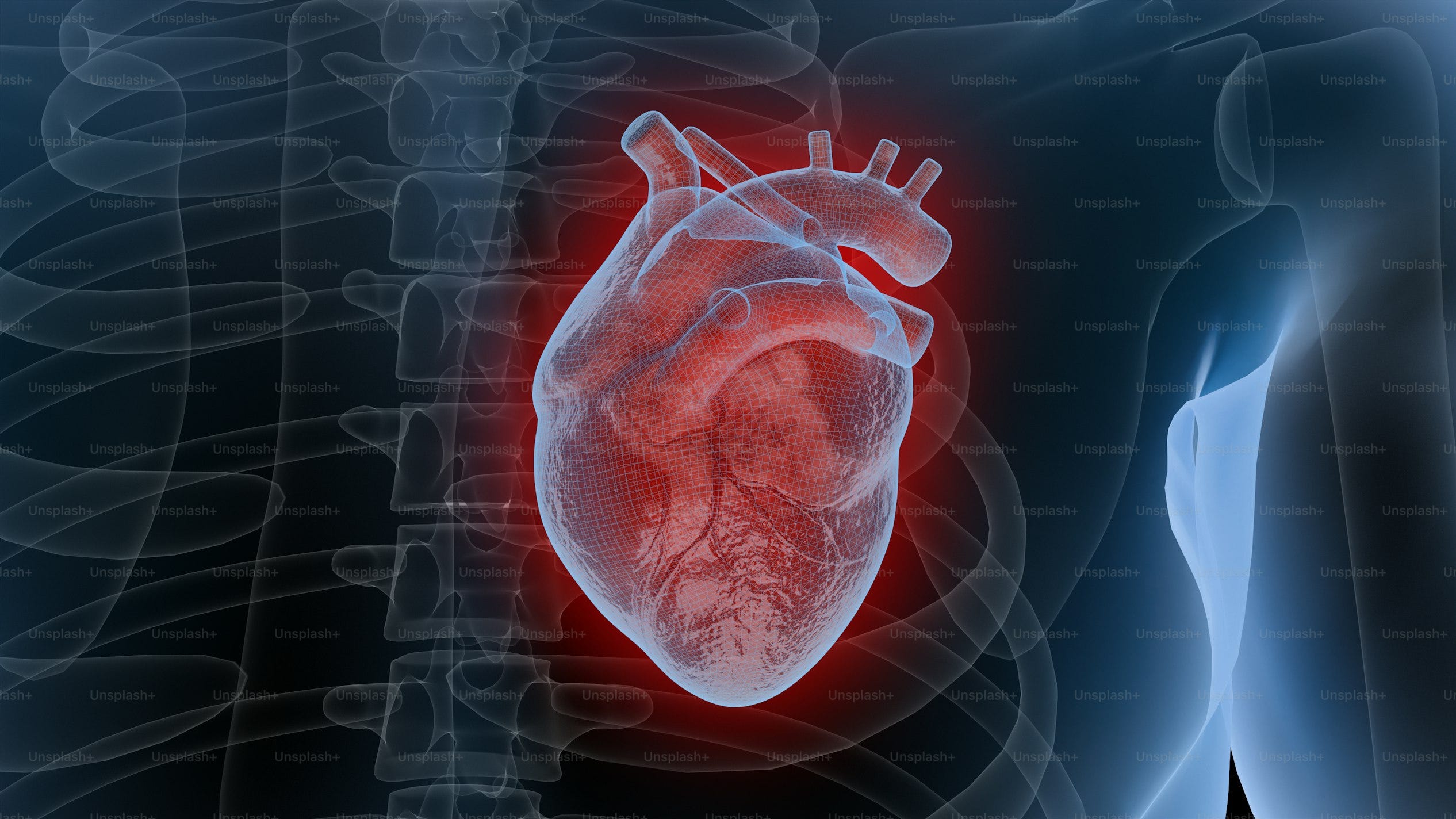
The heart has long been described as a simple pump, tirelessly pushing blood through the body’s vast network of vessels. This model, rooted in William Harvey’s 17th-century discoveries, has shaped medical understanding for centuries. Yet, recent research reveals the heart is far more than a mechanical device. From its intricate helical structure to its electromagnetic influence, the heart’s role in circulation, emotion, and physiology is both fascinating and biologically grounded. This blog post explores what science confirms and what’s plausible about the heart’s expanded functions, drawing on the work of researchers like Dr. Francisco Torrent-Guasp and the HeartMath Institute.
The Heart’s Traditional Role: A Pump with Purpose
The conventional view of the heart as a pump is not a myth but a foundational truth. Each heartbeat generates pressure to propel roughly 5-6 liters of blood per minute through the body, sustaining life. This is measurable through blood pressure, cardiac output, and imaging like echocardiography. The heart’s four chambers work in concert, contracting (systole) and relaxing (diastole) to maintain circulation.
“The heart’s ability to generate pressure is undeniable—it’s the engine that drives blood through 60,000 miles of vessels.” — Cardiovascular Physiology, 10th Edition
Yet, this model is a simplification. While the heart does pump, its mechanics and broader physiological roles are far more complex, as emerging research reveals.
The Helical Heart: A Breakthrough in Cardiac Anatomy
Spanish cardiologist Dr. Francisco Torrent-Guasp revolutionized our understanding of the heart’s structure with his discovery of the **Helical Ventricular Myocardial Band (HVMB)**. Through meticulous dissections, he showed that the ventricular myocardium is not a layered mass but a single, continuous muscle band folded into a double-helical spiral, stretching from the pulmonary artery to the aorta.
Confirmed Science: The Heart’s Spiral Dynamics
- Helical Structure: Diffusion tensor MRI studies confirm the myocardium’s spiral fiber arrangement, aligning with Torrent-Guasp’s model. This structure enables the heart to twist and untwist, creating torsion during systole and suction during diastole.
- Efficient Blood Flow: The HVMB’s twisting motion generates vortex-like blood flow in the ventricles and aorta, reducing turbulence and enhancing efficiency. 4D-MRI imaging has visualized these spiral patterns, supporting the idea that the heart’s motion is more than a simple squeeze.
- Clinical Impact: The HVMB model has informed surgical techniques, like ventricular remodeling for heart failure, and improved understanding of conditions like hypertrophic cardiomyopathy.
“The heart is a helical marvel, twisting like a wrung towel to eject blood and untwisting to draw it in.”— Dr. Gerald Buckberg, cardiac surgeon and HVMB researcher
Beyond the Pump
While the HVMB doesn’t negate the heart’s role as a pump, it suggests additional mechanisms. The suction created by diastolic untwisting may contribute significantly to filling the ventricles, challenging the idea that diastole is purely passive. The vortex flow in major vessels could also reduce the heart’s workload, making circulation more efficient than a purely pressure-driven model implies. These ideas are plausible and under active investigation, though they complement rather than replace the pump framework.
Blood Flow Before the Heart: Embryonic Insights
One intriguing claim is that blood moves before the heart fully forms in the embryo, suggesting circulation doesn’t rely solely on a pump. This is biologically confirmed and offers a glimpse into the heart’s broader role.
Confirmed Science: Early Circulation
In human embryos, blood begins to flow around 3-4 weeks, before the heart develops into a four-chambered organ. The early tubular heart acts like a peristaltic pump, while diffusion and local pressure gradients drive fluid movement. This primitive circulation demonstrates that blood flow can occur without a mature heart, relying on fluid dynamics and tissue interactions.
“In the embryo, blood flows like a gentle tide, guided by the body’s earliest rhythms.” — Developmental Biology, 12th Edition
Resonance and Fields
Some speculate that embryonic blood flow involves “resonance” or “electromagnetic” forces. While these terms are vague, the body does exhibit bioelectric fields that guide development. Ion gradients and electric potentials in embryonic tissues could influence fluid dynamics, though no direct evidence links this to resonance-driven circulation. This idea remains plausible but speculative, awaiting further research.
The Heart’s Electromagnetic Field: A Window to Coherence
The HeartMath Institute has popularized the idea that the heart generates a significant electromagnetic field, influencing physiology and even emotional states. This field, detectable via magnetocardiography (MCG), extends beyond the body and offers a new perspective on the heart’s role.
Confirmed Science: The Heart’s Field and Neurons
- Electromagnetic Field: The heart produces a measurable electromagnetic field, strongest near the chest but detectable at least a meter away. This field fluctuates with heart rate variability (HRV), a marker of autonomic nervous system balance.
- Intrinsic Nervous System: The heart contains thousands of neurons in its intrinsic cardiac nervous system, sometimes called a “heart brain.” These neurons regulate cardiac rhythm and communicate with the brain via the vagus nerve, influencing emotional and physiological states.
- HRV and Coherence: HeartMath studies show that coherent HRV patterns—smooth, sinusoidal rhythms—correlate with reduced stress, improved cognitive function, and better cardiovascular health. Techniques like controlled breathing can induce coherence, enhancing nervous system balance.
“The heart’s field is a silent conductor, syncing the body’s rhythms with our emotional state.”— Dr. Rollin McCraty, HeartMath Institute
Emotional and Interpersonal Effects
HeartMath research suggests the heart’s field may mediate emotional effects, with positive emotions like gratitude increasing coherence. Small studies have even detected heart signals in another person’s EEG during close contact, hinting at interpersonal field interactions. While these findings are preliminary, they’re plausible given the sensitivity of biological systems to electromagnetic cues. The idea that the heart’s field extends six meters or syncs with planetary rhythms (e.g., Earth’s magnetic field) is less substantiated, as the field’s strength drops off rapidly with distance.
The Heart and Emotion: A Psychophysiological Link
The interplay between the heart and emotions is a growing field called psychocardiology. Chronic stress, trauma, and negative emotions can dysregulate HRV, increase inflammation, and raise cardiovascular risk, while positive emotions may protect the heart.
Confirmed Science: Emotion’s Impact
- Stress and the Heart: Stress activates the sympathetic nervous system, raising heart rate and blood pressure, which over time can contribute to heart disease. This is supported by large-scale studies like the Framingham Heart Study.
- Positive Emotions: HeartMath and other research show that emotions like gratitude or love increase HRV coherence, reducing stress hormones and improving immune function.
- Bidirectional Communication: The heart sends more neural signals to the brain than vice versa, influencing areas like the amygdala (emotion) and prefrontal cortex (decision-making).
The Heart as a “Resonator”
The idea that the heart acts as a “resonator” or “frequency modulator” for the body is a poetic interpretation of its role in HRV and autonomic balance. The heart’s rhythmic signals do help synchronize bodily systems, and its electromagnetic field may subtly influence nearby cells or tissues. However, claims that it’s the “central conductor” of biology overstate its role relative to the brain and endocrine system.
Why the Pump Model Persists
Despite these advances, medical education often emphasizes the heart as a pump. This isn’t a conspiracy but a reflection of scientific inertia and the model’s practical utility. The pump framework is measurable, teachable, and sufficient for most clinical purposes, like treating heart failure or hypertension. Newer models like the HVMB are gaining traction but face scrutiny, as paradigm shifts require extensive validation.
“Science moves slowly, but the heart’s complexity is undeniable—it’s both pump and poet.”
Implications for Health and Medicine
Understanding the heart’s helical mechanics and electromagnetic role has practical implications:
- Surgical Advances: The HVMB model guides procedures to preserve the heart’s natural torsion, improving outcomes in heart failure surgeries.
- Lifestyle Interventions: HRV coherence techniques, like those from HeartMath, offer non-drug approaches to manage stress and boost heart health.
- Holistic Care: Recognizing the heart’s emotional role supports integrative approaches, addressing trauma and mental health alongside cholesterol or blood pressure.
Conclusion: A Heart of Many Dimensions
The heart is indeed more than a pump. Its helical structure, vortex-like blood flow, and electromagnetic field reveal a sophisticated organ that integrates mechanical, electrical, and emotional functions. Dr. Torrent-Guasp’s HVMB model confirms the heart’s spiral dynamics, while HeartMath’s research highlights its psychophysiological influence. Embryonic blood flow and HRV coherence further expand our view, showing the heart as a dynamic player in biology.
Yet, the pump model remains valid, as the heart’s pressure generation is essential for circulation. Rather than replacing this framework, new discoveries enrich it, painting the heart as both a biomechanical marvel and a resonator of human experience. As science evolves, so too will our appreciation of this vital organ—not just as a pump, but as a bridge between body, mind, and emotion.
