The mRNA Hype Machine: One Study, Endless Spin
Originally published: 2025-11-08
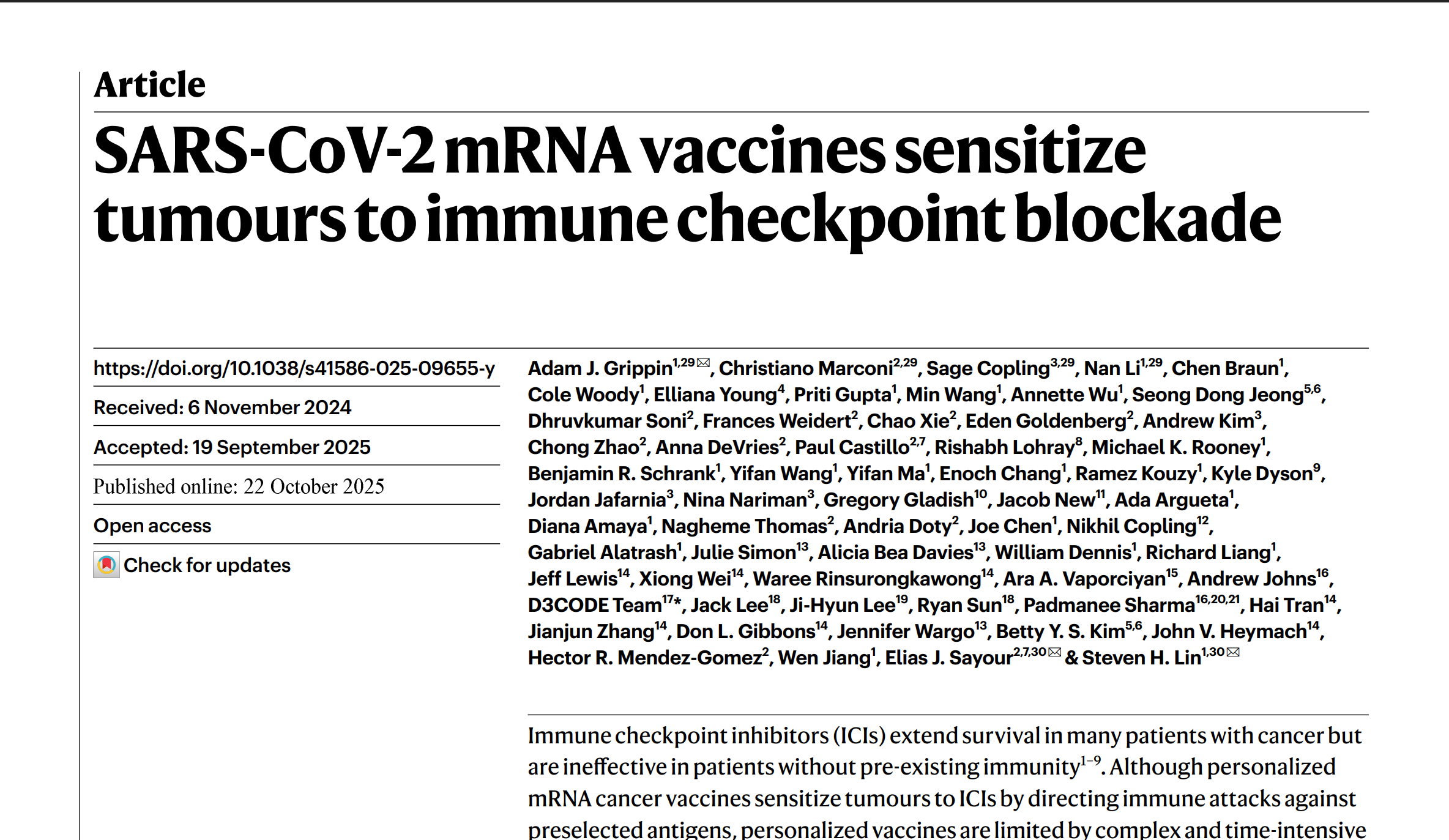
The Lone Study Sparking the Frenzy
At the heart of the buzz is a retrospective observational study published in Nature on October 22, 2025, involving researchers from the University of Florida and MD Anderson Cancer Center. Analyzing records from over 1,000 patients with advanced non-small cell lung cancer (NSCLC) or metastatic melanoma who were on immune checkpoint inhibitor (ICI) immunotherapy, the study found an association: those who received an mRNA COVID vaccine (like Pfizer or Moderna) within 100 days of starting treatment had roughly doubled median survival rates compared to unvaccinated peers.
For NSCLC patients, survival jumped from about 20.6 months to 37.3 months, for melanoma, it improved but wasn’t fully quantified due to ongoing data. The proposed mechanism? The vaccine triggers a “reset” in the immune system via type I interferon, potentially making tumors more responsive to immunotherapy, as hinted by mouse models in the paper.
It’s an intriguing correlation, no doubt. But here’s the kicker: this is not a randomized controlled trial. It’s based on existing records, ripe with potential confounders like patient health disparities or timing biases. The authors themselves stress the need for prospective trials to confirm causation. Yet, despite these caveats, the findings have been amplified as if they’re gospel.
“This study demonstrates that commercially available mRNA COVID vaccines can train patients’ immune systems to eliminate cancer.” – Adam Grippin, study author, in a press release that fueled the hype.
From One Paper to Widespread Hype: Media and Social Media’s Role
Within days of its presentation at the European Society for Medical Oncology (ESMO) Congress on October 19, 2025, headlines exploded: “COVID mRNA vaccines may be able to train immune system to attack cancer cells,” proclaimed CIDRAP. Reuters chimed in with “mRNA COVID vaccines appear to make immunotherapy cancer drugs work better.” The Washington Post ran with “Study finds mRNA coronavirus vaccines prolonged life of cancer patients.” Even Snopes fact-checked it positively, noting it “helped extend cancer survival.”
On social media, memes and posts echoed this, often framing it as a “surprising new discovery” or “the next big breakthrough in cancer care,” as if backed by a mountain of evidence. But a deep dive reveals no other clinical studies specifically linking off-the-shelf mRNA COVID vaccines to better cancer outcomes.
Sure, mRNA technology is advancing in custom cancer vaccines, over 120 trials are underway for tailored therapies, but that’s worlds apart from repurposing COVID shots. This amplification feels suspiciously timed, especially amid ongoing scrutiny of mRNA platforms. It’s as if one promising association is being stretched to cover a multitude of sins, turning tentative science into triumphant headlines.
“mRNA-based Covid vaccines from Pfizer-BioNTech or Moderna may have an unexpected benefit for cancer patients who undergo immunotherapy.” – STAT News, exemplifying the optimistic spin on preliminary data.
Supporters Rally to Downplay the Overwhelming Evidence of Harm
Proponents of mRNA technology, pharma giants, public health officials, and their media allies, are quick to tout this study as a redemption arc. But let’s not ignore the elephant in the room: mounting signals of harm from these vaccines, particularly regarding cancer risks.
While “mainstream” outlets dismiss “turbo cancers” (aggressive, rapid-onset tumors post-vaccination) as myths, real data tells a different story. A 2024 Japanese study in Cureus linked widespread third-dose mRNA vaccinations to a 2.1% excess in age-adjusted cancer mortality in 2022, with spikes in ovarian, leukemia, prostate, pancreatic, breast, and other cancers. Speculated mechanisms include spike protein interference or immune suppression, though it’s correlational and calls for more research.
Further, a 2025 review in Biomarker Research examined real-world data on oncogenic risks from COVID vaccines, finding inconsistent but concerning patterns without clear dismissal. CDC workgroup slides from September 2025 highlighted safety uncertainties, including potential reprogramming of immune cells. Even the European Parliament raised questions in May 2025 about links to “turbo cancer” in the context of Europe’s Beating Cancer Plan.
These aren’t fringe theories, they’re peer-reviewed signals demanding scrutiny. Yet, mRNA boosters use this single cancer-boost study to pivot, suggesting the technology’s benefits outweigh risks, effectively downplaying harms to protect a lucrative platform.
“The oncogenic potential of SARS-CoV-2 has been hypothetically proposed, but real-world data on COVID-19 infection and vaccination are inconsistent.” – From a 2025 study, highlighting the unresolved debates that hype conveniently sidesteps.
The Battle for the Educated Health Care Consumer
We’re in a war for truth in health care, where informed consumers must navigate biased narratives. On one side are Big Pharma and media pushing mRNA as a panacea, hyping one study to eclipse safety concerns. On the other side are skeptics demanding rigorous, transparent science.
As patients and advocates, we can’t afford blind faith. Question the hype, demand multiple, replicated studies before embracing mRNA shots as cancer adjuvants. Educate yourself on the full spectrum of evidence, from promising associations to red flags like excess mortality data.
In this battle, knowledge is our best defense against manipulation. The mRNA story isn’t over, but let’s ensure it’s written with facts, not frenzy.
