The mRNA Machine Rolls On
Originally published: 2025-06-05
The New “Vaccines”: Same Technology, New Wrinkles
The U.S. Food and Drug Administration (FDA) has approved two new COVID-19 vaccines—Moderna’s mNEXSPIKE (mRNA-1283) and Novavax’s Nuvaxovid—just in time for the 2025-2026 respiratory season. Yet beneath the headlines of scientific progress and updated boosters lies a deepening controversy: How safe and necessary are these new shots, especially when they continue to bypass randomized controlled trials (RCTs) for broad use?
While the Biden-era FDA routinely approved COVID vaccines based on limited immunogenicity data, RFK Jr.—now serving as Secretary of Health and Human Services under the Trump administration—has implemented a stricter policy: No more approvals for healthy populations without gold-standard RCT evidence. That policy, critics argue, hasn’t gone far enough.
“We’re still approving mRNA products with minimal human trial data while ignoring the accumulating signals of harm. That’s not science—it’s liability laundering.”
Moderna’s mNEXSPIKE: A “Refined” Booster With Familiar Problems
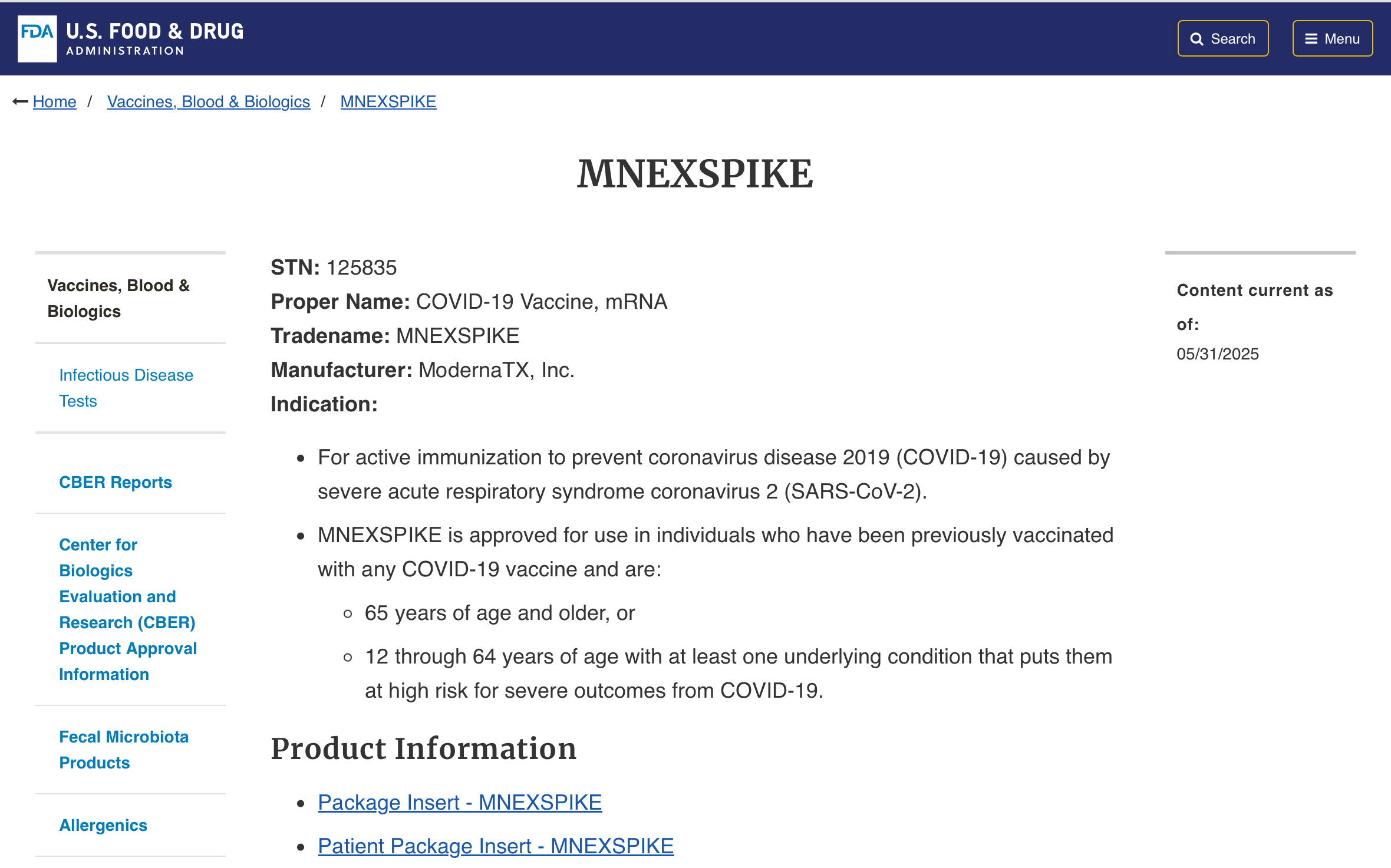
On May 31, 2025, the FDA granted Moderna’s new mRNA-1283 vaccine approval, but with restrictions. mNEXSPIKE is authorized only for:
Adults 65 and older
Individuals 12–64 with CDC-defined risk conditions
Touted as a "refined" version of Spikevax, mNEXSPIKE uses just 1/5 of the original mRNA dose, targeting a narrower set of spike proteins in an attempt to reduce adverse effects while maintaining protection.
Moderna’s approval was based on a non-randomized trial of 11,400 individuals, comparing the immune response to Spikevax—not clinical outcomes like hospitalization or death. While the data reportedly showed comparable efficacy, no placebo group was involved, and long-term safety signals were not part of the evaluation.
This raises an obvious question: Why is the same platform that has led to so much debate, injury reporting, and death post-2021 still being pushed out under the guise of regulatory reform?
RFK Jr.’s FDA Policy: Progress or Just Optics?
RFK Jr. has long criticized the pharmaceutical industry’s outsized influence on federal agencies. Now, in power, he has enacted policy changes that require placebo-controlled RCTs for any COVID-19 vaccine intended for healthy individuals under age 65.
The result? mNEXSPIKE and Nuvaxovid were exempt—since they were approved only for high-risk groups. No RCTs were conducted for these approvals.
“This is what reform looks like when it’s half-finished. The technology gets a free pass while the public gets false reassurance.”
Supporters of the new policy, including FDA advisers like Dr. Marty Makary and Dr. Vinay Prasad, argue it’s a step in the right direction: targeted protection for high-risk groups, while demanding higher-quality data for the general population. But skeptics worry this is just a cosmetic shift, and that mRNA technology continues to be fast-tracked, regardless of its mounting safety concerns.
Nuvaxovid: A Protein-Based “Alternative”—With Caveats
For those wary of mRNA vaccines, Novavax’s Nuvaxovid offers a protein-based option. Approved on May 19, 2025, for the same high-risk groups, it aims to fill a niche left by low mRNA uptake.
But Nuvaxovid faces its own hurdles:
New strain updates will require fresh trials—delaying deployment
Uptake remains low, and insurers may balk at covering it
Efficacy is inferred from antibody responses, not clinical outcomes
So while it’s being framed as a more “traditional” option, it’s still trapped in the same emergency-era paradigm of data-light, rollout-fast.
No RCTs, No Long-Term Safety Data, No Trust
The core controversy remains: Neither mNEXSPIKE nor Nuvaxovid were evaluated through placebo-controlled RCTs. Instead, their approvals leaned heavily on lab-based immunogenicity studies and comparisons to prior vaccines—despite those earlier vaccines now being deeply contested in both safety and effectiveness.
Meanwhile, millions continue to report post-vaccine injuries, and independent analyses have identified spikes in all-cause mortality temporally linked to mRNA rollout.
“If RFK Jr. is serious about restoring trust in public health, it’s time to stop greenlighting products built on broken platforms and ghost data.”
Public Sentiment and Booster Fatigue
The U.S. government still estimates that over 100 million Americans qualify for these vaccines based on risk conditions. Yet only 25% of adults and 10% of children received the most recent booster.
This signals a broader truth: Public confidence has collapsed. Americans are no longer buying the promises, especially when they see continued reliance on technologies and approval pathways that have failed them before.
Conclusion: Is the Reform Real or Just Political Theater?
Despite RFK Jr.’s campaign rhetoric and regulatory shifts, mRNA vaccines continue to march forward, often with little more than molecular models and theoretical immune boosts to justify their use. Reform may be in the works—but until it truly demands clinical proof, prioritizes safety, and halts fast-tracking of risky platforms, critics will see these developments not as medical breakthroughs, but as another chapter in a tragic public health experiment.
“Real reform means real science. No more shortcuts. No more casualties.”
