The Reckoning Begins: Do Southern States Actions Signal the Fall of the Chiropractic Cartel?
Originally published: 2025-06-27
A Profession Controlled by Private Interests
For decades, the chiropractic profession has operated under the control of three private, unelected organizations: the Council on Chiropractic Education (CCE), the National Board of Chiropractic Examiners (NBCE), and the Federation of Chiropractic Licensing Boards (FCLB). These entities form a self-reinforcing system that controls who may educate chiropractors, how they are tested, and whether they can be licensed. In many states, public licensing boards have relinquished their oversight authority to this triad, resulting in a profession governed largely by private interests rather than public accountability.
The Emergence of CPHE: A Structural Breakthrough
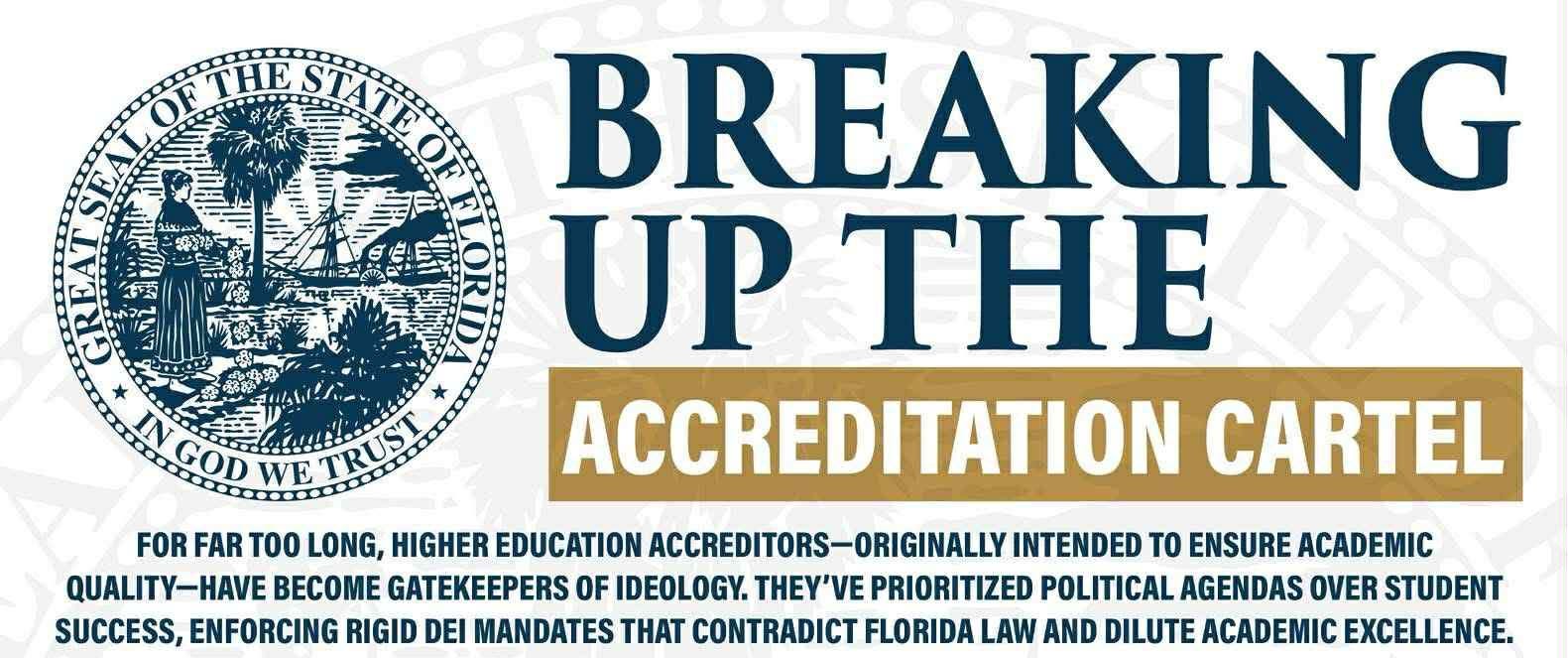
On June 26, 2025, a major shift occurred. Florida Governor Ron DeSantis announced the formation of the Commission for Public Higher Education (CPHE), a new accrediting body created by six state university systems from Florida, Georgia, South Carolina, North Carolina, Tennessee, and Texas. While CPHE was established in response to problems in regional accreditation for public universities, its structural and philosophical implications extend far beyond higher education. For chiropractic reformers, this development signals a credible pathway to challenge long-standing accreditation monopolies that have plagued the profession.
"CPHE is more than an education reform—it’s the clearest challenge yet to the kind of monopolistic grip that the CCE, NBCE, and FCLB hold over the chiropractic profession."
Affirming the Broader Problem of Accreditation Monopolies
CPHE affirms what many in chiropractic education and policy have been arguing for years: that accreditation monopolies are not unique to chiropractic, but part of a broader national problem. The dysfunction experienced under the CCE—including barriers to innovation, institutional coercion, and inflated student costs—are echoed in other disciplines. What distinguishes CPHE is its open acknowledgment that these problems originate from a lack of competition, accountability, and transparency in the accrediting process.
Creating a Precedent for Chiropractic Alternatives
Should CPHE succeed in obtaining federal recognition, it would establish precedent that new accrediting bodies can emerge to challenge entrenched institutions. This would have direct implications for chiropractic, particularly for organizations such as the International Agency for Chiropractic Education (IACE), which seeks to provide an alternative to CCE. If public university systems can create and legitimize their own accreditor, then chiropractic colleges—especially those operating outside the influence of the cartel—may have a viable path to pursue similar reform.
Restoring Public Governance to Accreditation
What makes CPHE even more significant is its governance model. Unlike the private nonprofit structures of the CCE, NBCE, and FCLB, CPHE is publicly accountable, backed by state governments, and committed to outcome-based standards rather than ideological conformity or legacy compliance. This directly challenges the approach used in chiropractic, where FCLB—a private trade association—routinely embeds CCE and NBCE policies into state licensure frameworks with little to no public oversight.
"The FCLB acts like a regulatory body, but it’s a trade group. The public never consented to this arrangement. CPHE gives the chiropractic profession the language and precedent to challenge it."
The Life University Example: Cartel Tactics in Action
This move represents a significant escalation in the enforcement of NBCE’s control, effectively making graduation contingent upon passing a privately administered, high-cost examination.
A current example of the dangers of chiropractic's closed system is playing out at Life University. In a sweeping and controversial policy shift, Life has announced that students must now pass NBCE Part IV in order to graduate—not merely to obtain licensure, but to receive their diploma. This move represents a significant escalation in the enforcement of NBCE’s control, effectively making graduation contingent upon passing a privately administered, high-cost examination. This requirement was not mandated by law, but appears to have been adopted in response to accreditation expectations—specifically, those outlined in CCE Policy 56, which ties graduation to “success on licensure exams.”
Compounding this is the NBCE’s ongoing push to centralize all Part IV exams at its Greeley, Colorado headquarters, eliminating regional testing options and thereby increasing financial and logistical burdens on students. The convergence of CCE policy mandates, NBCE testing control, and FCLB enforcement mechanisms is emblematic of a cartel structure in which three private organizations dominate every stage of a student’s professional trajectory—from education to licensure—without any real checks or balances.
"Life University’s new Part IV policy is a case study in cartel enforcement—coerced compliance masquerading as accreditation."
Why CPHE’s Model Matters Now More Than Ever
This is precisely the type of institutional behavior that CPHE is intended to challenge. By creating a publicly governed, outcomes-focused accrediting model, CPHE seeks to break up monopolies, restore institutional autonomy, and prioritize student outcomes over regulatory capture. The fact that a chiropractic college is now conditioning graduation on a student’s relationship with a private testing company, based on a private accreditor’s policy, underscores the urgent need for reform. CPHE offers the chiropractic profession not only a model, but a compelling political and legal precedent.
The Chiropractic Cartel No Longer Operates in Isolation
CPHE also reinforces a growing national consensus: monopolistic structures in education—whether in higher ed or professional licensure—no longer serve the public interest. The narratives emerging from CPHE’s formation align closely with the concerns raised within chiropractic about the NBCE’s centralized testing regime, the CCE’s restrictive accreditation model, and the FCLB’s role in translating both into mandatory state law. These are not isolated issues—they are part of a broader pattern of unaccountable power structures in education that are now being called into question.
This is not simply about a new accreditor. It is about rethinking who has the authority to define quality, competency, and legitimacy in professional education. CPHE proves that states have the power to create alternatives—and that professions have the right to challenge the self-interested monopolies that have defined their regulatory environments for decades. For chiropractic, this could be the opening long sought by those advocating for a freer, more diverse, and more accountable profession.
Conclusion: The Wall Is Cracking—Now Apply Pressure
The chiropractic cartel has endured by insulating itself from scrutiny and resisting meaningful alternatives. That era may be coming to an end. CPHE is already reshaping how accreditation is understood, who controls it, and who benefits from it. The opportunity now exists for chiropractic stakeholders—educators, legislators, students, and reform organizations—to leverage this moment and demand a future that values choice, transparency, and public accountability.
The wall is cracking. Now the pressure must be applied.
