The Spike Protein and Coagulation Concerns: A New Perspective for Chiropractors on Vascular Risks
Originally published: 2025-08-01
Introduction: A Shifting Landscape of Vascular Risk
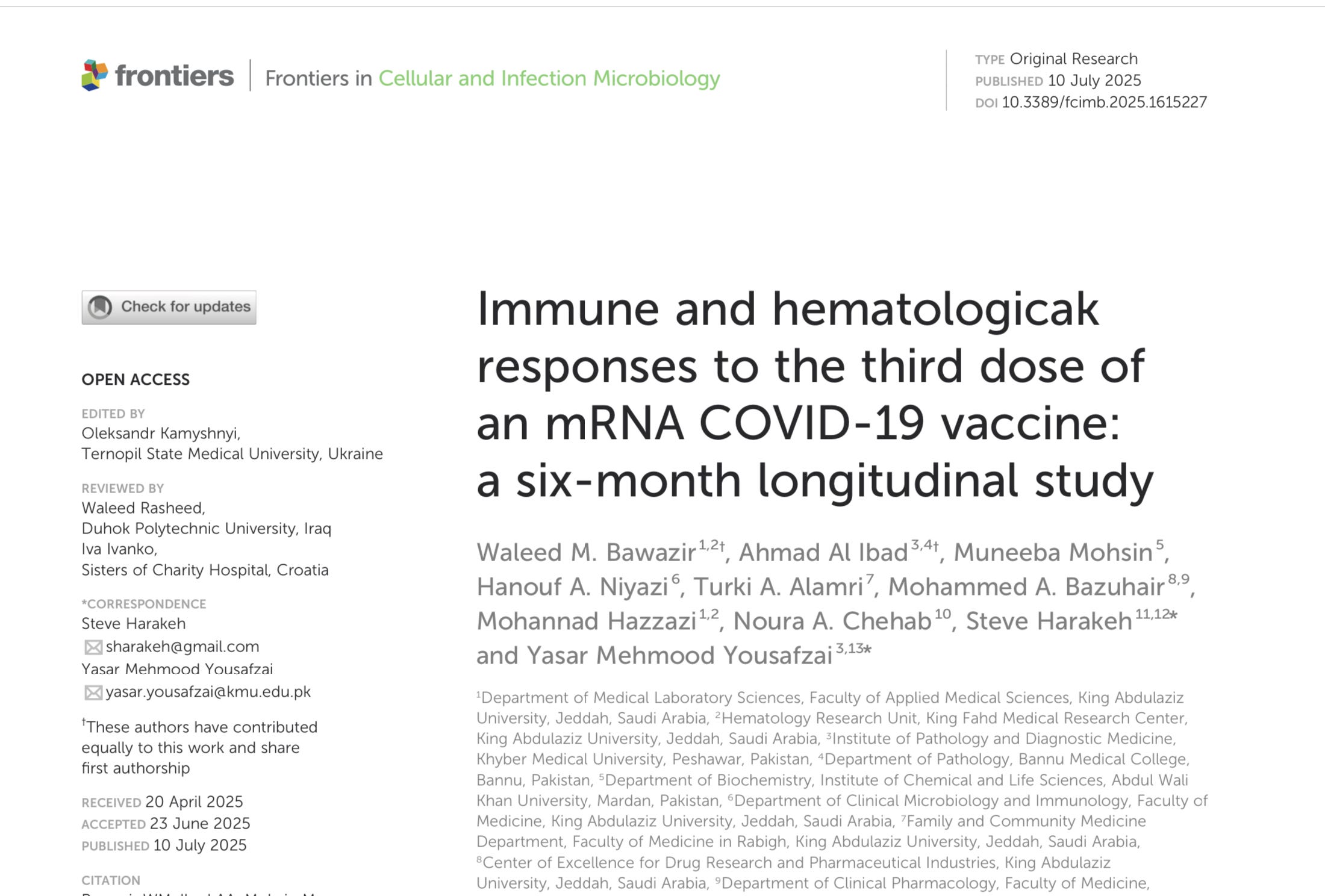
Chiropractors have long faced scrutiny over rare vascular events, such as strokes, allegedly linked to cervical manipulations. However, emerging research, including a 2025 study by Bawazir et al. published in Frontiers in Cellular and Infection Microbiology, highlights another potential contributor to vascular complications: the spike protein produced by mRNA COVID-19 vaccines. This longitudinal study on the third dose of the Pfizer-BioNTech vaccine revealed significant increases in D-dimer levels and slight prolongations in coagulation parameters, suggesting a transient prothrombotic state. For chiropractors, understanding these findings is critical to contextualizing patient risks, defending clinical practice, and enhancing risk management strategies in an era where vaccine-related side effects are under increasing scrutiny.
“The statistically significant rise in D-dimer levels post-mRNA booster suggests a need to broaden our perspective on vascular risks beyond chiropractic adjustments.” – Chirofutures Malpractice Insurance Program
The Study: D-Dimer and Coagulation Changes Post-mRNA Booster
The Bawazir et al. study followed 68 healthy adults (aged 20–30) who received a third dose of the Pfizer-BioNTech mRNA vaccine. Blood samples were analyzed for immune and hematological markers at baseline (D0) and 48 hours post-vaccination (D2), with antibody levels tracked up to 180 days. Key findings related to coagulation include:
- D-Dimer Elevation: Mean D-dimer levels increased from 0.20 ± 0.21 mg/L at baseline to 0.47 ± 0.57 mg/L at D2 (p < 0.005), indicating heightened fibrin formation and degradation, a marker of coagulation activation.
- Coagulation Parameters: Prothrombin time (PT) and activated partial thromboplastin time (APTT) showed slight but statistically significant prolongations (p < 0.05), with PT rising from 12.49 ± 2.09 seconds to 13.51 ± 2.88 seconds and APTT from 33.02 ± 17.04 seconds to 34.13 ± 14.11 seconds.
- No Clinical Adverse Events: Despite these changes, no clinical adverse events following immunization (AEFIs), such as thrombosis or stroke, were reported in the study cohort, suggesting subclinical effects in healthy individuals.
These findings point to a vaccine-induced activation of coagulation pathways, likely driven by the spike protein’s inflammatory effects on endothelial cells, as noted in prior research (Trougakos et al., 2022).
Why This Matters for Chiropractors
Chiropractors are frequently implicated in rare vascular events, particularly cervical artery dissections or strokes, despite evidence suggesting these events are often spontaneous or multifactorial. The Bawazir study introduces a new variable: mRNA vaccine-induced coagulation changes, particularly elevated D-dimer levels, which could mimic or contribute to the vascular risks historically attributed to chiropractic care. The spike protein, encoded by mRNA vaccines, may trigger endothelial inflammation, potentially increasing the risk of thrombotic events in susceptible individuals. This raises critical questions about whether some post-vaccination vascular events are being misattributed to chiropractic interventions.
“As chiropractors, we must consider all potential causes of vascular events, including vaccine-related coagulation changes, to protect our patients and our practices.” – Chirofutures Malpractice Insurance Program
Risk Management Strategies for Chiropractic Practice
To navigate this complex landscape, chiropractors can adopt proactive risk management strategies informed by the study’s findings and their implications:
1. Enhanced Patient Screening:
- Action: Update intake forms to include questions about recent COVID-19 vaccinations, especially mRNA boosters, and any history of thrombotic or inflammatory conditions.
- Rationale: Patients with recent mRNA vaccinations may have elevated D-dimer levels or other coagulation changes, potentially increasing their risk for vascular events. Identifying these patients allows for tailored care plans, such as deferring high-velocity cervical manipulations until more time has passed post-vaccination.
2. Informed Consent and Documentation:
- Action: Include discussions about vaccine-related risks in informed consent processes, documenting patient vaccination history and any reported post-vaccination symptoms (e.g., fatigue, headache, or unusual bruising).
- Rationale: Thorough documentation can protect chiropractors in cases where vascular events occur, demonstrating awareness of alternative risk factors like vaccine-induced coagulation changes.
3. Patient Education:
- Action: Educate patients about the potential for transient coagulation changes post-mRNA vaccination, emphasizing that these are generally subclinical but may warrant caution in certain contexts.
- Rationale: Transparent communication builds trust and empowers patients to report symptoms that could indicate coagulation issues, enabling timely referral if needed.
4. Collaboration with Medical Providers:
- Action: Establish referral networks with primary care physicians or hematologists for patients with concerning symptoms or recent mRNA vaccinations.
- Rationale: Collaborative care ensures that any potential vaccine-related coagulation issues are monitored, reducing the likelihood of chiropractors being solely blamed for adverse events.
5. Ongoing Professional Development:
- Action: Stay informed about emerging research on vaccine side effects, particularly coagulation and thrombotic risks, through continuing education and resources like Chirofutures.
- Rationale: Understanding the latest science equips chiropractors to defend their practice and make evidence-based decisions, especially when navigating malpractice claims.
Contextualizing Vascular Risks: The Spike Protein as a Suspect
The Bawazir study’s findings align with prior research linking the SARS-CoV-2 spike protein to endothelial dysfunction and coagulation activation (Favaloro, 2021; Liu et al., 2021). The spike protein, whether from infection or mRNA vaccines, can trigger inflammation that disrupts the endothelium’s anti-thrombogenic properties, potentially leading to fibrin formation (reflected in elevated D-dimer levels) and, in rare cases, thrombotic events. This is particularly relevant given reports of rare but serious AEFIs, such as myocarditis and thromboembolism, following mRNA vaccination, especially in younger populations.
For chiropractors, this introduces a plausible alternative explanation for vascular events that might otherwise be attributed to cervical manipulation. For example, a patient presenting with a stroke shortly after an mRNA booster could have an underlying vaccine-induced prothrombotic state, rather than a direct causal link to chiropractic care. This perspective highlights the need to consider multiple risk factors in clinical decision-making and legal defense.
“The spike protein’s role in coagulation changes challenges the narrative that chiropractic care is the primary culprit in vascular events.” – Chirofutures Malpractice Insurance Program
Limitations and the Need for Further Research
The Bawazir study has limitations that chiropractors should consider:
- Limited Follow-Up: D-dimer levels were only measured at 48 hours post-vaccination, leaving uncertainty about how long elevations persist. Other studies suggest coagulation changes may normalize by day 90 (Liu et al., 2021).
- Healthy Cohort: The study excluded individuals with comorbidities or coagulation disorders, limiting applicability to higher-risk patients chiropractors may encounter.
- Small Sample Size: With only 68 participants, the findings may not fully represent broader populations.
Further research is needed to clarify the duration and clinical significance of D-dimer elevations, particularly in older adults or those with pre-existing conditions. Chiropractors should advocate for studies that explore the interplay between vaccine-induced coagulation changes and other interventions, including spinal manipulation, to better delineate risk profiles.
Conclusion: Protecting Your Practice in a New Era
The Bawazir et al. study underscores that mRNA COVID-19 vaccines, through spike protein-mediated effects, can induce significant but subclinical coagulation changes, including elevated D-dimer levels. For chiropractors, this research offers a critical lens to reframe discussions about vascular risks, which have historically been pinned on cervical manipulations. By integrating robust risk management strategies, such as enhanced screening, thorough documentation, patient education, and interdisciplinary collaboration, chiropractors can safeguard their practices and patients while contributing to a broader understanding of post-vaccination risks.
Chirofutures Malpractice Insurance Program encourages chiropractors to stay vigilant, informed, and proactive. By recognizing the spike protein as “another suspect in the room,” you can better navigate malpractice risks and advocate for evidence-based care in an evolving healthcare landscape. For more resources on risk management and malpractice protection, visit Chirofutures or contact our team to ensure your practice is prepared for these emerging challenges.
“Armed with knowledge and proactive strategies, chiropractors can confidently address vascular risks while protecting their patients and practices.” – Chirofutures Malpractice Insurance Program
CLICK HERE for a copy of the study
References:
Bawazir WM, et al. (2025). Immune and hematological responses to the third dose of an mRNA COVID-19 vaccine: a six-month longitudinal study. Frontiers in Cellular and Infection Microbiology.
