Two Models, One Sacred Trust
Originally published: 2025-11-06
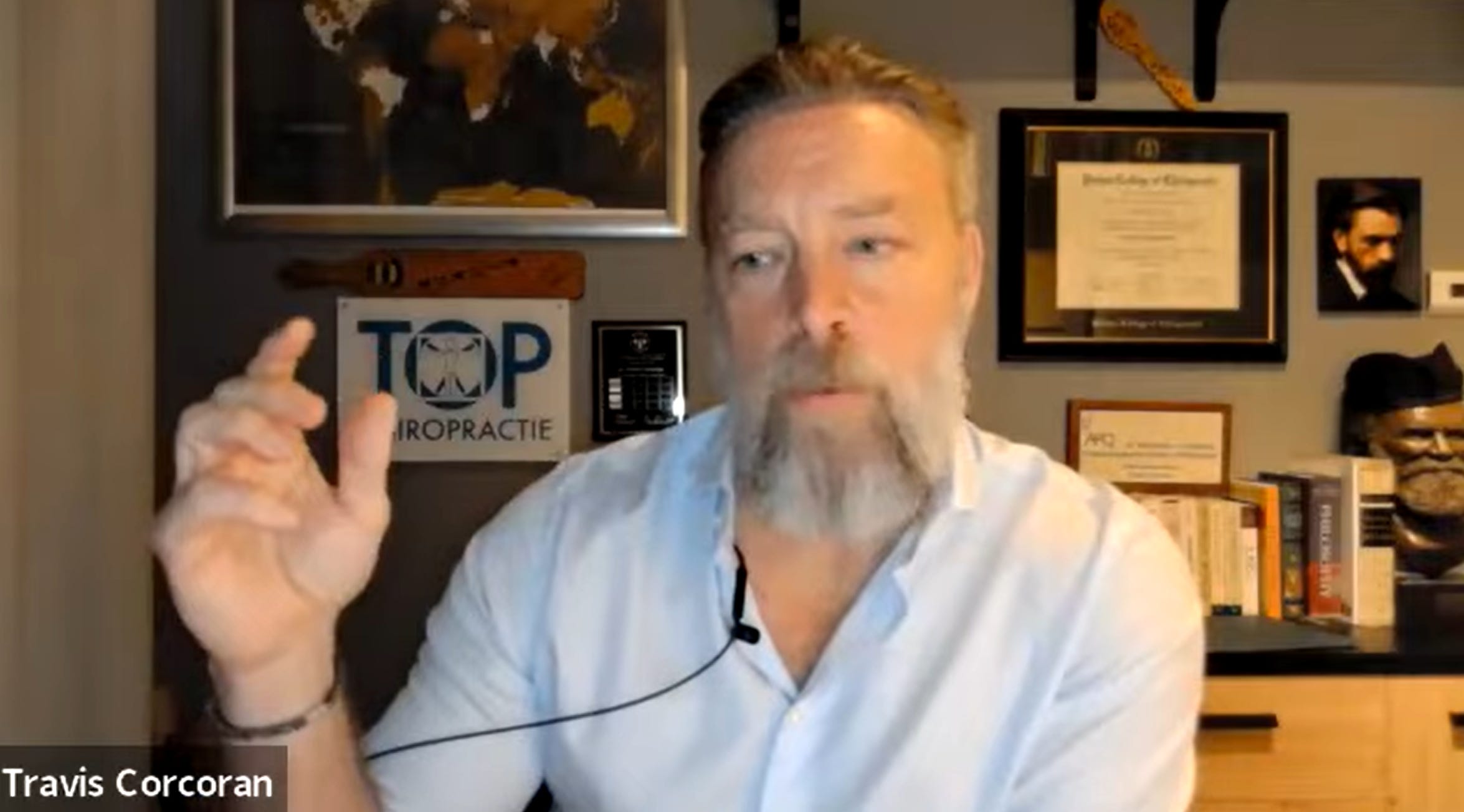
“If you want to get more from this profession, you have to give more to this profession.”
Setting the table: why this conversation matters
In a spirited, collegial exchange, Dr. Mark Romano (President, The Chiropractic Trust) and Dr. Travis Corcoran (IFCO President) take on a deceptively simple question: what is chiropractic today? Their answer runs through philosophy, history, professional identity, and strategy, landing on a clear call to protect the vertebral subluxation (VS) at the legal, academic, and political levels so the profession’s distinctiveness doesn’t dissolve into “me-too” health services.
CLICK Here to watch the discussion
“Vertebral subluxation is the fountain we all drink from. Remove it, and you remove chiropractic.”
Two models, three paradigms, and a shared cornerstone
Romano and Corcoran frame the profession in two broad models:
Non-therapeutic model: chiropractic as the analysis and facilitation of the adjustment of vertebral subluxations as an end in itself, independent of symptom chasing.
Therapeutic model: chiropractic as a treatment aimed at specific conditions or outcomes.
Within that, they reference three paradigms often seen in practice culture:
VS correction as curing disease,
VS correction as a treatment for indicated conditions,
VS correction because “life is better without subluxation.”
Romano and Corcoran both align personally with paradigm three. Corcoran emphasizes that IFCO’s mission is inclusive of practitioners across paradigms so long as chiropractic’s distinctive right, to locate, analyze, and correct VS, is protected.
“Nothing impinges the nerve, my life’s better. That’s how I am with vertebral subluxation.”
From symptoms to signals: technology and the evolution of assessment
The conversation reframes a common historical critique. Early chiropractors, lacking today’s instrumentation, leaned on symptoms as a proxy. With contemporary objective indicators, especially measures reflecting the autonomic nervous system, the rationale for first- and second-paradigm dependency on symptomatic cues is less compelling. The principles haven’t changed, our tools and understanding have.
Principles, not dogma: from DD & BJ to Stevenson and beyond
The hosts note the tension between spiritualized interpretations of chiropractic and the logical, principled approach articulated in Stevenson’s 33 Principles. The takeaway is not to dismiss heritage but to avoid dogma and keep chiropractic rooted in consistent reasoning, the analysis and correction of VS.
Identity at stake: VS as the profession’s unique value
Corcoran draws a bright line around professional uniqueness. If chiropractic sidelines VS and instead centers modalities (shockwave, laser, exercise), it becomes indistinguishable from 20 other licensed professions already offering those services. Focused on VS, chiropractic is universally relevant; once you pivot to treatment-indicated modalities or pharmaceuticals, indications narrow and distinctiveness erodes.
“No vertebral subluxation, no chiropractic profession.”
Organizations and fault lines: IFCO, WFC/ACA, and the ICA middle
Corcoran contrasts IFCO’s explicit affirmation of VS with entities he says minimize or deny it, and questions how the ICA can claim a VS-affirming stance while supporting bodies that disparage it. Romano adds historical context about near-merger discussions decades ago, underscoring how long these identity tensions have simmered.
The pharmaceutical debate: a strategic dead end
Both doctors push back on expanding prescriptive rights within chiropractic. Beyond the philosophical mismatch, they argue it’s bad strategy: pharmaceuticals are not indicated for everyone and are already well-owned by professions better positioned to deliver them. Importing that scope destabilizes chiropractic’s universal-value model and dilutes the profession’s cultural authority.
Protecting VS on three fronts: legal, academic, political
Corcoran distills his current work, and what he believes every chiropractor should support, into a three-front strategy:
Legal: Coalition efforts to secure VS in statutes and shield the right to analyze and correct it.
Academic: Accreditation pathways that ensure schools teach VS as central to chiropractic identity and practice.
Political: IFCO’s advocacy to maintain the chiropractor’s right to locate, analyze, and correct VS, regardless of paradigm.
The message is practical: if VS fills your cup, help protect the fountain.
“Too many are on the cruise ship, too few are keeping it seaworthy.”
Collegiality, growth, and the next hard conversation
The tone throughout is frank but generous. Romano and Corcoran model earnest inquiry over point-scoring, acknowledge areas of disagreement, and invite further dialogue, including a likely lively debate on insurance ethics in a future session. They also call on other leaders to join the conversation and move it forward.
What to do next
Re-center your message: Lead with VS as your differentiator in patient education and professional advocacy.
Align your support: Back organizations that protect VS legally, academically, and politically.
Invest in the commons: Give time, dues, and voice; don’t just ride the ship, help keep it afloat.
Join the dialogue: Engage respectfully across paradigms to keep the profession principled, logical, and future-ready.
“Principles don’t change. Our understanding does.”
