Unpaid Dues Raise Questions Ahead of FCLB Annual Meeting
Originally published: 2025-04-30
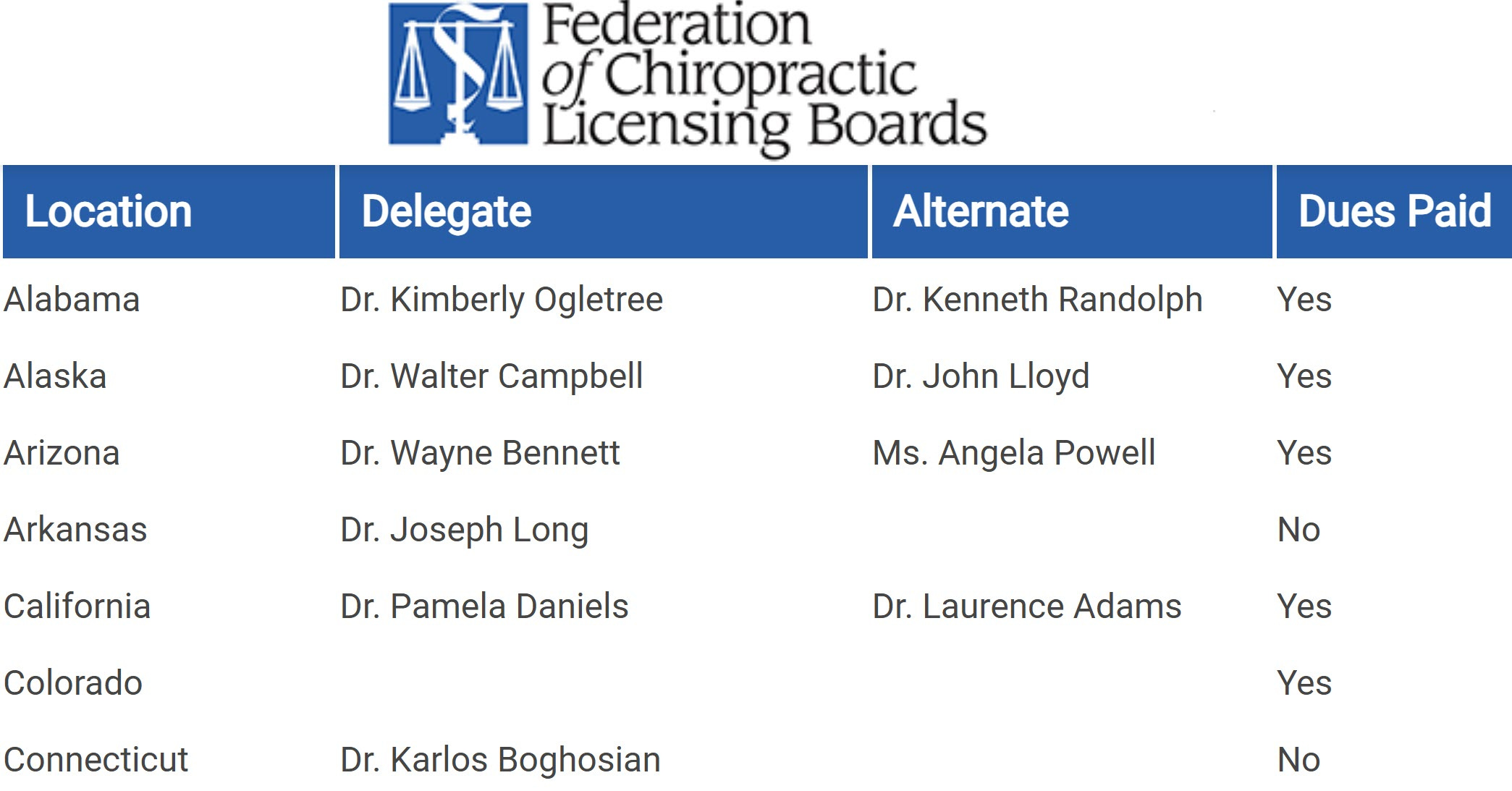
Overview: Membership Status and Voting Rights in Focus
As the Federation of Chiropractic Licensing Boards (FCLB) prepares for its 2025 Annual Meeting from April 30 through May 4 in St. Louis—held in conjunction with the National Board of Chiropractic Examiners (NBCE) Annual Meeting—an important governance issue has emerged:
Will states that have not paid their annual dues be permitted to vote or participate officially?
Based on available records, ten jurisdictions are currently not listed as having paid their dues to the FCLB. This raises not only procedural questions about delegate eligibility but also broader ethical and structural concerns about how dues are collected and used.
List of States Not Current on Dues
The following states have not paid their 2025 dues:
Arkansas
Connecticut
Illinois
Iowa
Kentucky
Maine
Michigan
New Mexico
New York
Vermont
Vermont has already formally withdrawn from the FCLB, while the remaining nine states appear to remain listed as members—despite being unpaid. In seven of these cases, delegates are still listed, though their official status remains uncertain under FCLB rules.
Delegate Participation and Bylaw Compliance
According to Article IV, Section 2 of the FCLB Bylaws:
“A Member Board that is current on its payment of membership dues shall be entitled to be represented by one voting Delegate and one Alternate Delegate…”
This provision clearly conditions voting rights and representation on the timely payment of dues. While the FCLB has discretion to recommend sanctions or termination of membership for non-paying states, any participation by unpaid boards would appear to be in conflict with the organization's own bylaws.
The Larger Problem: Public Funds and Private Control
Beyond the procedural questions lies a more fundamental concern:
The dues issue is not merely about internal governance. It reflects a deeper tension in the structure of chiropractic regulation.
State chiropractic boards—created by statute and funded by taxpayers—are using public funds to pay annual dues to the FCLB, a private nonprofit corporation. In many cases, the very chiropractors serving on these state boards also sit on or are affiliated with the FCLB, creating a potentially troubling loop of influence. Making matters worse is that these board members also bounce back and forth between the NBCE, FCLB and state regulatory boards. “Good Ole Boys” club doesn’t even come close to describing this conduct.
Further complicating the issue is the FCLB’s financial relationship with the NBCE. A significant portion of FCLB funding comes from NBCE exam fees, which are ultimately paid by students via federally backed student loans. Thus, the FCLB’s operational budget is supported through a combination of state tax dollars and federal student debt—with little transparency or external oversight.
"This isn’t just about dues. It’s about whether public and student loan funds are being funneled into a private regulatory framework with insufficient accountability."
A Shift in Awareness Among States?
The fact that ten states have withheld payment—whether temporarily or intentionally—may indicate that state board members are beginning to recognize the ethical, legal, and financial implications of this long-standing arrangement.
Whether it’s a matter of budget constraints, policy disagreements, or growing discomfort with how the FCLB operates, the implications are significant. If more states follow Vermont's lead, the FCLB may face serious questions about its long-term viability and authority.
Looking Ahead to St. Louis
As the 2025 meeting convenes, stakeholders across the profession will be watching closely. Will the FCLB enforce its bylaws and restrict delegate participation to paid members only? Or will it quietly permit unpaid states to vote—raising questions about procedural integrity?
Regardless of how the immediate situation is handled, the dues issue has exposed larger structural concerns that are unlikely to disappear.
"At a time when transparency and accountability are more important than ever, the chiropractic profession may be entering a new era of regulatory self-examination."
