“We don’t have a plan yet”- In Testimony, Montana Chiropractors Reveal They're Not Ready for Drugs
Originally published: 2025-04-14
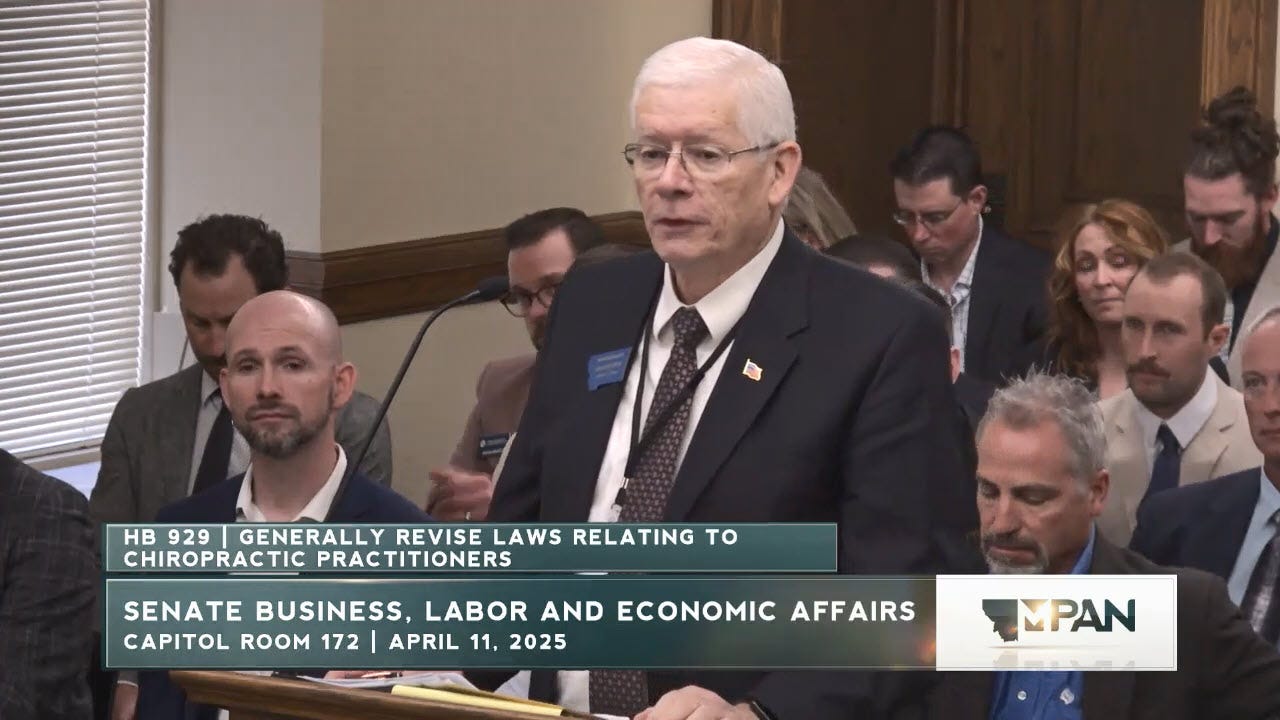
(Pictured: Greg Oblander DC. The Architect for Adding Drugs to Chiropractic in Montana)
With the Montana Senate scheduled to vote Tuesday, April 15, 2025, on HB 929—a bill that would give chiropractors limited drug-prescribing rights—testimony before the Senate Subcommittee painted a stark picture of a profession divided and a political process marred by conflicts of interest and misinformation.
Opposition Speaks Loudest
The hearing featured overwhelming opposition from chiropractors, patients, and professional organizations both inside and outside Montana. Dozens testified that the bill threatens the drug-free identity of chiropractic, risks patient safety, and would lead to skyrocketing malpractice costs.
Among the most powerful opposition came from chiropractors who felt betrayed by their own leadership. One chiropractor summed up the frustration bluntly:
“This bill was introduced without transparency. Most of us didn’t even know about it until it had already passed the House.”
Others condemned the process itself, calling it an “insider-driven maneuver by a handful of individuals who serve on both the regulatory board and the Montana Chiropractic Association.”
CLICK HERE to watch the Opposition Testimony
Proponents Lean on ACA and Vague Promises
Proponents, including bill sponsor Rep. Greg Oblander and leaders from the Montana Chiropractic Association (MCA), argued HB 929 would provide patients with greater access to care in rural areas. But many of their promises—especially around safety, training, and implementation—lacked substance.
“We don’t have a plan yet,” Oblander admitted when asked about training requirements.
Rather than offer detailed standards, proponents leaned heavily on endorsements from national organizations. In particular, they repeatedly invoked the American Chiropractic Association (ACA), revealing the central role this national trade group is playing in Montana’s scope expansion effort.
One proponent testified:
“ACA—which is the American Chiropractic Association—has approximately 10,000 members. They are in support of this. Matter of fact, we have the president of the ACA that lives right here in Montana… And they are supportive because they encourage each state to determine what they want their scopes to be”.
George Toyne, a former MCA president and ACA representative, reinforced this connection:
“I’m past president of the Montana Chiropractic Association and representative of the American Chiropractic Association”.
Oblander’s statement further underscored the national agenda:
“The ACA supports this bill because it helps advance state-level scope expansions—and eventually, these will shape Medicare policy”.
CLICK HERE to watch the proponent’s testimony
Conflicts of Interest and Regulatory Capture
The most damning revelations, however, came not from the testimony—but from the facts behind it. Three current members of the Montana Board of Chiropractors—Drs. Julie Murack, Caitlin Walter, and Dustin Rising—are all dues-paying ACA members. Two of them (Walter and Rising) also sit on the MCA board that is actively lobbying for the bill.
Dr. Marcus Nynas, former MCA president and current president of the ACA, is a close associate of Oblander’s son Ryan, who now owns his practice. This tight circle of influence between national leadership, state regulators, and elected legislators forms a textbook case of regulatory capture.
“This is not a diverse coalition of stakeholders,” said one opponent. “It’s a coordinated campaign by people wearing multiple hats—regulator, legislator, lobbyist, and beneficiary.”
Will Politics Overrule the Public?
Despite the overwhelming opposition, HB 929 continues to advance. Proponents downplay the risks and rely on procedural ambiguity, while opponents warn of a dangerous precedent that could spread to other states.
“This bill isn’t about patient care,” another opponent testified. “It’s about pushing a national political agenda on Montana’s chiropractic profession—and they’re using our state as a test case.”
As the Senate prepares to vote, Montana’s lawmakers must decide whether to uphold the values of transparency, accountability, and public safety—or enable one of the most blatant examples of professional and regulatory overreach in the state’s history.
One thing is clear: Montana is now the battleground for the soul of chiropractic.
