What Pregnant Women Deserve to Know About COVID-19 mRNA Vaccines
Originally published: 2025-04-12
When the COVID-19 pandemic began, pregnant women found themselves at the center of an uncomfortable dilemma. On one hand, they were considered a high-risk group for complications from COVID-19. On the other, they were excluded from the original clinical trials for mRNA vaccines—leaving a gaping hole in the safety data.
Still, health authorities and professional organizations urged pregnant women to get vaccinated. Questions and hesitations were dismissed, and anyone who raised concerns—no matter how thoughtful or science-based—was often accused of promoting “conspiracy theories.” But as time passes and more post-vaccination data emerges, many of those dismissed fears are beginning to look more like early warnings than misinformation.
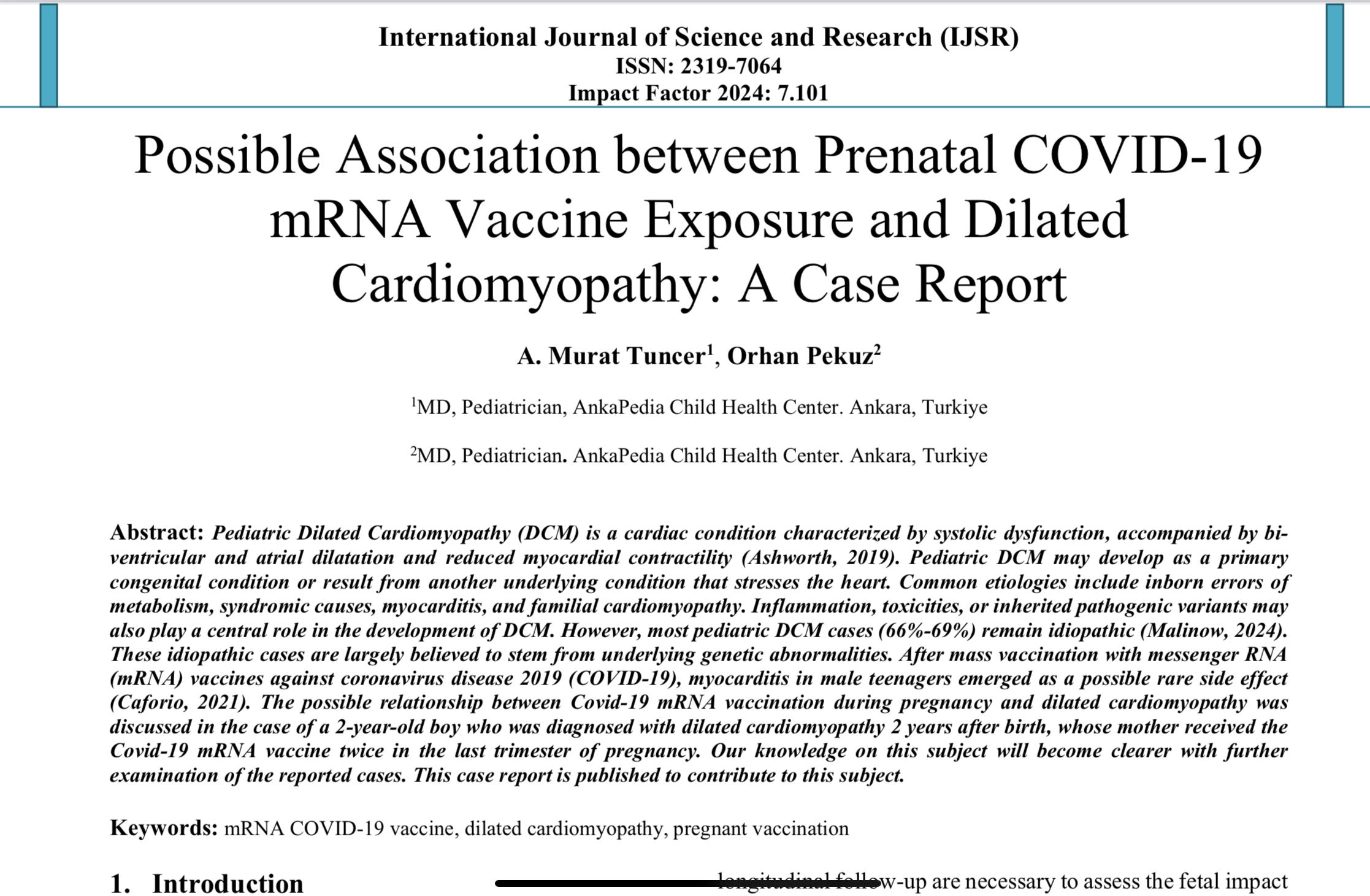
A newly published case report in the International Journal of Science and Research adds another layer of concern that expectant mothers should be aware of. The study details the case of a 2-year-old boy diagnosed with dilated cardiomyopathy (DCM)—a serious heart condition—after being exposed in utero to the Pfizer-BioNTech COVID-19 mRNA vaccine, which his mother received twice in the third trimester.
What This Case Report Reveals
The child was born healthy and met all developmental milestones until age two, when he was hospitalized with severe heart failure. Medical investigations ruled out common genetic and infectious causes of cardiomyopathy, leaving clinicians to consider other possible factors—including prenatal exposure to the mRNA vaccine.
While this case does not conclusively prove that the vaccine caused the heart condition, the timing and lack of other causes prompted the authors to publish the findings as a warning and a call for further investigation. They suggest mechanisms such as inflammation, cytokine release, or autoimmune reactions triggered by the vaccine could potentially play a role—especially in a developing fetus.
Why Pregnant Women Need to Pay Attention
This isn’t about fearmongering—this is about informed consent.
The truth is, pregnant women have not had access to the full picture when it comes to vaccine safety. Early on, medical and public health messaging glossed over the lack of trial data in pregnant populations. Even when mild myocarditis in young men and teens began to emerge as a side effect of mRNA vaccines, the possibility of similar effects in unborn children was largely ignored.
Now, with individual case reports like this one surfacing—and with many more likely underreported—it’s time we give pregnant women the respect they deserve: to make medical decisions based on full, transparent information.
From “Conspiracy Theory” to Cautionary Tale
We were told it was impossible for the vaccine to cross the placenta. We were told there was no risk of long-term harm. We were told that voicing concerns was dangerous. And yet, we now have to consider that the real danger may have been the rush to silence open scientific inquiry.
We’re beginning to see a shift. Studies are now questioning outcomes from vaccinated pregnancies. Reports of infant and toddler health issues in the wake of maternal vaccination are surfacing. And as these truths come to light, it’s essential that we support—not shame—those who asked these questions early.
What Should You Do If You're Pregnant or Planning to Be?
Ask Questions. Don’t let anyone—no matter how credentialed—shame you for wanting more information.
Look Beyond the Headlines. Read the actual data and studies, and consider emerging research, not just public relations soundbites.
Discuss With Your Provider. A good provider will respect your concerns and help you make the best decision for you and your baby—not pressure you to comply.
Follow Ongoing Research. Keep an eye on case reports, cohort studies, and safety data that continue to emerge—especially those that look at long-term outcomes.
Final Thoughts
Trust in science doesn’t mean blind faith. It means listening to new evidence, challenging assumptions, and adjusting our understanding when the data calls for it.
The case of a child with dilated cardiomyopathy potentially linked to prenatal mRNA vaccine exposure may be rare. But even if it’s rare, don’t mothers deserve to know? Don’t they deserve a seat at the table when it comes to risks that may affect the health of their unborn children?
Let’s leave behind the dismissive label of “conspiracy theory” and start having the real, evidence-based conversations that pregnant women deserve.
Because in the end, informed consent isn't just a right—it's a responsibility
