Who Polices the Policemen? Why the NBCE’s Justification for Its Exams Doesn’t Hold Up
Originally published: 2025-10-22
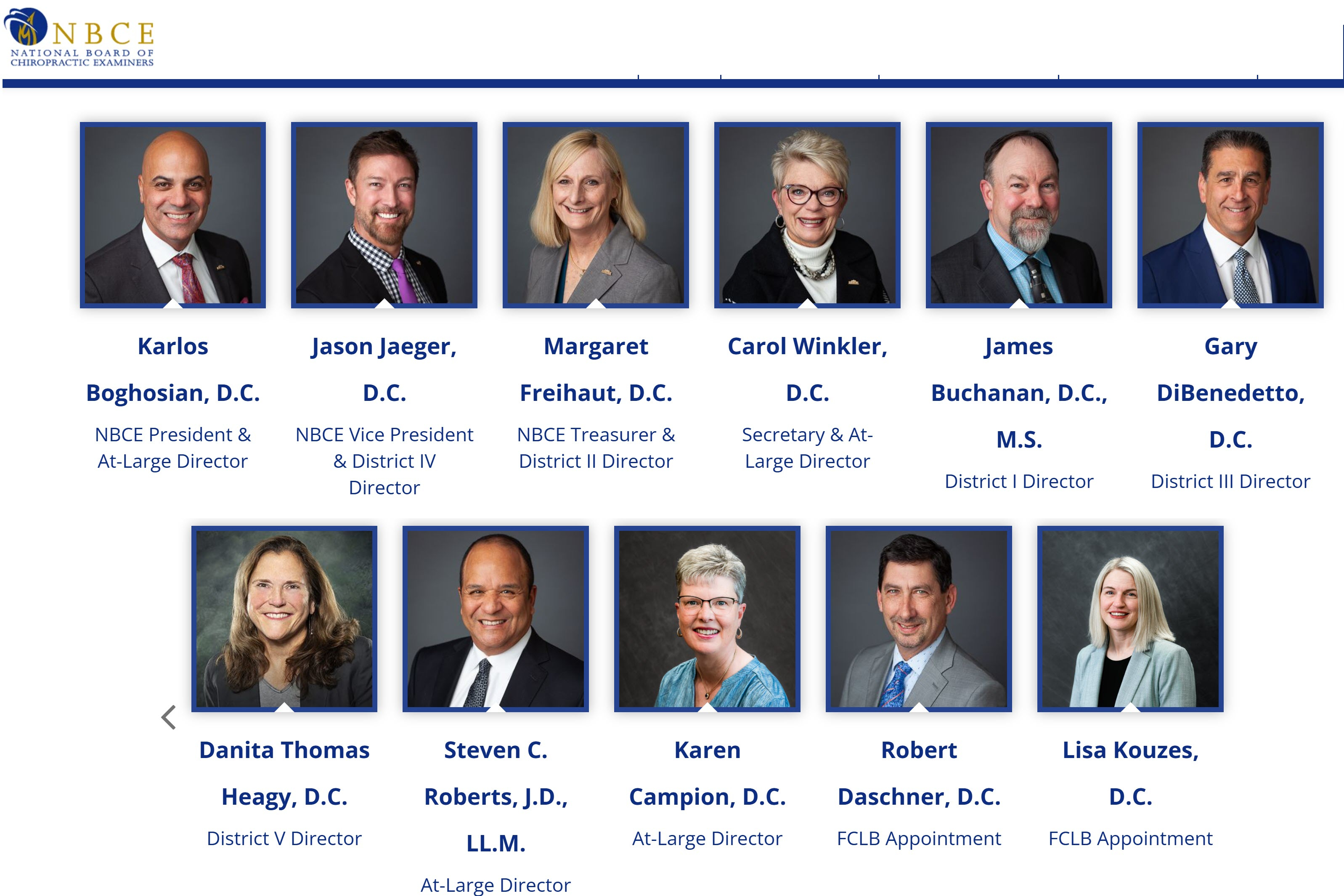
The Flawed Logic Behind the NBCE’s Defense
Directors of the National Board of Chiropractic Examiners (NBCE) often argue that their exams are indispensable because chiropractic colleges “can’t be trusted” to ensure clinical competency. The claim goes like this: schools have a vested interest in graduating as many students as possible, so an external check, the NBCE, is necessary to protect the public.
At first glance, that may sound reasonable. But on closer examination, it’s a circular and self-serving argument that collapses under its own weight.
“If chiropractic graduates are unprepared, the failure lies with the accreditors, not the schools, and certainly not the solution of a self-appointed, unregulated testing monopoly.”
Accreditors Already Provide Oversight
Every chiropractic program in the United States operates under multiple layers of accreditation, including the Council on Chiropractic Education (CCE), regional higher-education accreditors, and now the emerging International Agency for Chiropractic Evaluation (IACE).
These bodies already ensure that:
Faculty, curriculum, and clinical standards meet established benchmarks.
Students pass internal and external competency exams before graduation.
Schools demonstrate accountability through outcome tracking and annual reporting.
If unqualified graduates are leaving the schools, that indicates a failure of accreditor oversight, not a justification for the NBCE to impose another pay-to-play barrier. Accreditation is the mechanism society uses to guarantee educational quality. The NBCE merely profits from claiming that system doesn’t work.
Who Oversees the NBCE? No One.
The NBCE presents itself as the guardian of chiropractic standards, but who guards the guardian?
Unlike accrediting bodies, the NBCE is a private testing vendor, not subject to public accountability, academic review, or independent educational audits. Its exams are proprietary, its psychometrics opaque, and its governance intertwined with other political organizations that lobby state boards to maintain its monopoly.
This lack of oversight has been laid bare through the centralization of the Part IV exam in Greeley, Colorado. This sweeping change consolidated all practical testing into NBCE headquarters, effectively dismantling decades of decentralized, regionally accessible exams. Yet not one single state licensing board, the very entities that the NBCE claims to serve, has conducted a public review, held a hearing, opened a public comment period, or performed an outcome assessment before allowing this change to occur.
No state has asked whether centralization increases costs, restricts access, or introduces bias. No board has investigated how this decision affects students, schools, or the public’s right to transparent licensure practices. In short, the boards themselves have abdicated their oversight role, leaving the NBCE free to act unilaterally.
If the argument is that someone must “police” the schools, the obvious follow-up question is:
“Who polices the NBCE?”
The answer is no one, and the Part IV centralization proves it.
In the absence of regulatory scrutiny, the NBCE does whatever it wants, answering neither to the profession nor to the public. The very state boards tasked with holding it accountable have instead become passive enablers, rubber-stamping policies without review. That is not governance, it is complicity.
“The centralization of Part IV is the clearest example yet that when no one is watching, the NBCE governs itself.”
No Evidence That NBCE Exams Ensure Competency
There is no peer-reviewed evidence demonstrating that passing NBCE exams correlates with professional competency, clinical safety, or patient outcomes. The exams are theoretical and often misaligned with what chiropractic programs actually teach, especially those emphasizing vertebral subluxation, analysis, and adjustment.
Instead of promoting excellence, the NBCE enforces conformity to its own testing model, one that sidelines diversity in philosophy and method while extracting millions in mandatory exam fees from students and colleges.
The Real Solution: Accreditor Reform and Educational Freedom
If graduate competency is inconsistent, the proper remedy is accreditor reform, not a testing monopoly.
That’s precisely why the chiropractic profession is supporting alternative accrediting agencies such as IACE, which restore balance, transparency, and respect for philosophical diversity in chiropractic education. Accreditors are designed to evaluate institutional performance, verify competency measures, and enforce continuous improvement, all under recognized oversight.
Conclusion: Accountability Belongs to the Profession, Not a Vendor
The NBCE’s narrative that it “safeguards the public” by stepping in where schools fail is nothing more than a smokescreen for maintaining control and revenue. If schools were truly producing incompetent graduates, the accreditors should be held accountable, not replaced by an unregulated vendor selling the illusion of competency.
“The NBCE doesn’t ensure competency, it sells the illusion of it.”
True accountability must come from within the profession itself, through transparent accreditation and state-based oversight, not through a private company that answers only to itself.
