Why ICA Leaders Walked Away and Joined the IFCO
Originally published: 2025-11-22
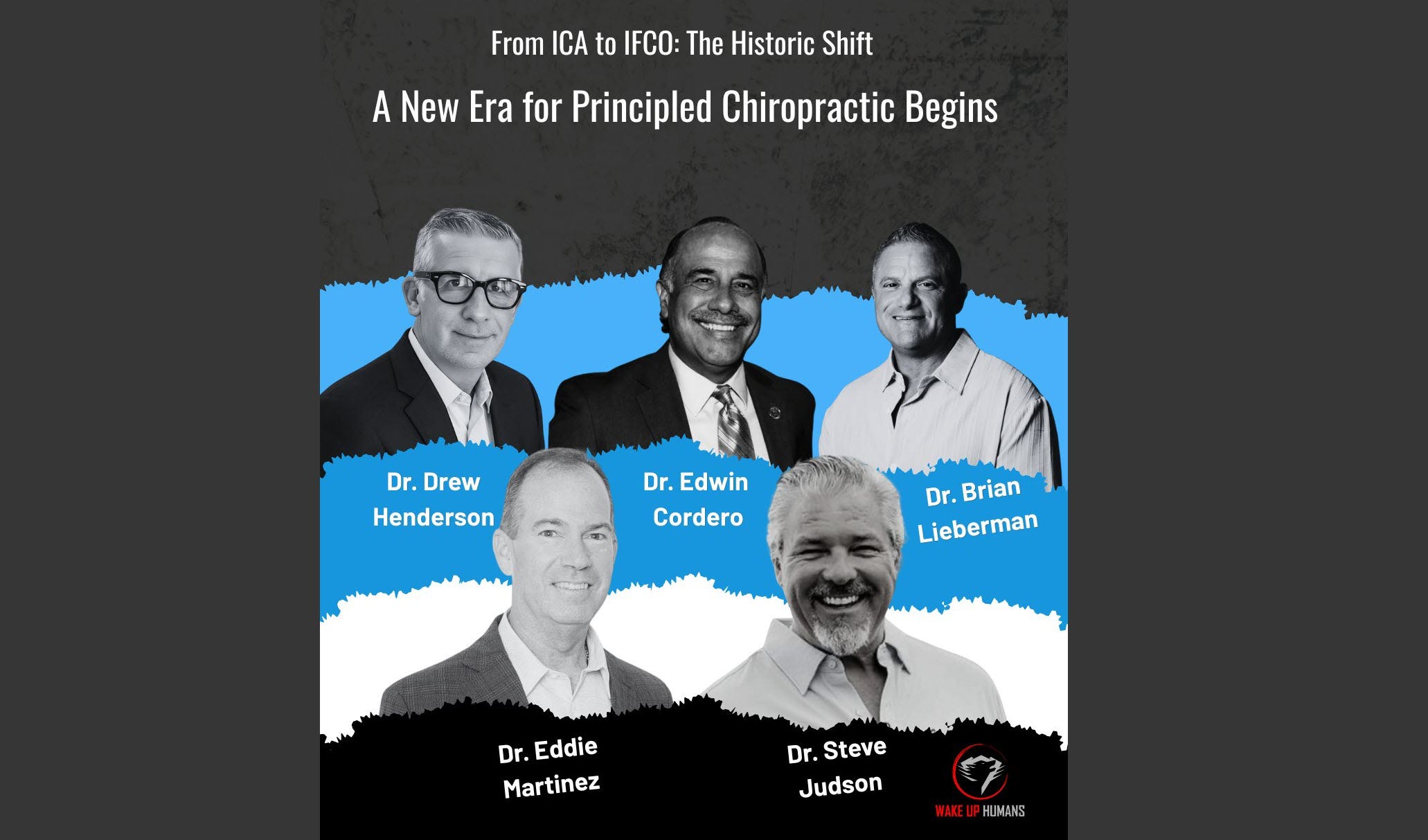
The recent conversation between Steve Judson, Edwin Cordero, Drew Henderson, Brian Lieberman, and Eddie Martinez marks a turning point in the modern history of principled chiropractic. These were not occasional members of the International Chiropractors Association, nor were they part-time volunteers. They were the individuals who carried the weight of governance, strategic planning, policy battles, and the culture of the ICA for years. Their departure was not sudden and it was not shallow. It was the result of years of internal struggle and a final recognition that the ICA had moved so far from its roots that it could no longer be salvaged from within.
CLICK HERE to listen to the discussion
Their decision to join the International Federation of Chiropractors and Organizations did not emerge from frustration alone. It came from clarity about what the profession is facing and the role they must now play. For chiropractors who have not been following the turmoil inside the ICA, this moment represents far more than a change in membership. It signals a tectonic shift in the battle against the chiropractic cartel and the structures that have come to dominate policy, education, regulation, and identity across the profession.
Why They Left: The ICA They Served No Longer Exists
Listening to the discussion, one theme rises above the rest. These leaders remained within the ICA as long as they believed there was something left to protect. They fought for years to restore integrity to ICA governance, to maintain fidelity to the original ICA Constitution, and to defend the association from forces that sought to reshape it into a mirror image of the ACA. But as each controversy unfolded, it became harder to justify staying.
Inside the ICA, they witnessed a slow but unrelenting restructuring of power that placed control in the hands of a small inner circle. The governance committee, originally intended to serve as an administrative tool, evolved into the dominant force inside the organization. It dictated nominations, controlled board slates, overrode member input, and shaped the selection of officers. As one former board member put it, every issue in the ICA eventually tied back to governance failure, because the governance committee had become the mechanism by which control was consolidated and outside voices were silenced.
The Georgia election scandal showed this clearly. When the ICA attempted to manipulate the Representative Assembly election by removing Lieberman from the ballot through procedural gamesmanship, it confirmed that election integrity was no longer a priority. When combined with the CEO debacle, in which a small group attempted to install a handpicked CEO outside the rules of the organization, it became impossible to pretend the ICA still functioned as a membership-driven association.
The ICA’s Drift Toward the Cartel
For years, members voiced concerns about the ICA’s growing alignment with the ACA, CCE, NBCE, and the WFC. These were not philosophical disagreements. They were concrete shifts in policy, language, and alliances. The ICA began endorsing terms like chiropractic physician, language long associated with the ACA and the cartel. It openly courted ACA-affiliated state associations and supported individuals who advocated for expanded scope, drug inclusion, and medical integration.
Even worse, ICA representatives continued to support the World Federation of Chiropractic despite the WFC’s public attacks on vertebral subluxation, its endorsement of Choosing Wisely, and its hostility toward imaging for subluxation analysis. When WFC speakers mocked vitalistic chiropractors from the stage in Berlin, ICA leadership refused to withdraw, refused to protest meaningfully, and refused to defend its own constituency.
These were not isolated events. They were signs of an organization that no longer saw itself as independent. Instead, the ICA began to operate as a junior partner to the cartel. For leaders who entered the ICA because of its historic role as the defender of subluxation centered chiropractic, this shift became impossible to ignore.
“The ICA is full of good people, but as an organization it is lost.”
Why They Chose the IFCO Instead of Starting Something New
One of the most revealing moments in the discussion came when they addressed the question many were already asking. Why not start a new organization. Why move to the IFCO.
Their answer was straightforward. The IFCO already held the values they fought for inside the ICA and it already possessed the global structure required to challenge the cartel. They did not need to reinvent the wheel. They needed to strengthen the one organization that still stood for principled chiropractic without compromise.
The symbolism was not lost on them. Reggie Gold and Sid Williams had reconciled before they passed. The merger of DE leadership and the IFCO represents a restoration of unity that should have taken place decades earlier. In many ways, the division that existed between the ICA and IFCO had always been artificial. Chiropractors who believed in vertebral subluxation, free markets, patient choice, and professional clarity were never meant to be separated.
“We did not walk away from anything. We walked toward something.”
A Global Battle, Not a Local One
Throughout the conversation, they emphasized the international stakes. The WFC, NBCE, FCLB, and CCE are coordinating through the International Chiropractic Education Alliance, a project that will influence accreditation, regulatory standards, and professional identity across the globe. ICA leadership continues to support these entities or refuses to publicly oppose them.
International chiropractic institutions are deeply vulnerable because they lack principled guidance. Many of them accept the WFC and CCE worldview simply because they have no alternative. The IFCO provides a counterweight that can reach beyond the United States and restore a philosophy driven, subluxation focused identity to chiropractic education worldwide.
“The international market is completely clueless out there. They need support. They need advocacy. They need a principled organization.”
The ICA Failed Because It Forgot Who It Was
The transcript is not a story of bitterness. It is a story of clarity. The ICA leaders who left did so because the ICA no longer remembers what made it unique. When an organization loses sight of its identity, abandons its core mission, and sacrifices its membership structure in favor of centralized control, the outcome is inevitable.
The ICA’s shift toward ACA style governance, its entanglements with the WFC and NBCE, its embrace of CCE aligned terminology, its conflicts of interest involving Welsh and Jaeger, and its refusal to defend subluxation centered chiropractic have transformed it into something unrecognizable.
Chiropractors who once saw the ICA as the firewall against the cartel now see it as one more component of the cartel’s system.
“We are not following a leader. We are following leaders.”
Conclusion: A New Era Begins
This moment is not about an exodus. It is about a realignment. The IFCO is now positioned to serve as the global voice of principled chiropractic. The leaders who left the ICA have brought with them decades of experience, influence, and cultural energy. DE’s involvement adds a depth of philosophy and force that the principled movement has not seen in years.
The ICA’s decline does not mean the profession is losing ground. It means the right people are moving to the right place at the right time. This realignment will define the next chapter of the fight against the chiropractic cartel and the restoration of chiropractic to its original mission.
